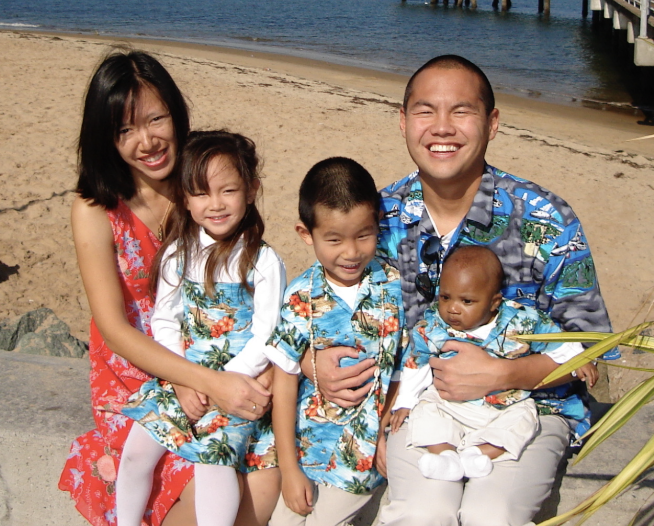
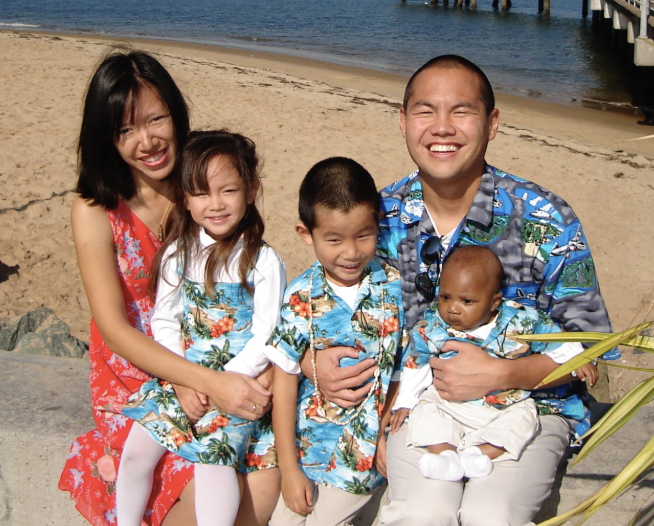
Marissa Chow is pictured here (left) with her husband and children, who know first-hand the lifechanging impact blood donors can have on families living with sickle cell disease. Photo: Courtesty of Marissa Chow
"We are so grateful that every time our son has needed blood, the hospital has had an ample supply. This is only possible through the selfless generosity of blood donors, who literally save patients’ lives."
- Marissa Chow
By Marissa Chow, American Red Cross volunteer
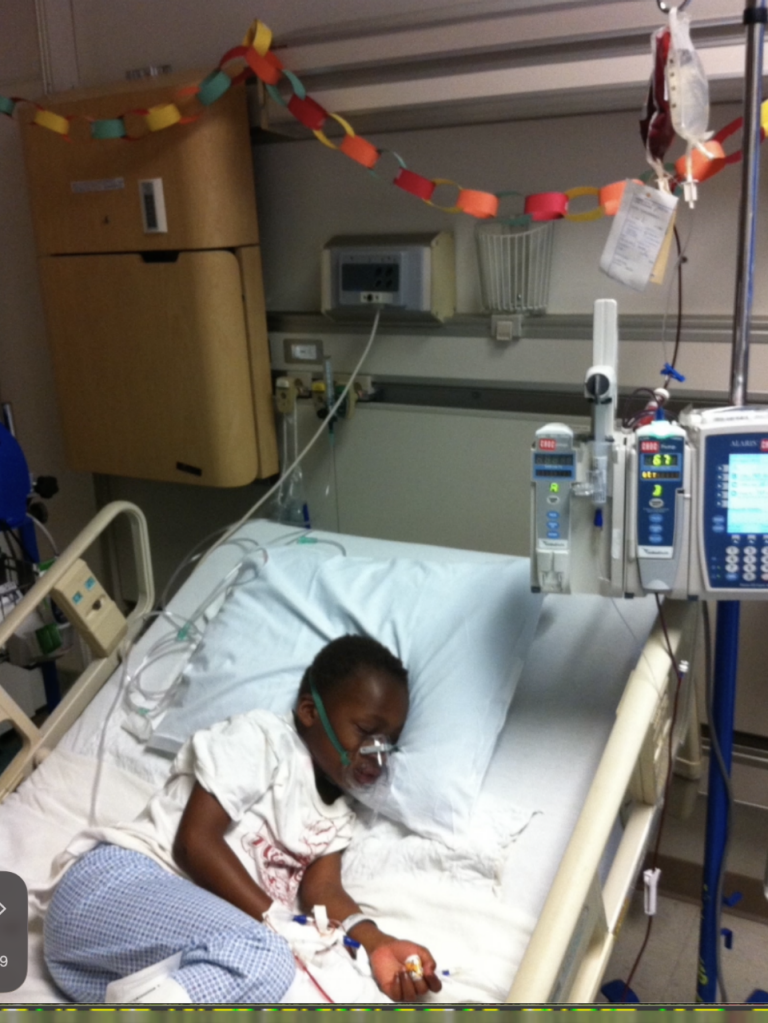
It’s sobering when you’re admitted to the hospital so often that the nurses know you by name. They look at you with a mixture of compassion and pity, saying “Oh no, you’re back again?” or “I remember you. I’ve known you since you were a baby!” And they don’t just know your name; they know you. As a sickle cell patient, they know your need for a blood transfusion is urgent and that your tiny veins tend to collapse, making blood draws difficult and painful. They know that the intense stabbing pain racking your body, a dangerously low hemoglobin level, and a high fever can result in your condition progressing from serious to critical very fast. They know that every hour that passes without a blood transfusion increases your risk of infection, life-threatening respiratory difficulties, organ damage, and stroke. They know that once you get new blood in your veins, you’ll perk up and return to your normal self; that you hate the weird clown guy who comes around trying to make you laugh but welcome the friendly and comforting therapy dogs; that the only way to get you out of bed is to challenge you to a game of foosball. The hospital has been your second home since infancy; the nurses just know you.
Before we adopted our son at two months old, we were told he was born with sickle cell disease. We researched it extensively and familiarized ourselves with the facts: It is the most common genetic blood disorder in the U.S, and regular blood transfusions are critical to manage extreme pain and life-threatening complications. Sickle cell disease causes normally soft and round red blood cells to become sticky and crescent shaped. As a result, blood has difficulty flowing smoothly and carrying oxygen to the rest of the body, which often leads to severe pain, tissue and organ damage, respiratory distress, anemia, and even strokes. In the U.S., it is estimated that over 100,000 people have sickle cell disease, many of whom require frequent blood transfusions throughout their lives.
Though we knew these things, nothing prepared us for the reality of raising a child with sickle cell disease. Nothing equipped us to handle how this disease would ravage his body; how it would erode his mental health; how it would impede his social life; how every aspect of our son’s life— and our family’s— would be affected by this relentless, debilitating, and life-threatening disease that was seemingly incurable.
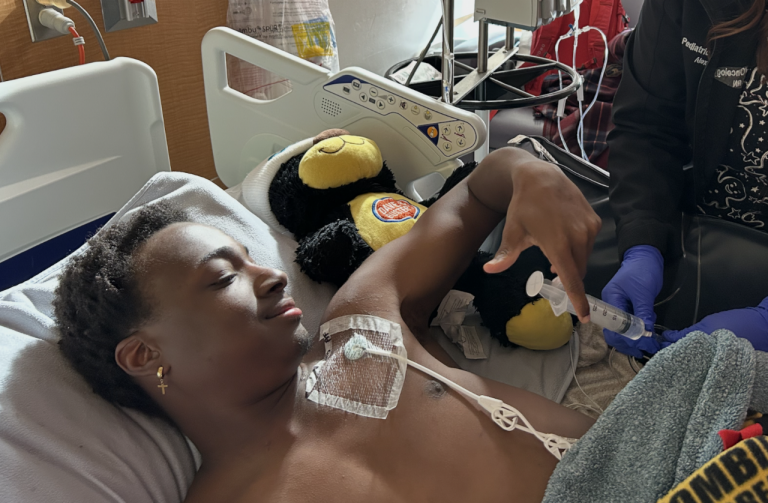
Throughout his countless hospitalizations, sometimes as often as every 4-6 weeks, we counted on blood transfusions to alleviate pain and manage the symptoms of a pain crisis. A few hours after donor blood began to circulate throughout his body, our son was a new person. The brightness returned to his eyes, his energy level increased, and he began to eat and talk and laugh again. It was like magic. But in his teen years, blood transfusions no longer helped to relieve his sickle cell pain. There were no longer periods of respite between pain crises; it was just chronic pain. Because he couldn’t stand for very long, he struggled to hold a job. Frequent hospitalizations forced him to miss school for weeks at a time. He wanted to take larger doses of painkillers, which came with many adverse effects. We grew discouraged and hopeless at the prospect of him suffering from a life of pain with no assurance of relief or lasting treatment. Though our son demonstrated incredible resilience and seldom complained, we knew each day was agonizingly unbearable for him. It was excruciating and heartbreaking to watch him suffer. We were desperate for a cure.
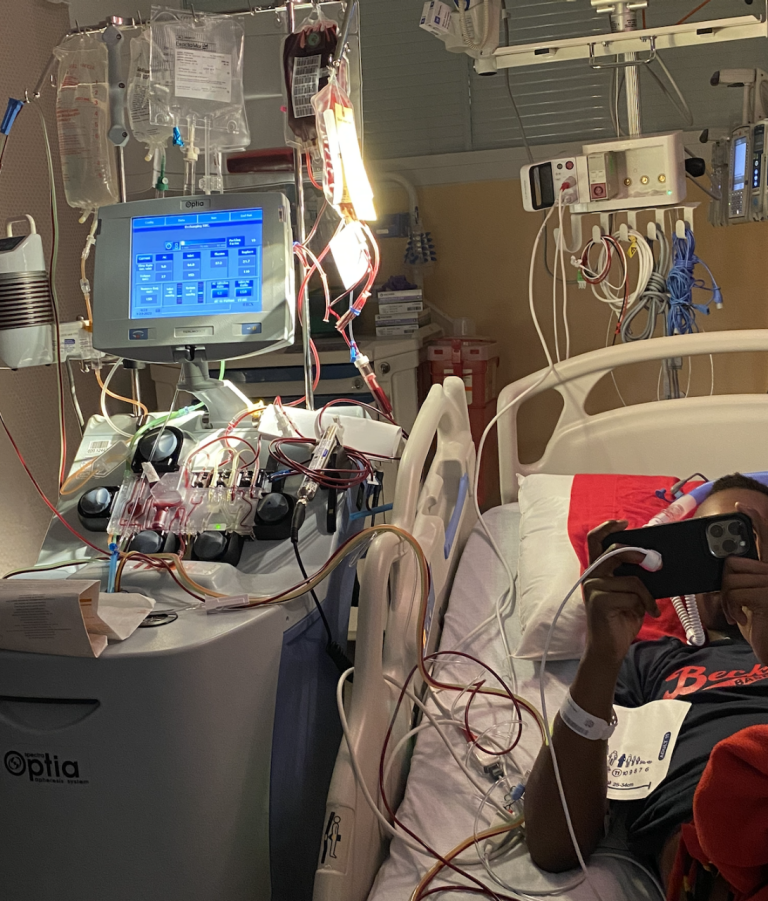
In December 2023, the FDA approved two gene therapies as a functional cure for sickle cell disease. Exactly one year later, our son became one of the first patients in the U.S. to receive this groundbreaking treatment. Gene therapy involved three rounds of collecting his stem cells, sending them to a lab where they were genetically edited, and infusing his modified stem cells back into his bone marrow to produce healthy blood cells. It required transfusing countless units of blood, six platelet transfusions, a six-week hospitalization with chemotherapy, and three weeks of aftercare at the hospital’s hotel.
Since this life-transforming treatment in December 2024, our son, now age 20, has not had a pain crisis, been hospitalized, or needed a blood transfusion. He is able to work part-time and stand for longer than 20 or 30 minutes. Though he still feels the effects of the damage that has already been done to his organs and bones, his symptoms are much more manageable. He enjoys making music, going to the beach, and cooking fettucine. He now has hope for the future and looks forward to snowboarding, skiing, and swimming in the ocean — activities he couldn’t participate in before because they were considered risks.
Blood and platelet donations are vital in supporting patients with sickle cell disease and regular blood transfusions are often needed to help manage symptoms. We are so grateful that every time our son has needed blood, the hospital has had an ample supply. This is only possible through the selfless generosity of blood donors, who literally save patients’ lives. Our son has received over 60 transfusions and more than 130 units of blood. There is a critical need for blood donors not only for sickle cell patients, but for cancer patients, surgical patients, accident and burn victims, and women in childbirth. One unit of blood can save more than one life. Schedule an appointment today by visiting RedCrossBlood.org, using the Blood Donor App, or calling 1-800-RED CROSS.


Support all the urgent humanitarian needs of the American Red Cross.
Find a drive and schedule a blood donation appointment today.
Your time and talent can make a real difference in people’s lives. Discover the role that's right for you and join us today!