By Cheyenne DeGross, American Red Cross communications intern
For Deborah Ward, donating blood and platelets was never prompted by a personal tragedy or a family member in need. Instead, it began with a simple belief in helping others that grew into a lifelong commitment that has inspired those around her to do the same.
Her journey started as a student at Shepherd College, now Shepherd University, in West Virginia.
"I started donating blood during my freshman year in college because they were on campus," she said. "I started giving blood in college just because I felt that was what you should do. I've never understood why someone wouldn't donate."
That habit continued throughout her career as a social worker. Whenever there was a workplace blood drive, she participated. In the 1980s, after moving just a few blocks from a Red Cross donation center, she began donating regularly and was eventually encouraged to become a platelet donor.
"It has evolved over time ... One time when I was there, they said, 'We'd like to ask you to start giving platelets,'" Ward recalled. "So, now I give platelets every time."
Platelets are tiny, colorless cell fragments, produced in your bone marrow, that circulate in your blood and help form clots, stop bleeding, and heal wounds. Low platelets can be caused by cancer treatments or the cancer itself.
Platelets play a critical role in treating those fighting cancer, chronic diseases, and traumatic injuries. They can only be used within five days of collection, which is why donors are constantly needed. Without a platelet transfusion, cancer patients may not be able to receive their treatments.
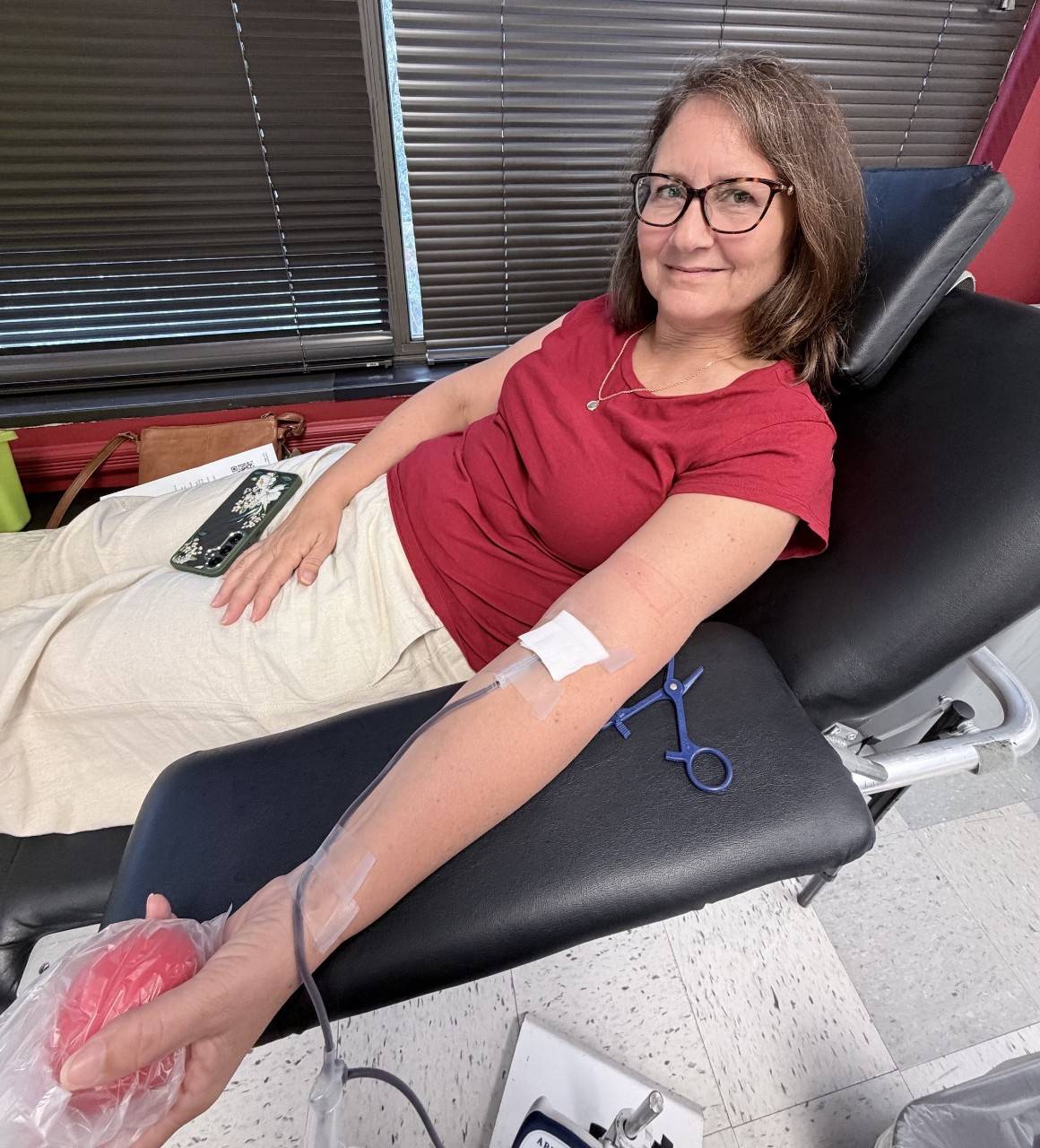
Today, Ward is a dedicated platelet donor, often donating every other week at her local Red Cross donation center in Baltimore and working toward as many as 24 donations a year.
Along the way, donations have become part of her routine and even part of her social life. Before each appointment, she often turns to Facebook for entertainment recommendations. Because it takes time to separate and collect the platelets from a donor’s other blood components, a platelet donation takes roughly two hours, and the Red Cross provides TVs with Netflix for donors to watch as they donate.
"One of the most popular questions I ask on Facebook is, 'I'm giving platelets again. What should I watch on Netflix?'" She said with a laugh. "People say they get their notepad out to write down the suggestions."
More importantly, her posts have encouraged others to donate as well.
"Several folks have given as the result of me promoting it on my Facebook page," she said.
Over the years, Ward has developed an even deeper appreciation for the impact blood and platelet donations can have. She has met people whose loved ones depended on transfusions during cancer treatments and witnessed how platelet donations can extend and improve lives.
"I think about people like that [as I’m donating]," she said.
For one family friend, a young woman treated for cancer at Johns Hopkins Hospital, platelets from donors like Ward extended her life. "She needed so many platelets just to survive,” Ward recalls. “She didn't get my platelets, but she got somebody's platelets."
Ward also enjoys the unexpected benefits that come with regular donations, including the health screenings donors receive.
"I love the fact that I know that I'm healthy," she said. "Every two weeks I get my blood pressure, and my iron level. I know what my platelet count is, and I know that I'm not anemic."
Even when donations haven't gone perfectly, she has never considered stopping.
"Just try it. Just do it," Ward said. "And if the first time you do it, it's a little difficult, don't give up. Do it again."
For those unsure about donating, her advice is simple: talk to the Red Cross and find the donation type that best matches your blood type and ability.
"You don't have to give platelets," she said. "Give whole blood, give double reds, do whatever. Just do it."
After decades of donating, Ward still believes every donation matters. Whether it's whole blood, platelets, or another type of donation, she hopes more people will take that first step.
"I feel it's really important," she said. "Just do it."
Support all the urgent humanitarian needs of the American Red Cross.
Find a drive and schedule a blood donation appointment today.
Your time and talent can make a real difference in people’s lives. Discover the role that's right for you and join us today!