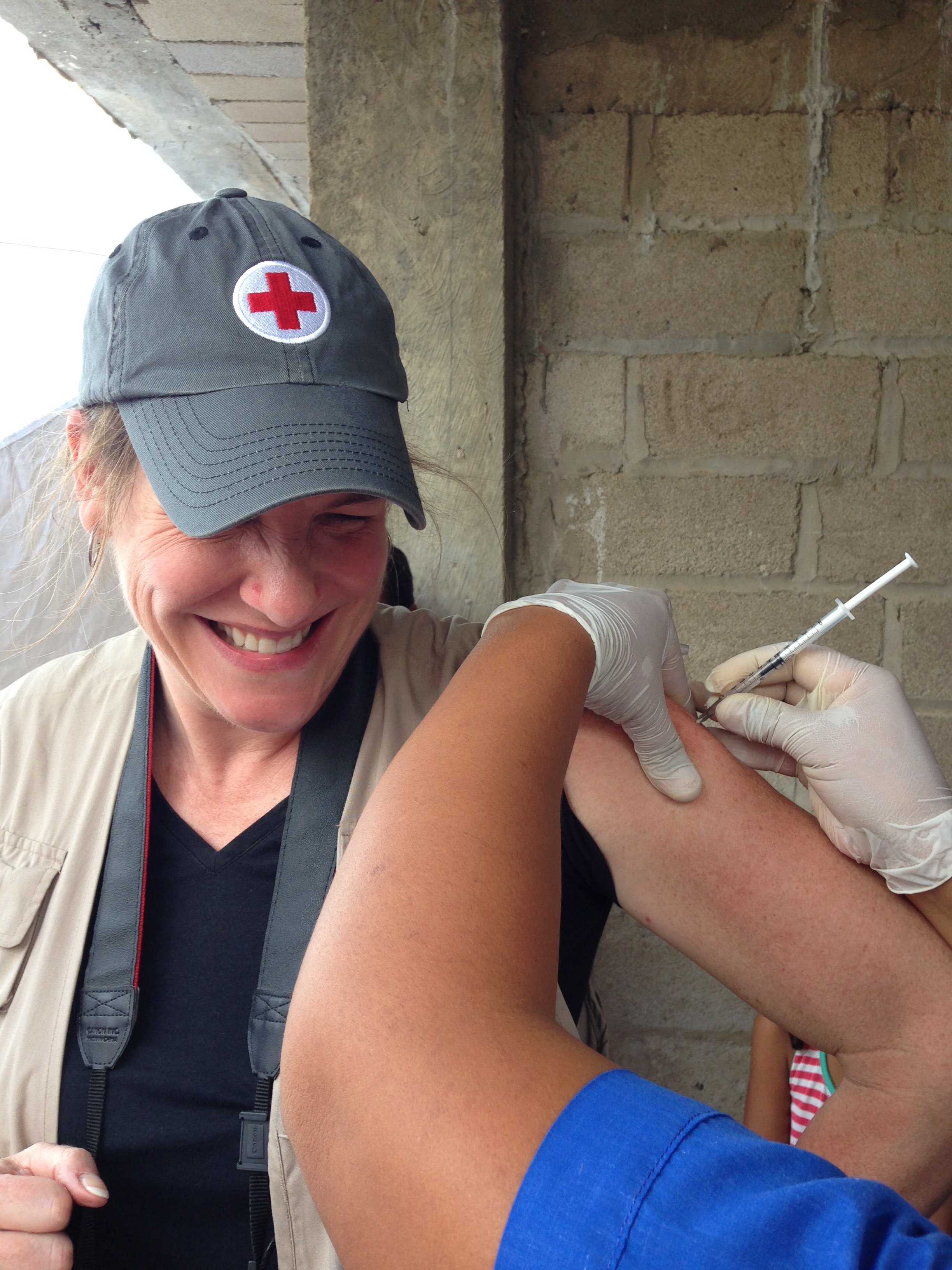
Red Crosser Jana Sweeny receives her annual flu shot at a mobile health clinic in 2014. Photo by Roberto Brito de la Cuesta/American Red Cross archives
By Cheyenne DeGross, Red Cross volunteer
As temperatures drop and families spend more time indoors, flu season becomes an important time to prioritize health and prevention. According to Scott Wells, a registered nurse and Red Cross volunteer, taking a few simple precautions can help protect your family from influenza and other seasonal illnesses.
Wells has two decades of experience in acute care, emergency medicine and public health and is the lead nurse for the health services team at the Red Cross of the National Capital and Greater Chesapeake Region.
1. Get Your Annual Flu Vaccine
One of the most important ways to protect yourself and your family is to get the annual flu vaccine. Influenza strains change from year to year, last season’s vaccine may not provide the same protection this season, Wells says.
Talking with your healthcare provider about vaccinations are especially important if you have an underlying health condition. Young children, older adults, pregnant women, and people with weakened immune systems are at greater risk of serious complications from the flu.
2. Practice Good Hand Hygiene
Washing your hands is a simple but effective way to reduce the spread of germs. Use soap and water for at least 20 seconds, particularly after coughing, sneezing or touching shared surfaces. If soap and water are unavailable, use an alcohol-based hand sanitizer when your hands are not visibly dirty. Encourage children to make handwashing part of their daily routine.
3. Avoid Spreading Germs
If someone in your household is sick, try to limit close contact to prevent others from becoming ill. “Cover coughs and sneezes with a tissue, throw the tissue away immediately, and wash your hands afterward,” Wells urges. Disinfect frequently touched surfaces, including kitchen counters, bathroom fixtures, and shared spaces. If you feel sick, stay home as much as possible to minimize the risk of spreading the illness to others.
4. Support Your Immune System with Healthy Habits
Everyday habits can support your immune system and overall health throughout flu season. “Drink plenty of water, eat a balanced and nutritious diet and stay physically active,” Wells says. Although these habits cannot guarantee that you will avoid illness, maintaining your general health is an important part of caring for yourself and your family.
5. Recognize Symptoms and Know When to Seek Help
Fever, chills and feeling unusually tired can be signs of influenza. If you develop flu symptoms, contact your healthcare provider promptly to discuss treatment options. Antiviral medications may help shorten the illness, particularly when started early. Seek urgent medical attention for warning signs such as difficulty breathing, chest pain or pressure, confusion, severe dizziness or an inability to keep fluids down.
And the biggest takeaway? “Prevention is key,” Wells says.
By staying up to date on vaccinations, practicing good hygiene, and making healthy choices, families can take meaningful steps toward a safer, healthier winter.
****
Support all the urgent humanitarian needs of the American Red Cross.
Find a drive and schedule a blood donation appointment today.
Your time and talent can make a real difference in people’s lives. Discover the role that's right for you and join us today!