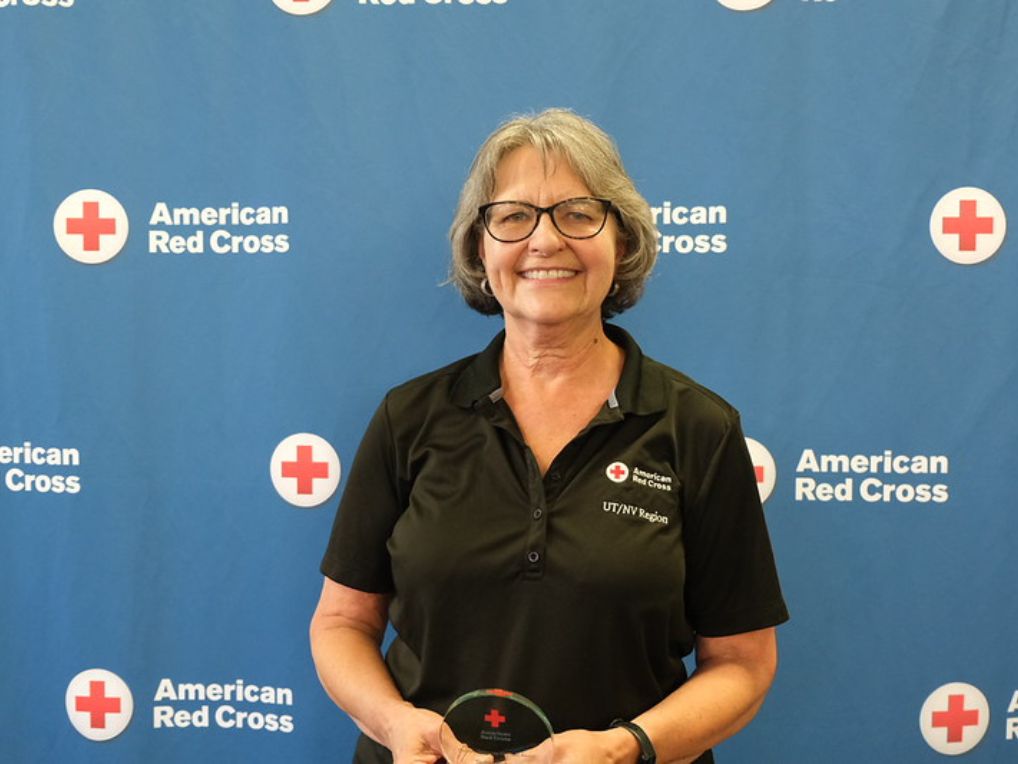
Susie Askew at the 2025 Northern Nevada Volunteer Recognition Event where she was awarded the Disaster Response Volunteer Award.
By Jodi Truglio
With thousands of people displaced across Northern Nevada, a local Red Cross volunteer brought vital comfort and support to families in need.
On Aug. 22, one of the most devastating wildfires in Reno's history prompted the area's largest evacuation effort, affecting an estimated 42,000 to 90,000 people as evacuation orders and warnings were issued after the fire threatened northwest Reno and surrounding communities.
The Hawk Fire ultimately burned 15,085 acres on Peavine Peak just outside Reno before being fully contained on Sept. 9, 2026. The official cause of the fire was determined to be human-caused.
As the first evacuation alerts sounded, the Red Cross was already on the ground setting up services to support those affected. Among the first volunteers to arrive was Susie Askew, who stepped into the role of shelter manager.
After four years of volunteering with the Red Cross, Askew was no stranger to the long hours and challenges of disaster response. Still, nothing quite prepared her for the scale of this response, one of the largest evacuations she had ever witnessed.
"During my time with the Red Cross, I have learned the value of providing care, comfort and compassion to individuals affected by a disaster. I've been told many times that the Red Cross was the only helping hand they knew to turn to when disaster hit," said Askew, a Red Cross volunteer.
Recently, Askew shared more about her experience responding to the Hawk Fire.
How did you first get involved with the Red Cross response to this disaster?
When the Hawk Fire first ignited and evacuation warnings were issued, I was sent to help open and receive people at an evacuation center.
What was your role during the response, and what did a typical day look like?
I served in various roles, with the first being shelter manager. My first day of the evacuation went until 2 a.m., and I returned that same morning at 7 a.m. Shifts are usually 12 hours, but that first day was very busy, with more than 750 people showing up at the shelter.
During the day, I would respond to inquiries from clients in the shelter and people who showed up wanting to help. I also made sure Red Cross standards for operating a shelter were being followed and that shelter clients were provided with basic Red Cross services.
How many days or shifts did you volunteer, and what kinds of tasks did you help with?
I worked for around 10 days, helping with sheltering, disaster assessment, cleaning cots after the shelter closed and helping restock and put away supplies so we would be ready for the next disaster.
Can you tell me about a person or family you met whose story has stuck with you?
I met a gentleman in the shelter during the Hawk Fire. He was living in a mobile home with his special-needs grandson. They had evacuated and left their cat behind in their mobile home. They both mentioned their worries about the cat every time I stopped to visit with them.
I asked around and was told Washoe County Animal Services was conducting welfare checks on animals in the affected areas.
I called their office, and they reported that they had indeed stopped by the mobile home and had fed and watered the cat and cleaned its litter box. The cat was doing fine.
It felt great to report this news to the grandfather and grandson. They were so relieved.
What did you see from the people affected by the disaster that gave you hope?
People are very resilient and managed amazingly well in the shelter. I know they were thankful to have a roof over their heads, a place to sleep and three meals a day.
The outpouring of support from our community was phenomenal. There was a steady stream of people stopping by the shelter to offer help in any way they could.
Was there a small moment that might seem insignificant to others but meant a lot to you?
It's hard to know if you are doing all the right things during a disaster. I was having a moment when I wasn't sure if I was up to all the responsibilities placed on me to manage the shelter. My Red Cross chapter manager stopped by the shelter, gave me a hug and thanked me for doing a great job.
When you are a volunteer, there is no financial incentive to keep going when you are exhausted or feeling overwhelmed. A simple thank you and the knowledge that you are making a positive difference in someone's life are what keep me going.
What do you think most people are unaware of or get wrong concerning disaster relief?
I think people are unaware of the number of unpaid volunteers, and even those who may be affected by the disaster themselves still step up and answer the call to serve.
Also, there are numerous groups and agencies that are there to help. It's hard to know all of them, but the Red Cross can provide aid and resources to help you recover when disaster strikes.
What advice would you give someone interested in volunteering?
The Red Cross offers a myriad of volunteer opportunities. Call the local chapter office or go online and fill out a volunteer application. A representative will call you and walk you through all the opportunities.
You can start with one, but it is easy to move to other opportunities that may interest you.
Support all the urgent humanitarian needs of the American Red Cross.
Find a drive and schedule a blood donation appointment today.
Your time and talent can make a real difference in people’s lives. Discover the role that's right for you and join us today!