Nurses have been at the core of delivering the American Red Cross mission since Clara Barton—an amateur nurse herself—founded the organization in 1881. While today’s nurses don’t operate field hospitals or treat soldiers, they remain a vital part of Red Cross disaster services, blood programs and health and safety training.
In Southeastern Pennsylvania (SEPA), nurses are key members of the Red Cross Disaster Health Services (DHS) team. These volunteers help individuals and families cope in the aftermath of disasters. They can provide first aid treatment for minor injuries, monitor the wellbeing of people staying in Red Cross shelters and help replace prescription medications, eyeglasses and other medical items.
SEPA’s DHS team is led by volunteer and registered nurse Kate Byrnes, who was featured in March as part of our “Lead Like Clara” series. Byrnes describes the role of DHS as one of “health maintenance”—helping ensure people safe, comfortable and supported while they’re in Red Cross care. She’s also the lead for staff health, which means addressing health concerns that arise from Red Cross workers (both paid staff and volunteers) during disaster operations.
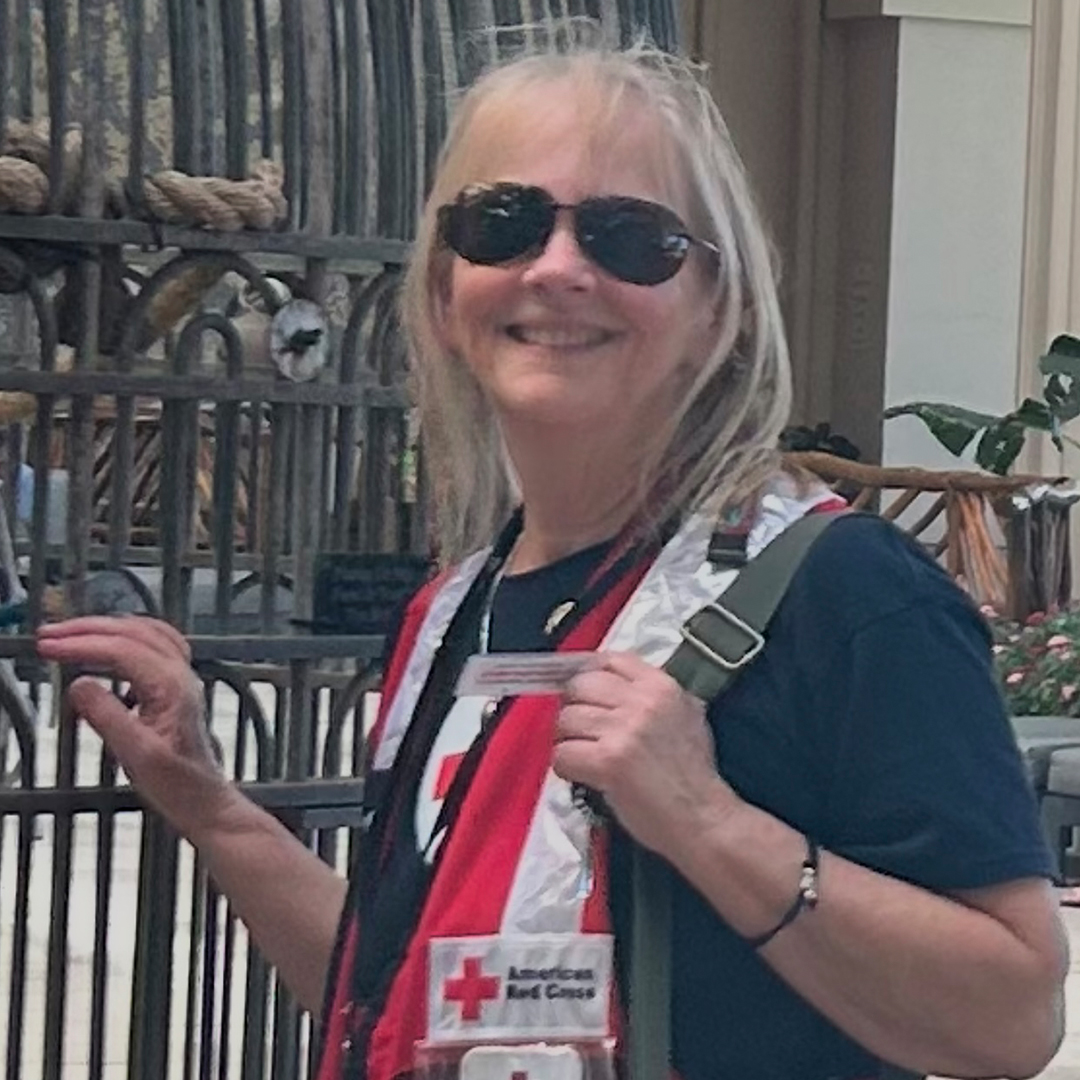
Kate Byrnes deployed to the wildfires in Maui in 2023. Submitted photo
In an article on redcross.org, American Red Cross Chief Nurse Linda Fahey shared that DHS volunteers contributed more than 156,000 hours of service nationally last year.
“Every day over the past year, they made a difference while providing care under some of the most challenging circumstances—from the Texas floods and widespread fires across the West to a typhoon in Alaska, and, most recently, a typhoon in the Northern Mariana Islands, more than 3,700 miles from Hawaii,” she said.
In addition to supporting disasters, Fahey writes that more than 180 employed Red Cross nurses provide “direct clinical care within Therapeutic and Cellular Services,” and others serve as volunteer nurses in military treatment facilities around the world, as well as in leadership positions across the organization.
Fahey also reminds us that nurses never work alone.
“Our interdisciplinary teams—including physicians, EMS professionals, social workers, psychologists, mental health counselors and many other health professionals—are essential partners in this mission,” she writes.
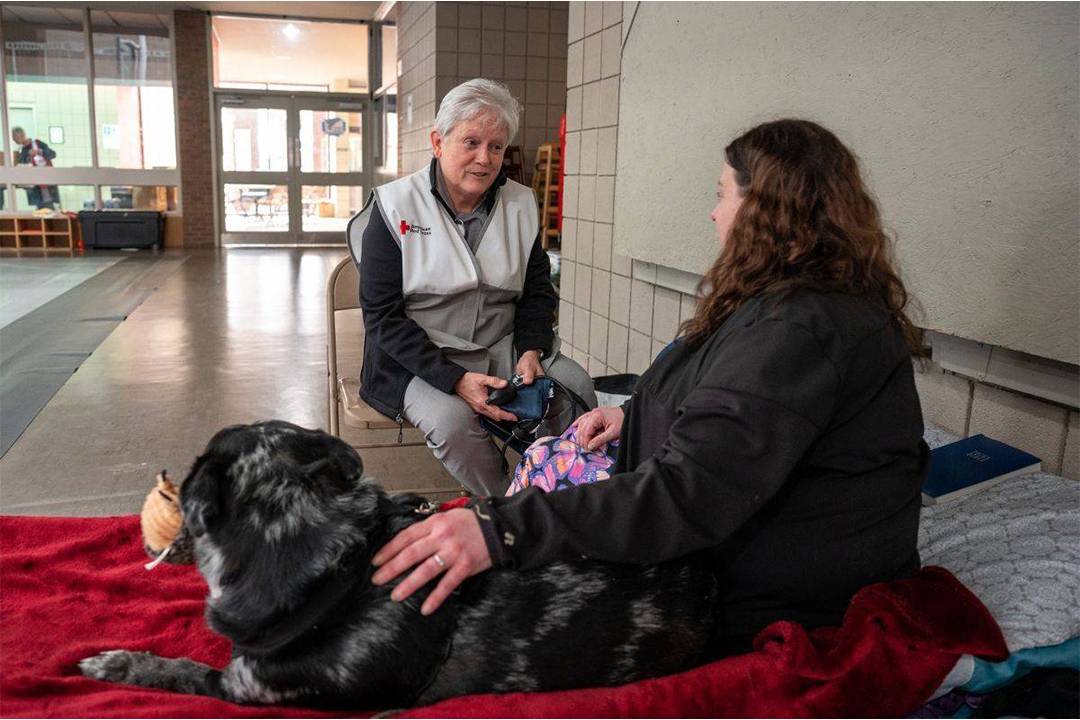
American Red Cross Chief Nurse Linda Fahey checks the blood pressure of a shelter resident during the 2023 relief response after tornadoes hit Arkansas. Red Cross photo by Kevin Shttlehan
This collaboration is evident in SEPA, where the Disaster Mental Health (DMH) team is also led by a registered nurse, volunteer Randy Miller, who we interviewed last year for World Mental Health Day. A retired psychiatric nurse and a certified grief and loss educator, Miller says her team’s role with the Red Cross is to provide support strategies, not therapy.
“We talk about resilience, and if they’re still struggling after those few initial calls, we will refer them to support in their community,” she shared. “The thing that is often most helpful is just being present, being a good listener and allowing people to share their story.”
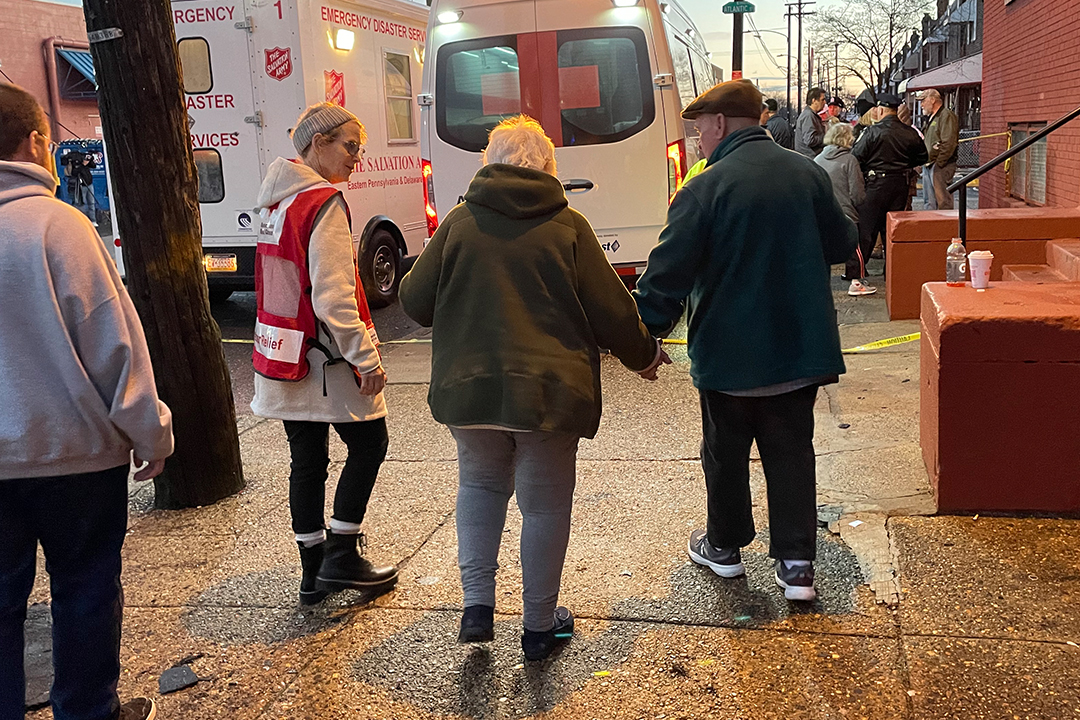
Randy Miller walks with a couple impacted by a home explosion in the Port Richmond section of Philadelphia on Jan. 1, 2023. Submitted photo
SEPA’s DHS and DMH teams are part of a larger Client Care Team that also includes Disaster Spiritual Care (DSC) and Recovery Casework. This integrated approach ensures individuals receive comprehensive support tailored to their needs.
Regional Client Care Manager Maureen Smith Streeter oversees these services, which begin within 72 hours after the Disaster Action Team responds to a local emergency, such as a home fire.
“In the first contact by the case manager, we’re checking on the client’s wellbeing and immediate needs,” she explained. “Each case looks different as we walk with the client through their recovery planning.”
Smith Streeter describes her team’s approach as using an “arsenal of resources” to assist families, including DHS and DMH support, financial assistance and referrals to community partners such as food banks and clothing closets.
On average, the team works with individuals for 2-3 weeks following a disaster, providing critical short-term support while helping connect them to the resources they need for long-term recovery.
Byrnes, Fahey and Miller are among the more than 20,000 nurses involved in the Red Cross today. They continue the mission of the women and men who have served under the Red Cross banner for more than 130 years.
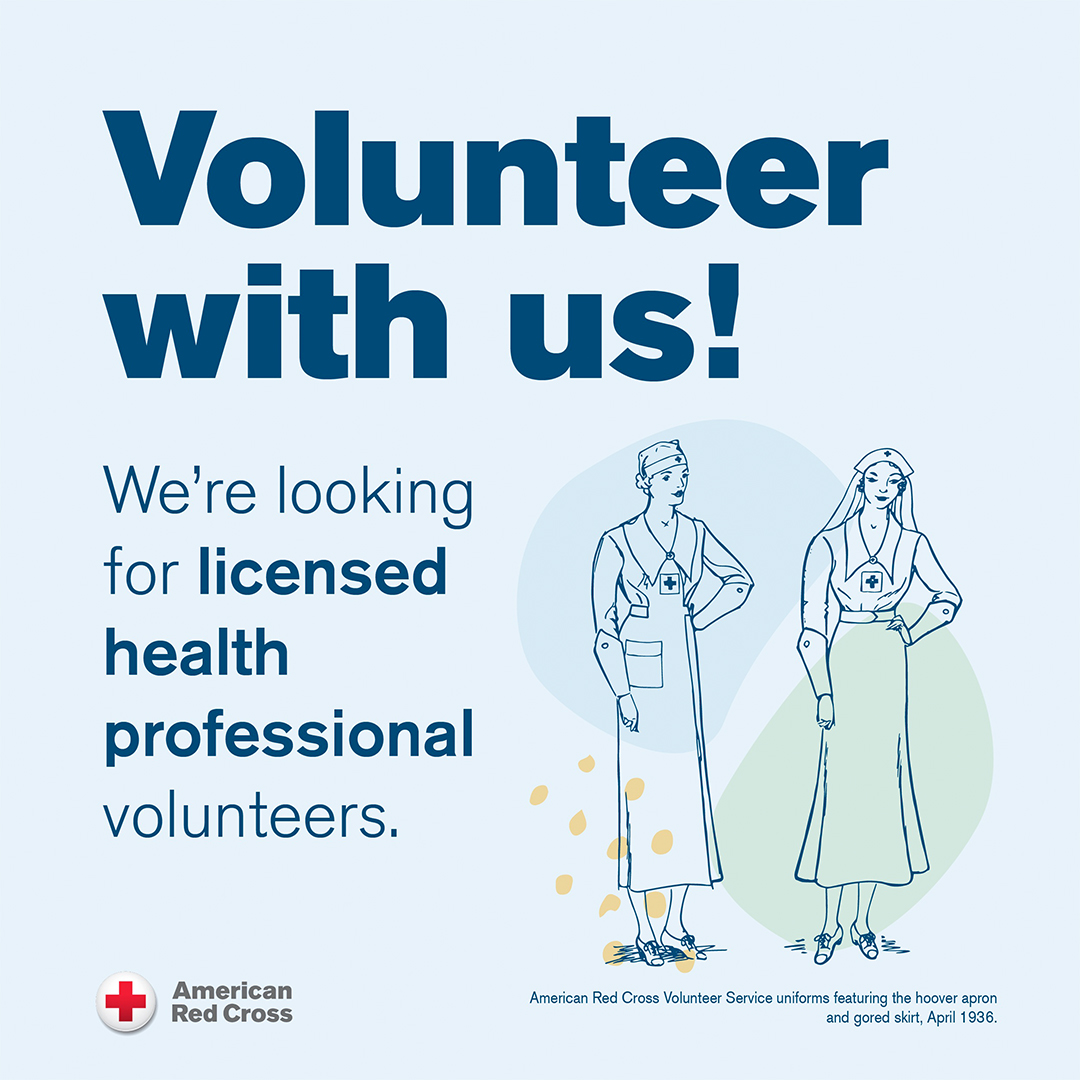
Ninty percent of the work of the Red Cross is done by volunteers, including nurses and other health professionals. Visit our website to learn more about the roles of Red Cross nurses and how you can get involved.
---------------
- Written by Alana Mauger
Support all the urgent humanitarian needs of the American Red Cross.
Find a drive and schedule a blood donation appointment today.
Your time and talent can make a real difference in people’s lives. Discover the role that's right for you and join us today!