By Palashpriya Bhattacharyya, Northwest Region
For Stephen, a safer home means more independence.
When Anne Moore first contacted the American Red Cross this summer, she was looking for a simple answer to an important question: How could she make sure her deaf son would know if there was a fire while he was home alone?
Her family’s five Nest smoke and carbon monoxide alarms were approaching their 10-year expiration dates. Moore knew her son, Stephen, needed something different from a traditional smoke alarm, but she wasn’t sure what options were available or how to find them.
“I just naturally went to Amazon and I was like, ‘Oh, I’ll just buy deaf-friendly smoke alarms,’” Moore said. “It’s really confusing to figure out what is ADA approved and not, and everything seems also really expensive.”
Moore, who lives in Bellingham, eventually learned about the Red Cross program providing specialized fire safety equipment for people who are deaf or hard of hearing and reached out for help.
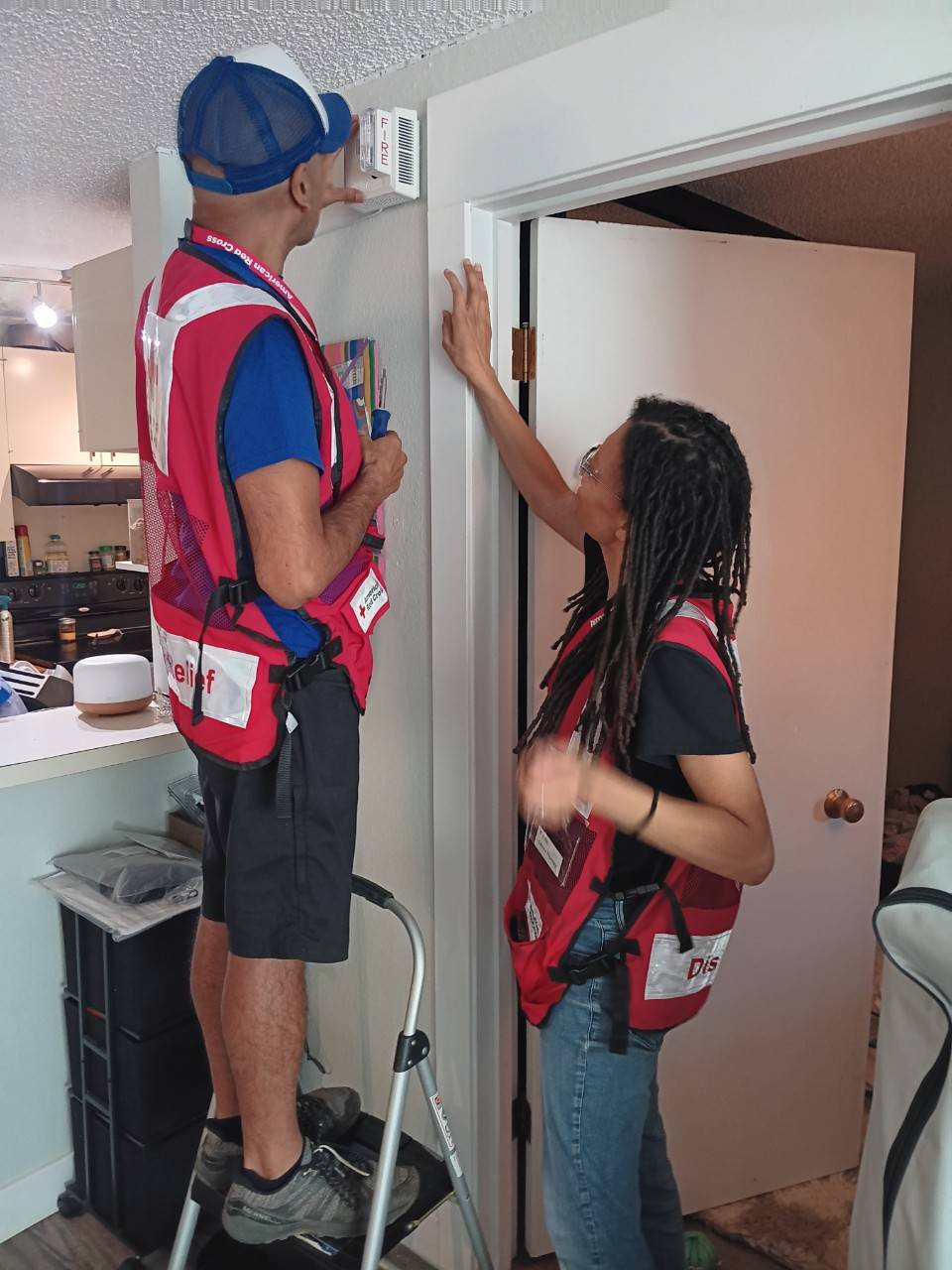
In July, Red Cross volunteers installed specialized fire safety equipment in the family’s home, including three light strobes, a bed shaker and a smoke alarm.
The equipment gives Stephen multiple ways to recognize a fire emergency. The alarms use flashing lights and loud sounds, while the bed shaker sits underneath his mattress and shakes the bed when the connected smoke alarm detects a fire.
For Stephen, who is nearly 14, the new equipment made an immediate impression.
“I thought it was cool,” he said.
During testing, Stephen was able to see the flashing lights and hear the alarm.
“The alarms are really loud, and the flashing lights grab my attention quickly,” he said.
The family also tested the bed shaker while Stephen pretended to be asleep. When it activated, he woke up and called out, “Fire, fire.”
Moore said the equipment has become particularly meaningful as Stephen gets older and spends more time at home without his parents.
The family had already discussed emergency plans with him, including how he could escape through his bedroom window if necessary. But the new equipment gives him a way to recognize an emergency without having to depend on someone else to alert him.
“It really is Stephen being able to be self-sufficient in an emergency and be able to get himself to safety,” Moore said.
Before the installation, the family relied on smart alarms that sent notifications to Moore and her husband through an app on their phones. While that system alerted his parents, Moore wanted Stephen to have a way to recognize an emergency himself.
The installation took less than 30 minutes, Moore said.
She said the experience also showed her how important it is for families to know that resources like this are available.
“A lot of deaf kids are born to hearing adults, unfortunately, and a lot of us just don’t know what resources are available to our deaf children and how to make our homes more deaf-friendly,” Moore said.
For Stephen, the impact goes beyond his own home. He said he wishes more families had access to the same kind of equipment.
“This can save people’s lives. All houses should have these alarms. I wish these were everywhere!” he said.
Moore hopes other families with deaf or hard-of-hearing children learn about specialized fire safety equipment before they need it.
“I wish I had known about it earlier,” she said. “It could really save a life. You just never know.”
For Stephen, having a way to recognize a fire emergency on his own means another step toward being safe and independent, even when his parents aren't there to help.
Support all the urgent humanitarian needs of the American Red Cross.
Find a drive and schedule a blood donation appointment today.
Your time and talent can make a real difference in people’s lives. Discover the role that's right for you and join us today!