Beginning Wednesday, high pressure is forecast to build over the region, bringing clearer skies and rising temperatures. By the weekend, highs are expected to climb into the 80s, with some areas near the Cascade foothills and the south interior of Western Washington reaching the 90-degree mark — the warmest temperatures so far this year.
While coastal areas and Puget Sound may offer some relief in the upper 60s and 70s, inland communities will see significantly higher heat.
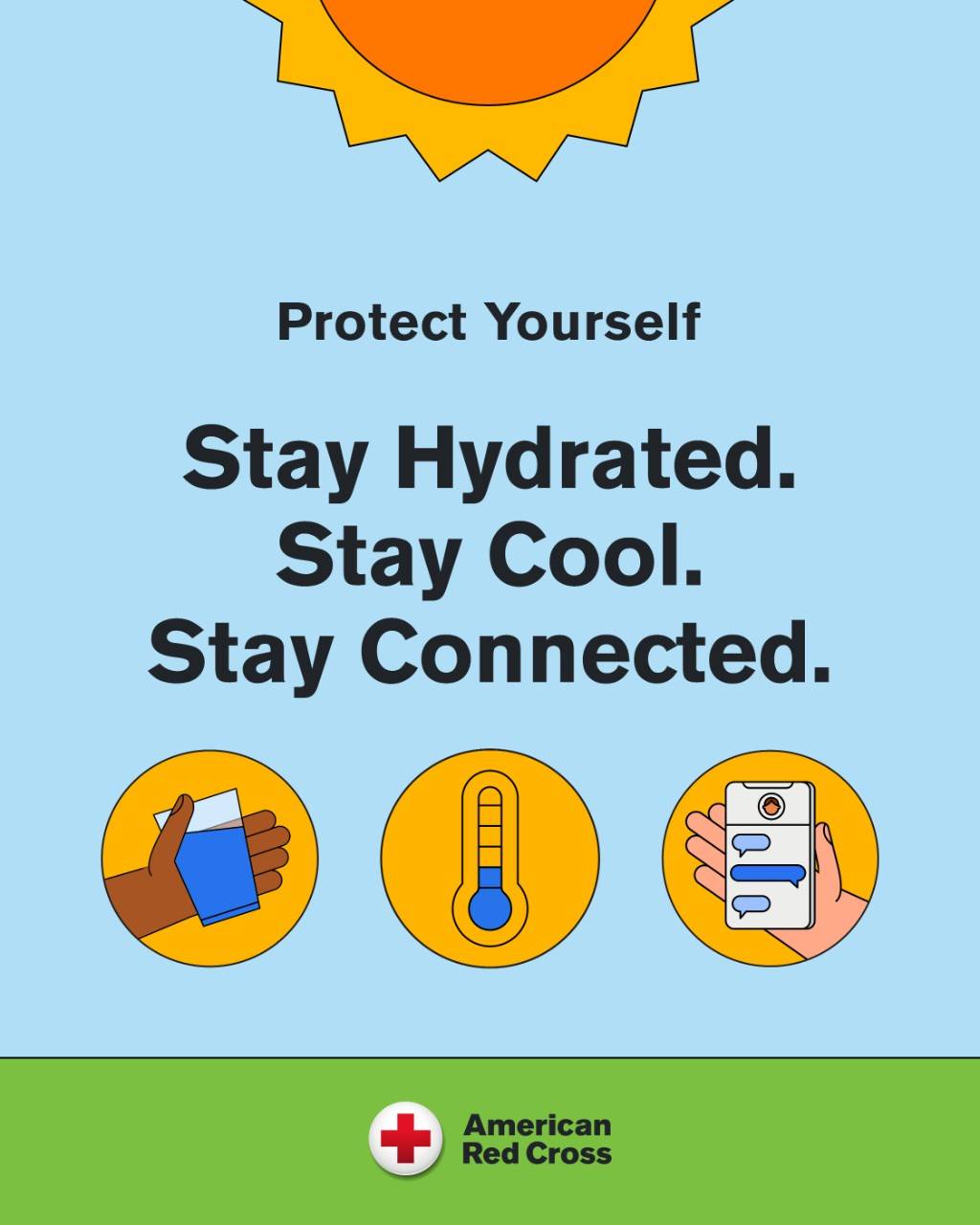
With warmer temperatures arriving quickly, the American Red Cross encourages everyone to take steps now to stay safe and prevent heat-related illness.
Steps to Take During Hot Weather
If you are unable to travel to cooler areas, the Red Cross recommends the following:
- Stay cool indoors: Seek air-conditioned spaces such as shopping centers, libraries, or community centers if your home is not air-conditioned.
- Stay hydrated: Drink plenty of water and avoid alcoholic beverages.
- Limit outdoor activity: Avoid strenuous activity during the hottest part of the day. If working outside, take frequent breaks in shaded or cool areas.
- Never leave children or pets in cars: Temperatures can rise to dangerous levels within minutes, even with windows open. Remember: Check the back seat.
- Check on others: Older adults, young children, and those with chronic health conditions are more vulnerable to heat. Reach out to neighbors, friends, and family members.
- Dress for the heat: Wear lightweight, loose-fitting clothing.
Waterways may offer relief from the heat, but safety is critical. Always wear a properly fitted life jacket. Water temperatures remain cold, typically in the 50s to low 60s, and cold water shock can happen quickly.
Increasing Heat Risk
Heat in the Pacific Northwest is becoming more frequent. Seattle historically averaged about three days per year reaching 90 degrees in the 20th century. In recent years, that number has increased, with more frequent and prolonged heat events.
The National Weather Service’s HeatRisk tool can help you understand potential impacts. This forecast tool considers how unusual the heat is, how long it will last, and both daytime and overnight temperatures to determine the level of health risk.
Dry Conditions and Wildfire Risk
Much of Washington is experiencing dry conditions, increasing the risk of wildfires as temperatures rise.
Hot, dry weather can quickly create dangerous conditions. The Red Cross encourages everyone to take precautions to prevent accidental fires:
- Fully extinguish campfires before leaving
- Follow local burn bans and fire restrictions
- Secure tow chains to prevent sparks
- Do not discard cigarettes or burning materials outdoors
Looking Ahead
Temperatures are expected to moderate by the middle of next week as cooler air moves in from the Pacific. However, seasonal outlooks suggest warmer and drier conditions will continue through mid-June.
Heat can develop quickly, especially early in the season when people may not yet be acclimated. Taking simple steps now can help prevent serious illness and keep you and your community safe.
Visit redcross.org for more information on how to prepare for extreme heat and other summer hazards.