Photo by Gregor Elgee, Northwest Region
By Gregor Elgee, Northwest Region
As powerful atmospheric rivers continue to batter the West Coast, state officials warned Saturday that flood risks remain across parts of Washington, even as some rivers begin to recede following weeks of relentless rain that have strained levees, damaged infrastructure and forced thousands from their homes. The warnings came during a press briefing held at the Washington National Guard Armory, where state, county and federal leaders outlined ongoing response efforts and the outlook for the days ahead.
Also present at the briefing was Megan Dulgar, Chief Executive Officer of the American Red Cross Northwest Region, who attended to coordinate with military and government officials as response efforts continue across the state.
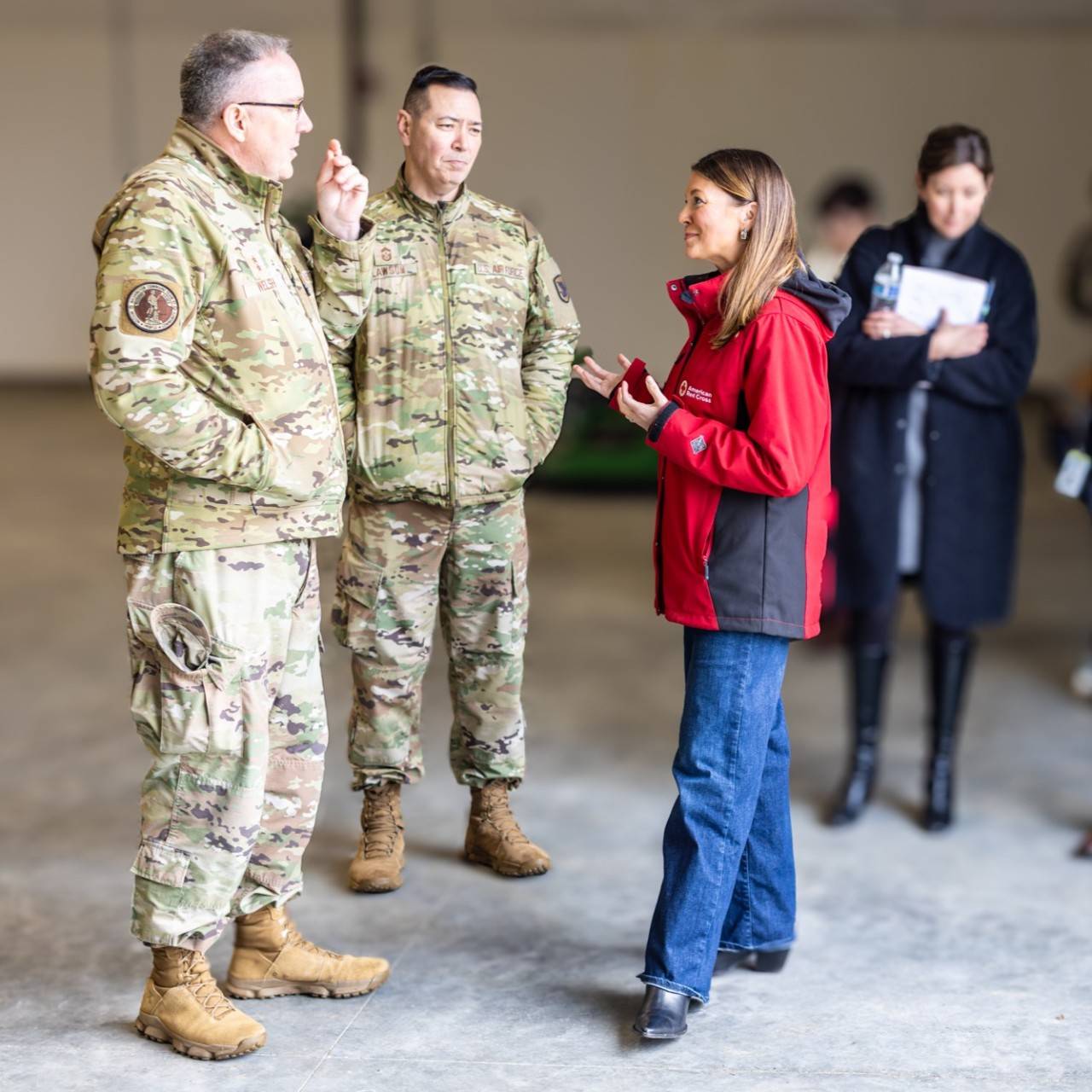
Photo by Gregor Elgee, American Red Cross
Speaking to reporters, Governor Bob Ferguson described the flooding as historic in scale, emphasizing that the cumulative impacts of prolonged rainfall have placed extraordinary strain on flood-control systems.
“The natural disaster our state is going through is historic in nature and will be a long-term event,” Ferguson said. “The sheer number of days and the sheer amount of water is historic.”
Ferguson said levee systems in King County and surrounding areas have experienced unprecedented stress, noting that while the risk of additional breaches has decreased in recent days, it has not disappeared.
“The risk of another breach has most certainly come down in the past week,” he said. “But that risk is still being described to us as moderate. In other words, the risk of a breach is still real.”
Flooding Part of Broader West Coast Emergency
The flooding in Washington is part of a larger regional emergency unfolding across the West Coast, where nonstop atmospheric rivers have caused flooding, landslides and widespread power outages in multiple states. Tens of thousands of people have been left without electricity after strong winds downed trees and damaged power infrastructure.
Heavy rains have pushed rivers back to flood stage, while landslides have cut off communities — particularly in areas previously scarred by wildfires, where unstable soil increases the risk of slope failures.
As western Washington begins cleanup and recovery efforts, forecasters say the storm system is shifting south, with additional impacts expected in Oregon and California in the coming days. Strong storms could reach California on Christmas Eve and Christmas Day, extending the threat through the end of the year.
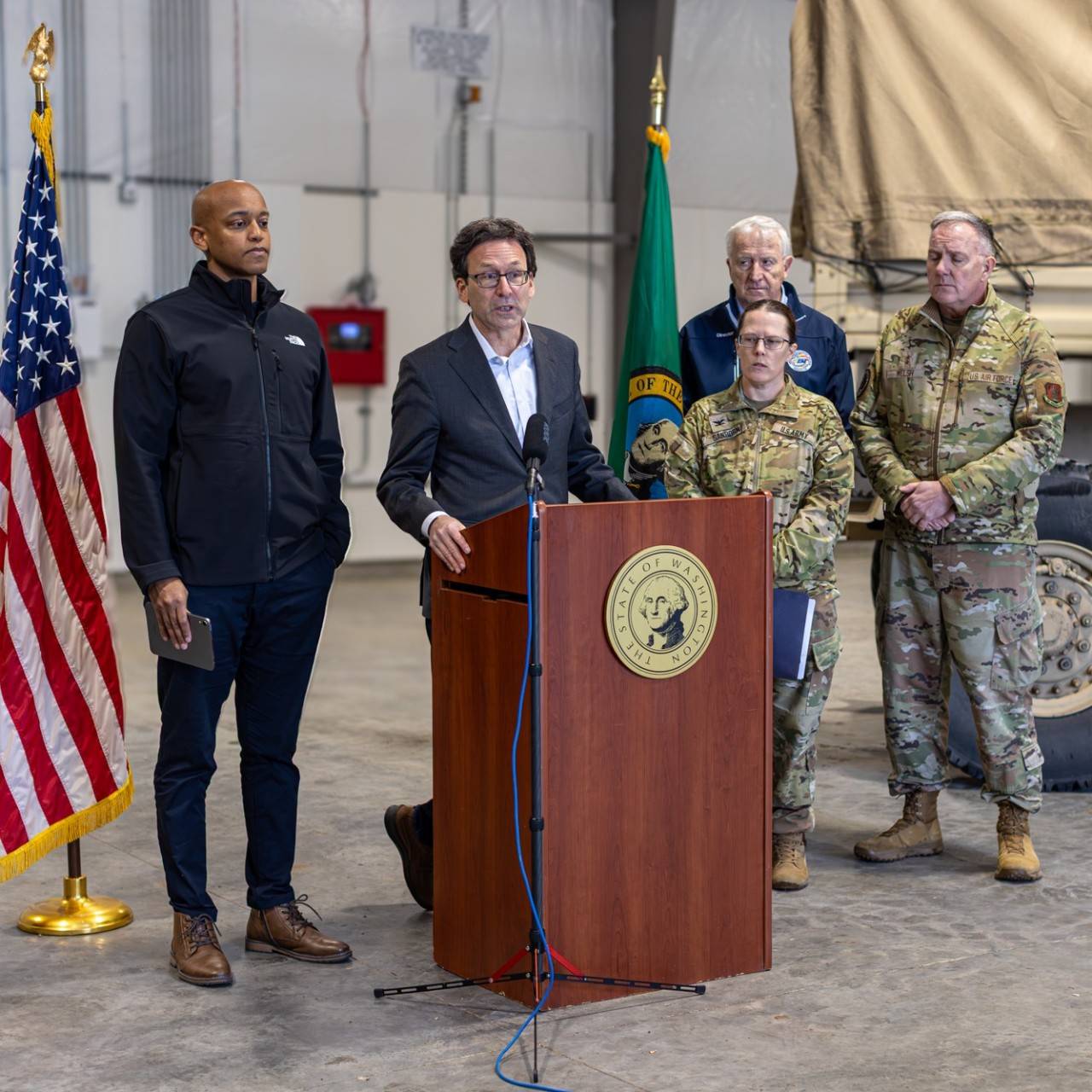
Photo by Kristin Goodwillie, American Red Cross
Red Cross Responding Across Washington and Beyond
As the situation continues to evolve, the American Red Cross is responding across several states while maintaining a significant presence in Washington.
In Washington alone, more than 300 trained Red Cross volunteers and partners have mobilized across 10 counties to bring urgent relief to people affected by last week’s catastrophic flooding. Since shelters were opened for this disaster, the Red Cross and its partners have provided 1,807 overnight stays across 21 emergency shelters.
With the help of partners, a total of 14,773 meals and snacks have been distributed, including 7,078 shelf-stable meals delivered to areas where other food resources are unavailable. Nearly 3,000 relief items, including comfort kits and essential supplies, have been provided to people in need, with 932 households served to date.
As storms continue to impact the West Coast, the Red Cross has also opened shelters in Colorado, Montana and Oregon, while pre-staging emergency supplies and response vehicles near potential impact areas to ensure a rapid response during the winter holidays. Disaster response leadership teams and volunteers remain ready to deploy.
Local Officials Stress Continued Vigilance
At the county level, King County Executive Girmay Zahilay said prolonged saturation remains a major concern for levee systems, particularly along the Green and White rivers.
“While floodwaters are receding, the levees have never experienced before the amount of saturation they’re experiencing for the duration that they are experiencing it,” Zahilay said. “That means they are strained.”
Zahilay said county, state and federal agencies are coordinating closely to monitor levees, stage emergency equipment and prepare for potential additional flooding.
“This is a dynamic situation,” he said. “There remains a moderate level of risk of levees breaching, especially with another weather system approaching us later next week.”
Red Cross disaster workers are supporting these efforts, including providing assistance at seven Emergency Operations Center locations across Washington State.
Federal Officials: Flood Risk Does Not End When Waters Recede
Federal officials echoed the need for continued vigilance, emphasizing that flood danger does not disappear immediately as water levels decline.
“The risk with levees decreases as the river levels drop, but it does not go away,” said Kathryn P. Sanborn, a colonel with the U.S. Army Corps of Engineers.
Sanborn said the Corps is conducting emergency levee repairs across multiple counties and managing dam operations to reduce downstream flood risk.
“Public safety is our number one priority,” she said. “We are committed to supporting our partners when requested.”
Watching the Days Ahead
Ferguson said officials are closely monitoring forecasts for another atmospheric river expected later this month, which could bring renewed pressure to already stressed systems.
“We are, of course, aware that another atmospheric river is in the forecast, which could arrive on December 28th,” Ferguson said. “We’re going to be monitoring that closely as we get more information and will share that with the public.”
As conditions continue to evolve, the Red Cross remains focused on meeting immediate needs while supporting communities through the early stages of recovery. Among the 311 trained Red Cross disaster workers supporting the response are 27 volunteers trained in health services, mental health and spiritual care, helping families cope with displacement and uncertainty during the holiday season.
Residents in flood-prone areas are urged to remain alert, follow evacuation orders and stay informed through local authorities. Information about open shelters and available resources can be found at redcross.org or through the Red Cross Emergency App.
Support all the urgent humanitarian needs of the American Red Cross.
Find a drive and schedule a blood donation appointment today.
Your time and talent can make a real difference in people’s lives. Discover the role that's right for you and join us today!