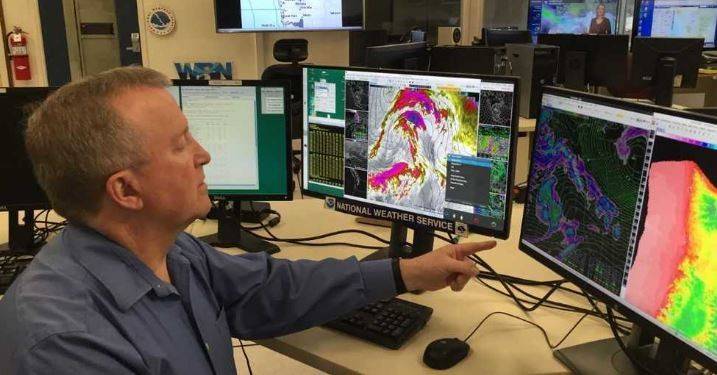
Ted Buehner at the Northwest Weather Service in Seattle.
On the morning of May 18, 1980, Mt. St. Helens erupted, killing 57 people and forever reshaping the Pacific Northwest.
For Ted Buehner, a forecaster on duty at the National Weather Service (NWS) in Seattle, it was a defining moment - one that would not only shape his career, but also help change aviation safety worldwide.
“It was a pleasant, sunny morning,” Buehner recalled. “People outside his Lake Union Building 7th floor window were walking dogs and getting coffee.”
Inside the NWS office, Buehner was working the aviation forecast desk, responsible for keeping aircraft safely moving across Washington State. Nearby on the desk sat a red emergency phone, one that had never rung.
But shortly after 8:30 a.m., it did.
“I answered, ‘Seattle Weather,’” Buehner said. A flight service specialist was on the line: “I have a pilot on the radio. I’m patching you in.”
The pilot’s message was urgent.
The mountain had erupted.
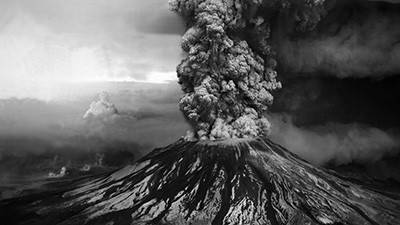
Photo Credit: Smithsonian Institution, National Museum of Natural History
He had been flying a sightseeing tour near Mt. St. Helens when the blast hit. “The plane went from horizontal to nearly vertical in just seconds,” Buehner said, recounting the pilot’s description. The pilot turned swerved south and regained control to escape.
Now he needed to get home safely and that’s why he was calling.
Using an ash plume trajectory forecast issued just hours earlier, Buehner informed him the ash cloud was moving east-northeast. If the pilot turned and followed the Cowlitz River north, he could return safely to Chehalis.
In the radio background, Buehner noted the 5 passengers on board were expressing what he called – R-rated language - in their close call with the sudden eruption.
The pilot turned and made it back safely.
Inside the weather office, the situation shifted instantly from routine forecast operations to emergency response.
A flash flood warning was issued for the Toutle River as a lahar surged downstream. Air traffic control was quickly notified to close airspace downwind of the volcano.
But before updating aviation forecasts across Eastern Washington, there was an unexpected challenge. “There was no aviation forecast code for volcanic ash,” Buehner said.
With no standard way to describe volcanic ash in airport terminal forecasts, the team improvised, temporarily using the aviation code for “dust” to signal the danger.
But volcanic ash is far more hazardous. It damages engines, sharply reduces visibility, and creates life-threatening conditions in moments. The eruption exposed a critical gap in aviation safety.
In the months that followed, that gap was closed. The International Civil Aviation Organization (ICAO) established a new designation: VA, for volcanic ash. That code is now used worldwide in aviation forecasts and alerts, helping pilots avoid one of the most dangerous airborne hazards.
Meanwhile, the eruption itself unfolded on an extraordinary scale.
The ash plume rose to nearly 80,000 feet, darkened skies across Eastern Washington, and circled the globe in the days that followed. Entire forests near the mountain were flattened. A massive landslide triggered a lahar that carried debris all the way to the Columbia River. The mountain lost more than 1,300 feet of elevation.
More than four decades later, the memory remains vivid.
“In any career, there are defining moments,” Buehner said. “For me, this was the first and one I will never forget.”
Why It Still Matters Today
The eruption of Mt. St. Helens shows how quickly disasters can unfold and how critical it is to be prepared.
Events like this have driven improvements in warning systems, communication, and safety standards. They also serve as a reminder for individuals and families to:
Preparedness and timely action can make all the difference when seconds count.
This story is adapted from a firsthand account by Ted Buehner, who was on duty at the National Weather Service in Seattle during the May 18, 1980 eruption.
Support all the urgent humanitarian needs of the American Red Cross.
Find a drive and schedule a blood donation appointment today.
Your time and talent can make a real difference in people’s lives. Discover the role that's right for you and join us today!