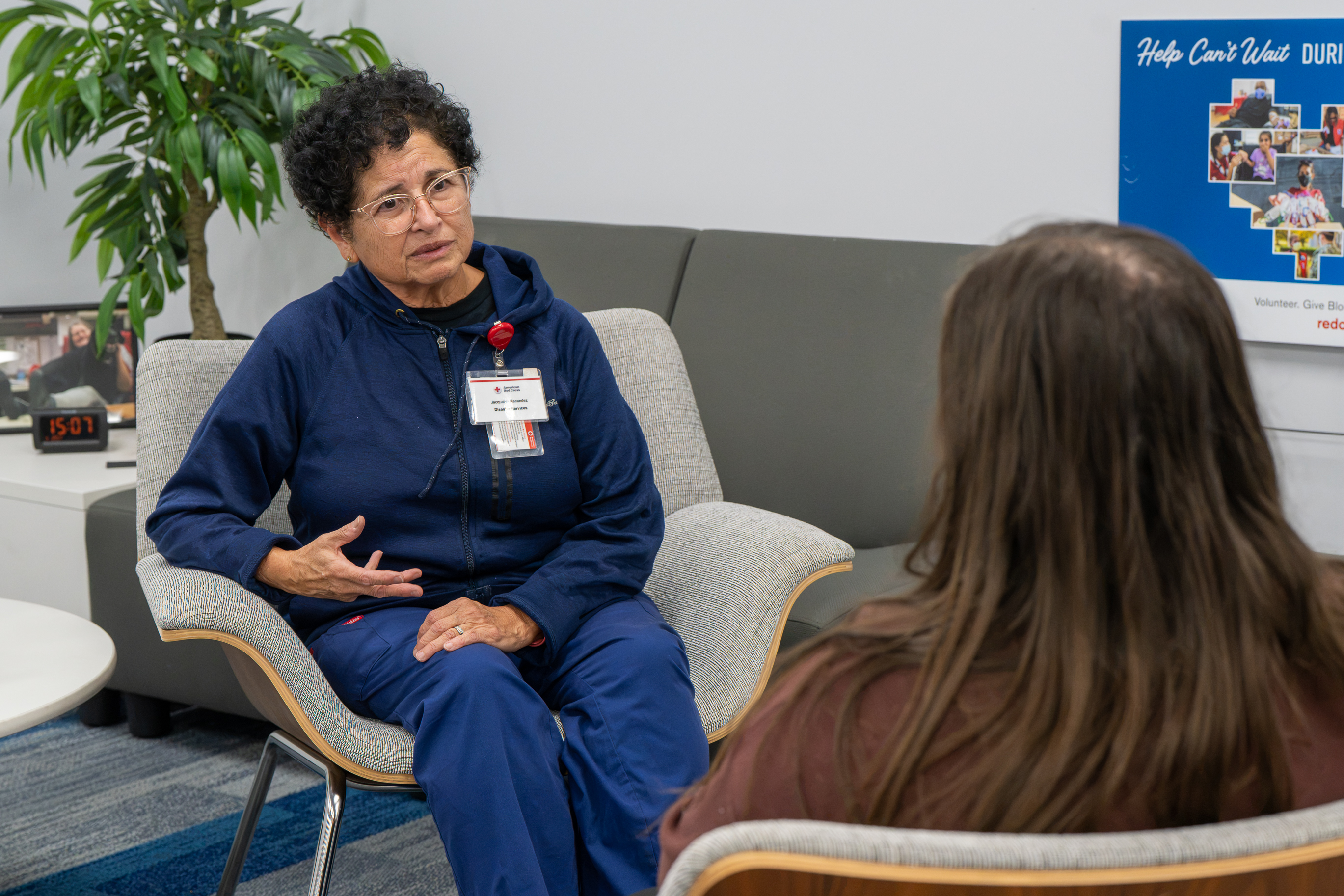
As a member of the Integrated Care and Condolence Team, Disaster Health Service volunteer Jackie Recendez (left), helps create space for understanding, support and a path forward. (Photos by Mimi Teller/American Red Cross).
Alexis Quevedo and Mimi Teller/American Red Cross
When a disaster claims a life, recovery looks different. Alongside overwhelming grief, families are often faced with urgent decisions and unfamiliar responsibilities. Funeral arrangements must be made; important documents may be lost or difficult to obtain and some families are searching for loved ones who remain missing. To help meet these needs, the American Red Cross Integrated Care and Condolence Team, known as ICCT, provides specialized support for people coping with the loss of a loved one, a critically injured family member or the uncertainty of someone who remains missing after a disaster.
The multidisciplinary team brings together volunteer Red Cross recovery caseworkers, Disaster Mental Health volunteers, nurses and Spiritual Care volunteers who work side by side to support families through the emotional and practical challenges that follow a tragedy. Before each visit, team members work together to understand a family's circumstances and identify immediate needs. By combining expertise from multiple service areas, the team can provide coordinated support tailored to each situation.
"We meet them where they are in their grief and remind them that they don't have to go through it alone," said Angela Albright, a Disaster Mental Health volunteer who has served on the team for three years.
Among the volunteers who serve on ICCT is Kevin Austin, whose nearly 12 years with the Red Cross have included assignments in disaster recovery, disability integration, disaster training and first aid instruction. While he has supported many areas of the Red Cross mission, he says ICCT work stands apart because families are often facing a long and complicated journey.
"When someone's house burns down, families usually spend a few days processing what happened and then begin focusing on recovery," Austin said. "When someone dies in a disaster, everything takes longer."
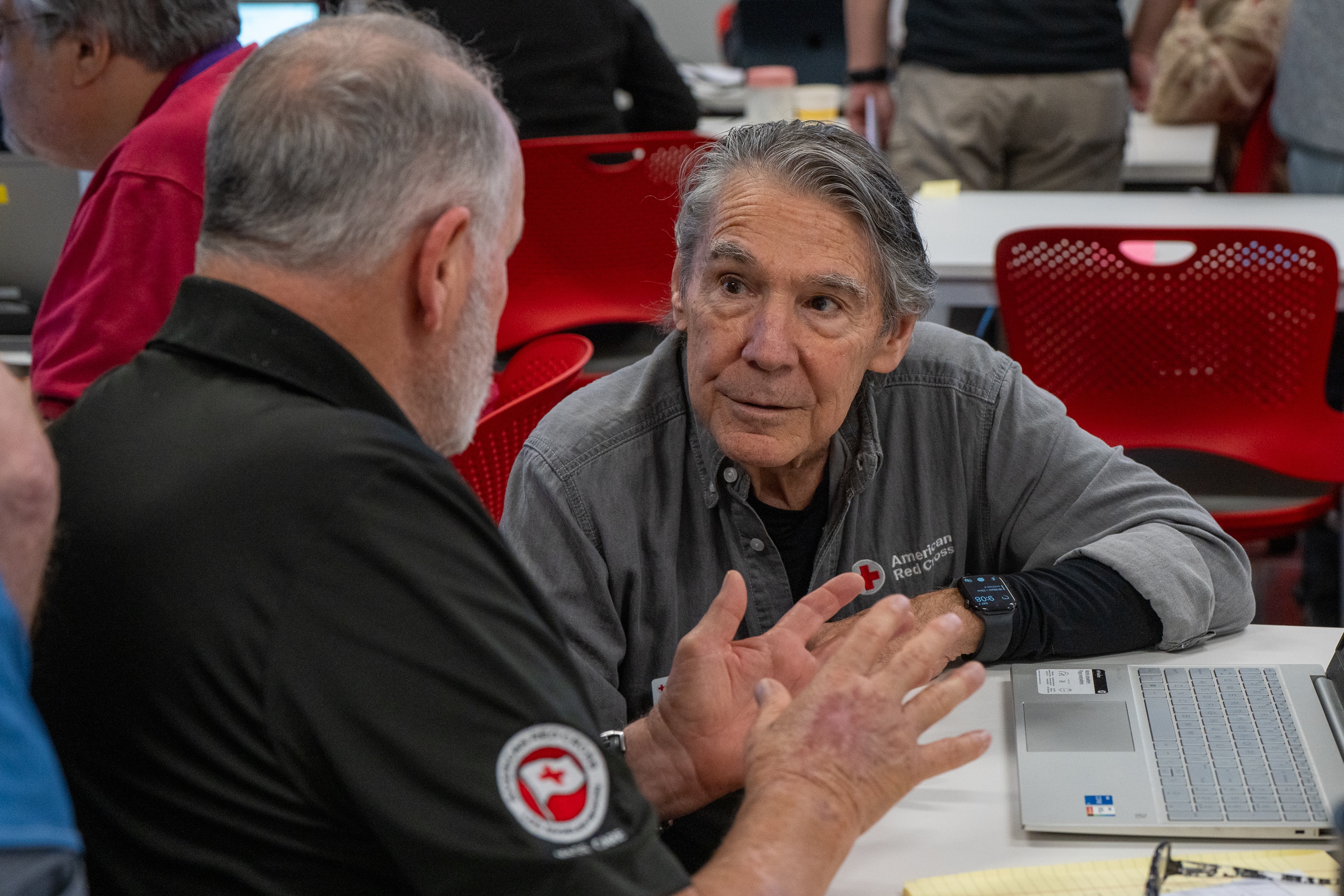
One of the first challenges families face is navigating the process that follows a death. "People don't realize it can take several weeks to receive a death certificate," Austin said. "People can't really move forward until they have that certificate because they need it for insurance claims, funeral arrangements and other matters." During that time, uncertainty can feel overwhelming. Austin says his role is often to help families focus on the immediate steps ahead while ensuring they receive ongoing emotional support.
"My job is to remind people to take things one step at a time," Austin said. "We help guide them through what needs to be done and in what order. We also make sure they're getting support from Disaster Mental Health."
That guidance often begins with a face-to-face conversation. Austin says personal connections are difficult to establish over the phone, especially when people are struggling to process what has happened. Sitting together creates space for honest conversations and helps families begin to regain a sense of direction during an incredibly uncertain time.
As trust builds, so does the opportunity for healing. Austin says he can often see a visible change in someone's demeanor as the conversation progresses and they realize they do not have to navigate the experience on their own. What begins as a difficult and emotional discussion frequently evolves into a genuine human connection.
"After a few minutes, I can often see someone take a deep breath and start to collect themselves," he said. "They begin to realize we're not there to take over. We're there to listen and offer guidance from our experience. At the beginning, it's a tough conversation; by the end, it's friends talking."
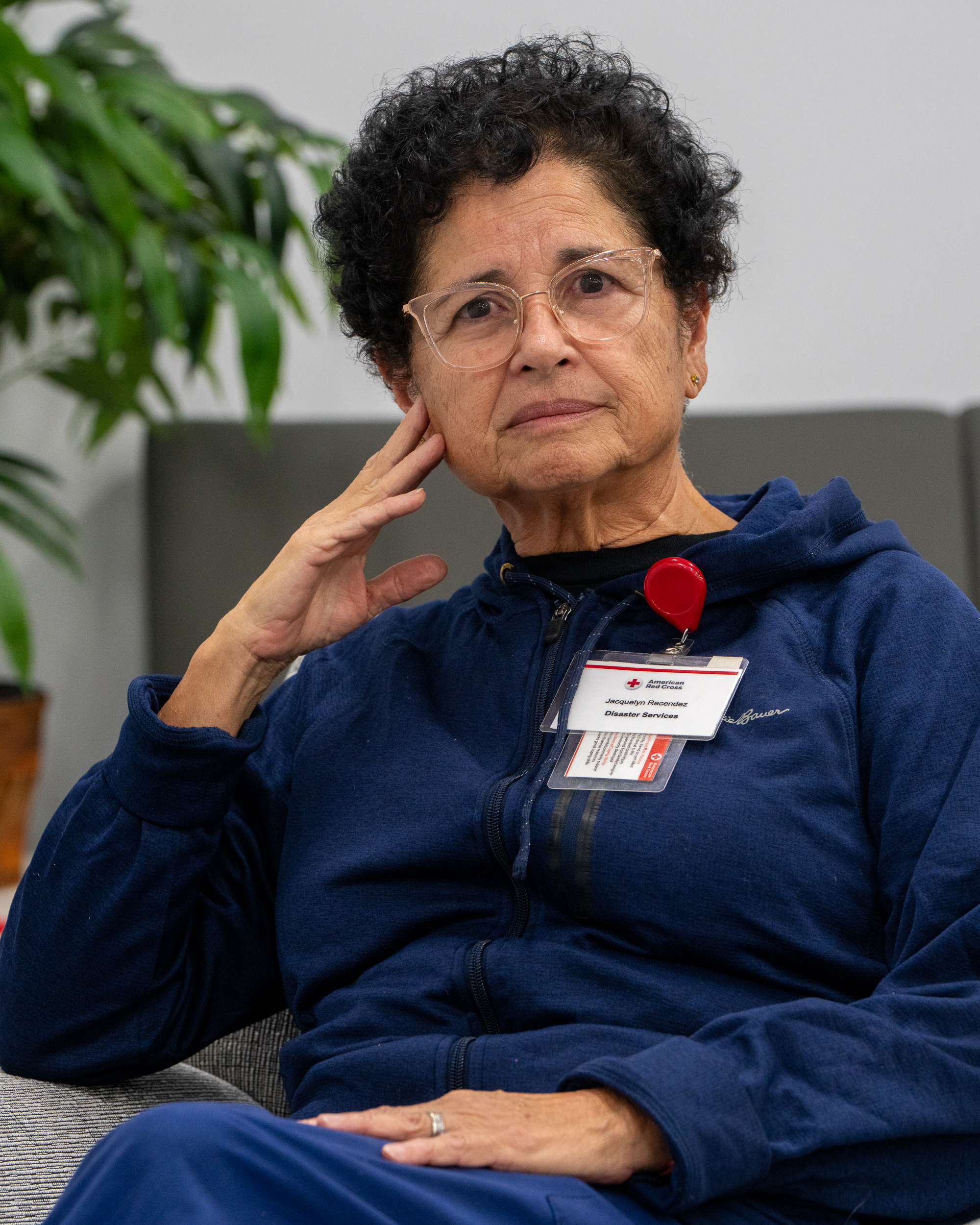
The team's support is grounded in compassion, but practical assistance is equally important. Volunteers help families replace important documents, connect with counseling services, navigate insurance questions, access financial assistance and identify community resources. For Jackie Recendez, a nurse practitioner and ICCT volunteer, each case requires a different balance of practical guidance and emotional support.
"Sometimes they need help organizing what comes next," Recendez said. "Sometimes they simply need someone who will truly listen."
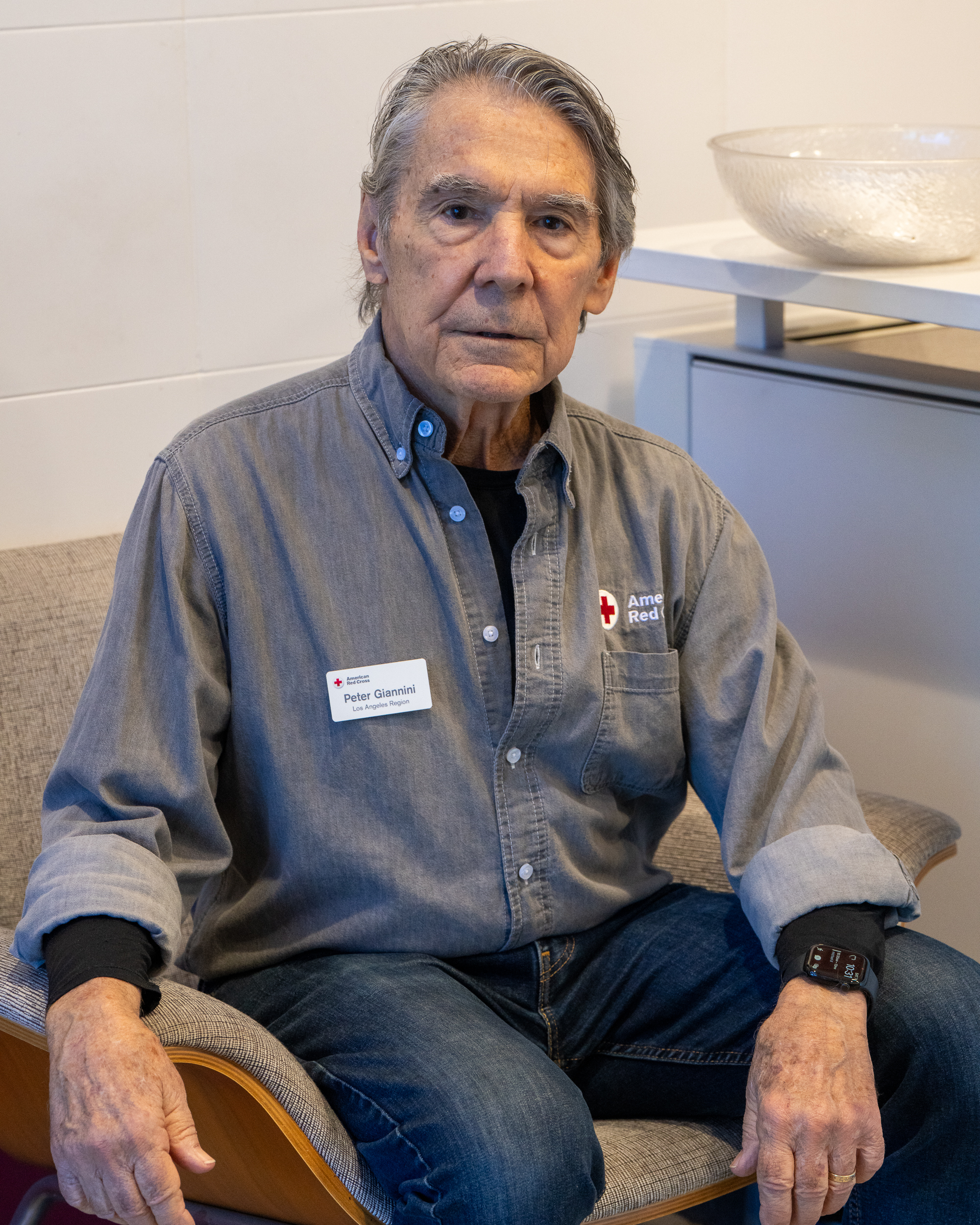
Peter Giannini, a recovery caseworker who has volunteered with ICCT for seven years, says that balance is essential. Families are often overwhelmed by grief at the same time they are being asked to make important decisions and manage unfamiliar responsibilities. By providing support in both areas, volunteers can help reduce some of the burden.
"People are overwhelmed with grief, and their ability to think through all the technical details is often compromised," Giannini said. "Our job is to walk alongside them and help them through it."
Austin remembers supporting a family member who was suddenly responsible for handling the affairs of a parent who died in a home fire. They had not been in close contact for years and were thrust into a situation filled with logistical responsibilities and complicated emotions.
"There were a lot of emotions tied up in the situation," Austin said. "We helped walk them through both the practical and emotional aspects of recovery."
Another case remains especially memorable. Austin met with a parent who had lost an adult child in a fire. Although a meeting had been scheduled, the parent arrived nearly 20 minutes late after struggling with whether they could face the conversation. Once the grieving parent arrived and the meeting progressed, trust began to build. At one point the parent went back to their care and returned from with photo albums and began sharing photos and stories about the child they had lost.
For Austin, moments like that capture the heart of the team's work. Supporting someone through grief rarely means solving a problem. More often, it means helping them find enough stability to take the next step forward.
"You can actually see the moment when someone takes a breath," he said. "Hopefully, they're a little better off than when they arrived."
Unlike many disaster services that last days or a few weeks, ICCT support often continues for more than a month. Team members stay connected as needs evolve, gradually reducing contact as families begin to regain stability. Austin says most ICCT cases last between 30 and 45 days, but every family's experience is different, and the team allows each case to progress at its own pace.
That long-term support is one of the defining features of the program. Over time, volunteers build relationships that often extend beyond traditional casework, helping families navigate both the practical realities of recovery and the emotional weight of loss.
"You build a deeper relationship in ICCT than you often do in other casework," Austin said. "At first, we're helping people understand what they need to do. But we're also helping them cope with tragedy and loss."
Whether they are helping someone navigate paperwork, connecting them with resources or simply listening as memories are shared, ICCT volunteers provide comfort, guidance and human connection during some of life's most difficult moments. Through care, compassion and collaboration, the team helps ensure no family has to face that journey alone.
For support from the Red Cross Integrated Care and Condolence Team, visit redcross.org or call 1-800-RED CROSS (1-800-733-2767). The team is available to provide guidance, resources and compassionate support for individuals and families coping with loss or navigating the aftermath of a disaster.
About the American Red Cross:
The American Red Cross shelters, feeds and provides comfort to victims of disasters; supplies about 40% of the nation’s blood; teaches skills that save lives; distributes international humanitarian aid; and supports veterans, military members and their families. The Red Cross is a nonprofit organization that depends on volunteers and the generosity of the American public to deliver its mission. For more information, please visit redcross.org or CruzRojaAmericana.org, or follow us on social media.
Support all the urgent humanitarian needs of the American Red Cross.
Find a drive and schedule a blood donation appointment today.
Your time and talent can make a real difference in people’s lives. Discover the role that's right for you and join us today!