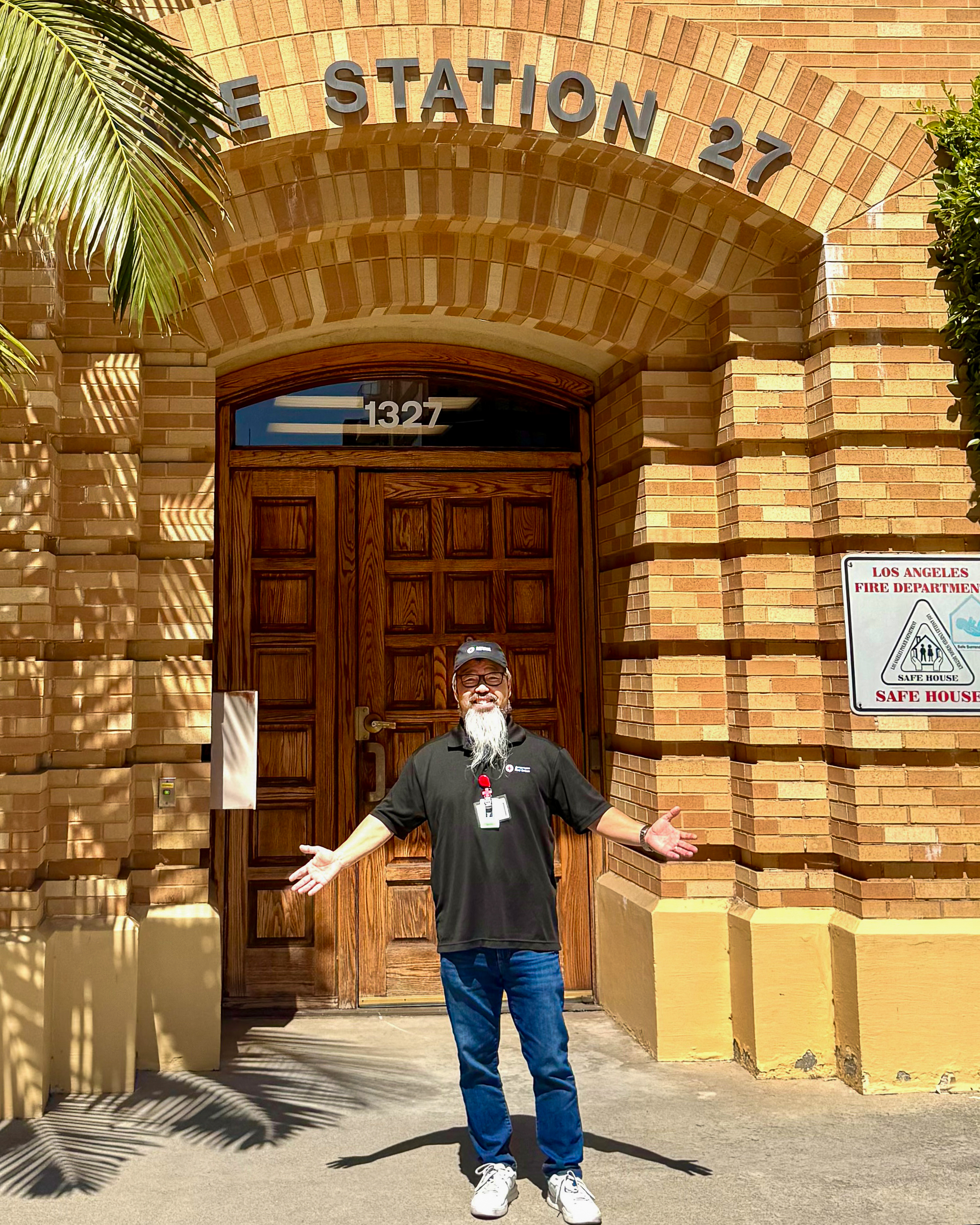
Ken Takata, a disaster action team volunteer and interim American Red Cross employee, stands outside Los Angeles Fire Department Station 27 during a pilot program designed to strengthen communication and coordination between the Red Cross and LAFD following home fires. Photo courtesy of Ken Takata/American Red Cross.
By Hannah Klain and Mimi Teller/American Red Cross
When a home fire happens, every minute matters. When Angelenos are displaced from their homes, or lose their homes entirely, a timely connection to American Red Cross support can make a big difference in someone’s life.
That goal was at the center of a pilot program that placed Red Cross volunteers inside the Los Angeles Fire Department's Metropolitan Fire Communications Center, known as Metro. Among those serving in the program was Ken Takata, a Disaster Action Team volunteer and interim Red Cross employee who brought years of field experience to a new environment.
Takata joined the pilot to better understand a challenge he had observed while responding to disasters. Not every home fire reported in Los Angeles results in a Red Cross notification. Working inside the LAFD dispatch center gave him an opportunity to see where those gaps occur and help strengthen communication between the Red Cross and our partners at LAFD.
As a call center liaison, Takata worked alongside LAFD dispatchers, floor captains and battalion chiefs while monitoring incidents that might require Red Cross assistance. He also visited fire stations throughout Los Angeles to talk with firefighters about Red Cross services and learn more about their operational needs.
At Metro, dispatchers handle thousands of emergency calls daily. The pace shifts quickly as personnel move from medical calls to structure fires and other emergencies. Takata monitored the computer-aided dispatch system, listened to incoming incidents and looked for situations where Red Cross volunteers could provide assistance.
Working inside the communications center provided a close look at the scale of emergency response operations. Takata said he was struck by the volume of activity and the professionalism of dispatchers, who managed high-pressure situations with focus and precision.
The pilot also created opportunities to connect people with assistance more quickly. Because Takata could observe incidents as they unfolded, he was sometimes able to initiate notification to Red Cross responders earlier than might otherwise have happened.
Just as important were the relationships built during the program. One conversation with a fire captain outside the busy dispatch floor helped Takata better understand leadership perspectives and operational challenges. Those discussions often opened the door to greater awareness of Red Cross disaster services and stronger collaboration between the organizations.
Another memorable moment came during the Palos Fire in Boyle Heights. After firefighters had spent long hours on scene, a battalion chief contacted Takata to request feeding support. He relayed the request through Red Cross channels and helped coordinate the response. The experience highlighted how ongoing outreach and relationship building can lead to practical support when it is needed most.
"Meaningful change happens through relationships” Takata said. “Informal discussions outside of active operations were often the most effective way to build trust, clarify misunderstandings about Red Cross services and explore practical improvements.”
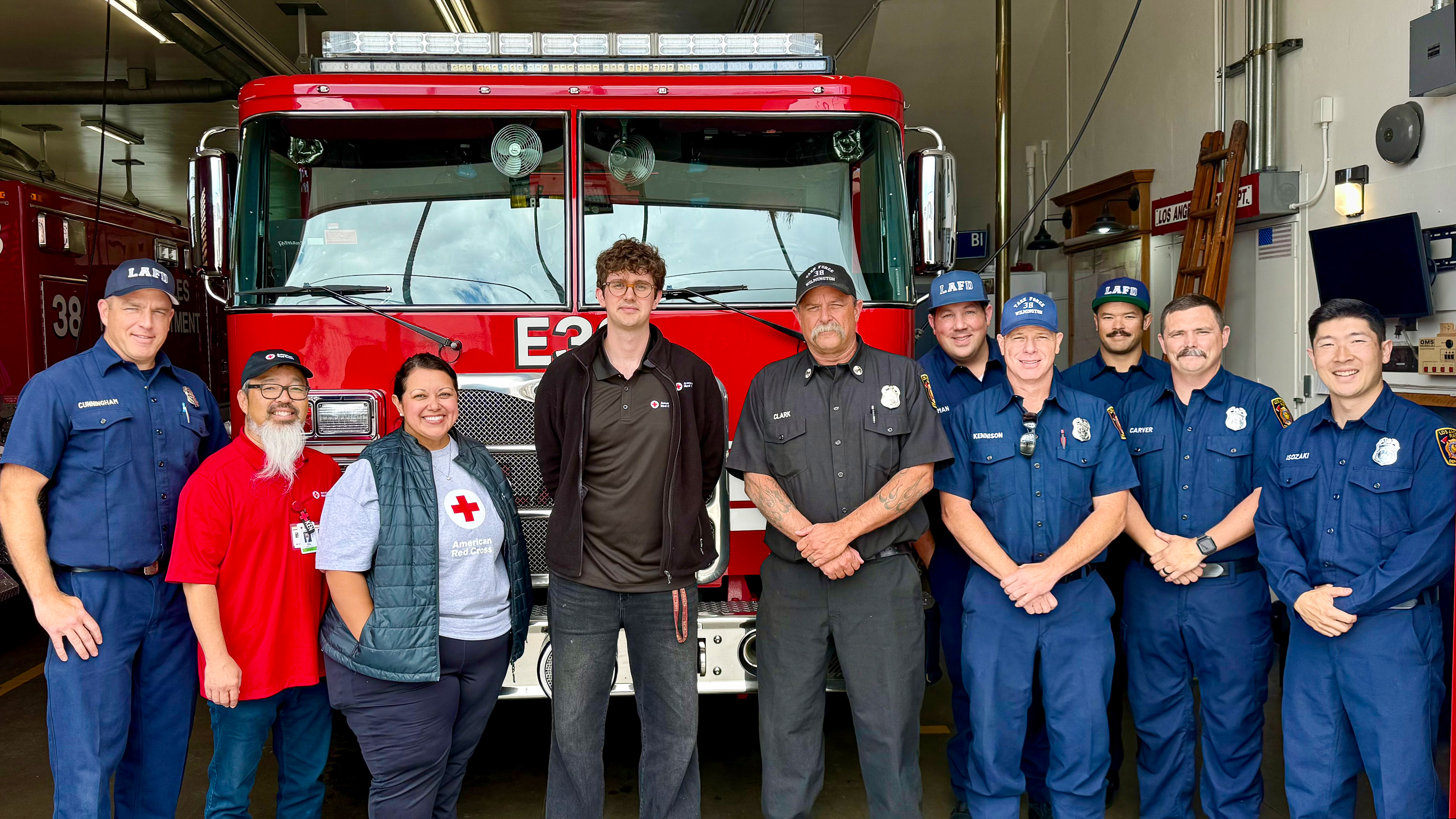
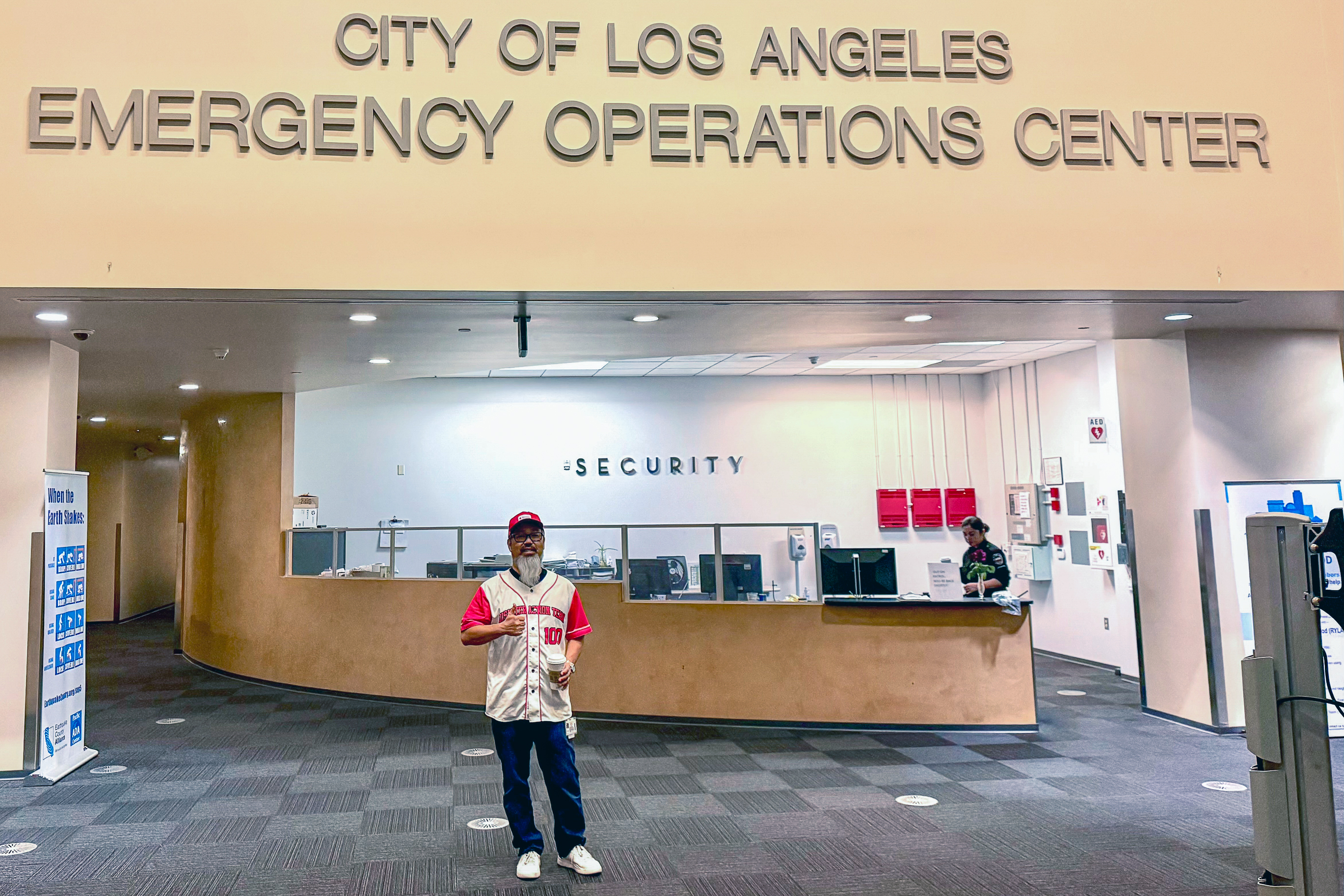
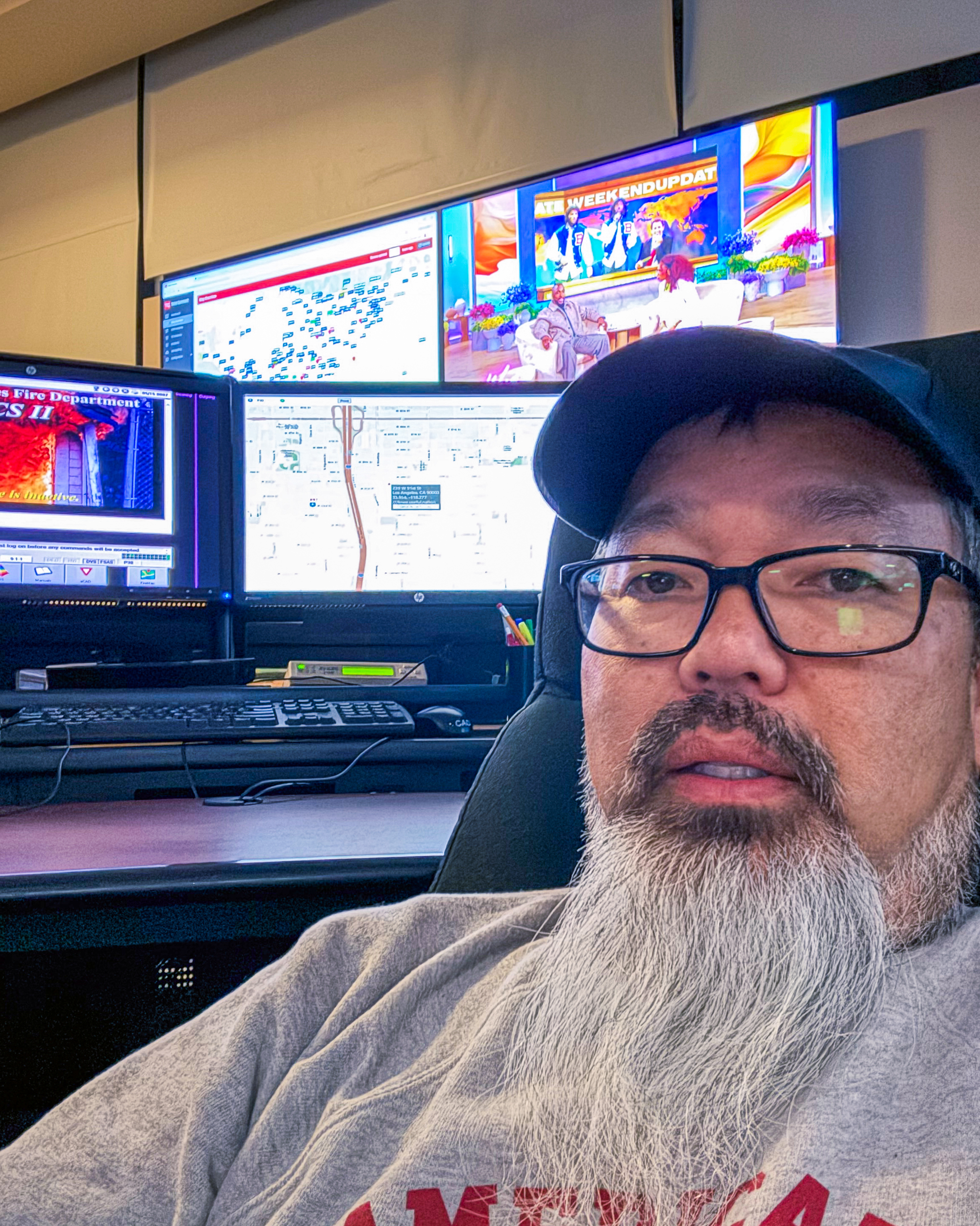
As the pilot concluded, Takata said the program provided invaluable learning opportunities for both teams, built a strong understanding between the Red Cross and LAFD, and identified opportunities to improve notification processes and coordination.
For Takata, the experience reinforced an important lesson: through collaboration, communication and trust, Red Cross volunteers and LAFD personnel are working together to help ensure more individuals and families receive support after a disaster.
About the American Red Cross:
The American Red Cross shelters, feeds and provides comfort to victims of disasters; supplies about 40% of the nation’s blood; teaches skills that save lives; distributes international humanitarian aid; and supports veterans, military members and their families. The Red Cross is a nonprofit organization that depends on volunteers and the generosity of the American public to deliver its mission. For more information, please visit redcross.org or CruzRojaAmericana.org, or follow us on social media.
Support all the urgent humanitarian needs of the American Red Cross.
Find a drive and schedule a blood donation appointment today.
Your time and talent can make a real difference in people’s lives. Discover the role that's right for you and join us today!