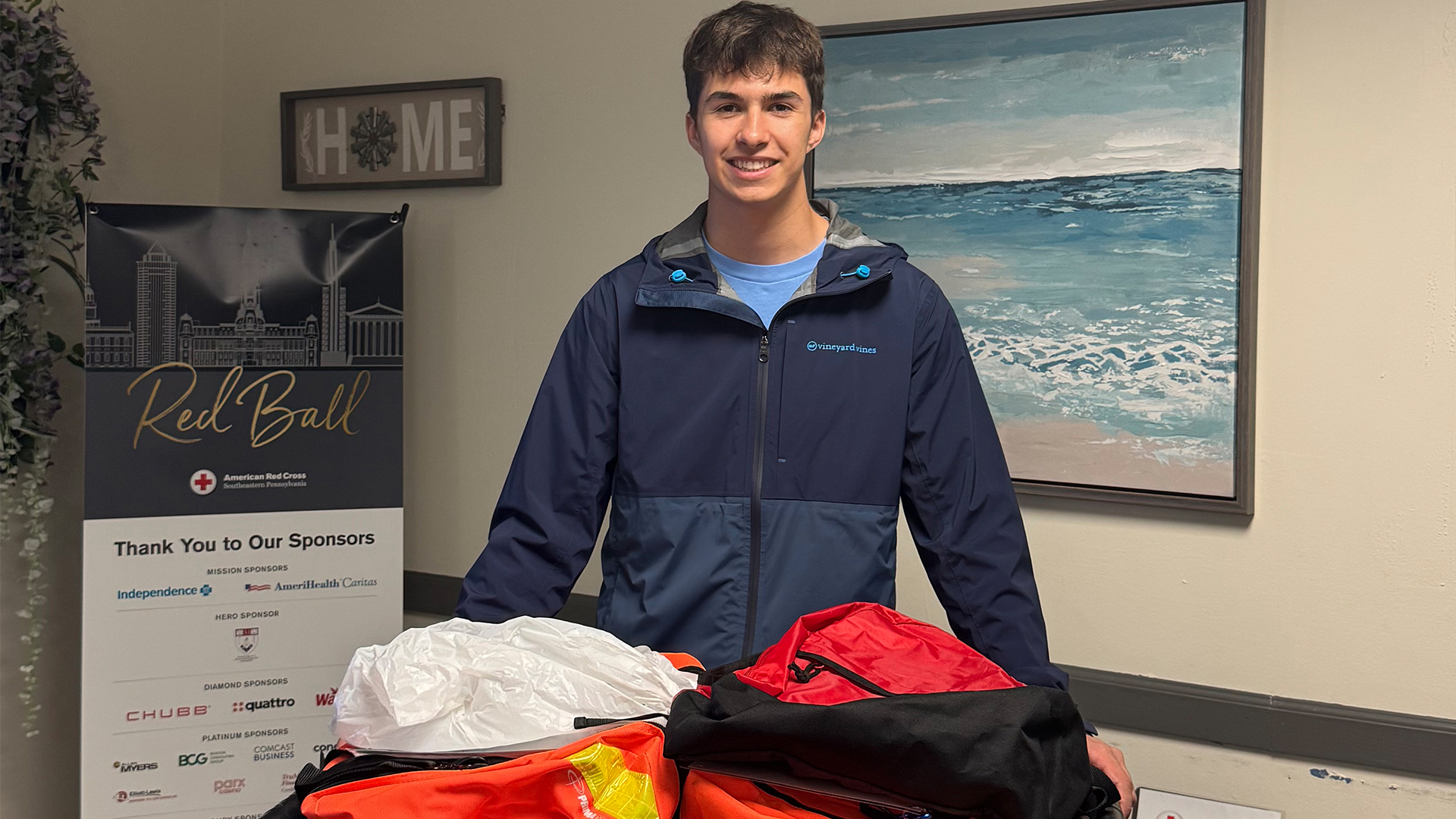
Ben Michel stands with the sensory go bags he built at the Red Cross House. The bags contain carefully selected items designed to reduce sensory overload and provide comfort in high-stress environments. Submitted photo
When disaster strikes, preparedness can mean the difference between chaos and comfort, especially for individuals with sensory sensitivities or disabilities. In Southeastern Pennsylvania, a new initiative is helping ensure that emergency response is more inclusive, compassionate, and effective. Thanks to the vision of local high school senior Ben Michel and a collaboration with the American Red Cross, sensory “Go Bags” are now available to support individuals with sensory needs during emergencies.
The Inspiration Behind the Project
Ben Michel’s senior project at The Episcopal Academy in Newtown Square, Pennsylvania, began with a passion for environmentalism and a desire to make a meaningful impact. As he explored the growing frequency and severity of natural disasters, including the recent California wildfires, his research expanded beyond environmental policy into the human realities of disaster response.
Through conversations with college professors and disaster experts, including reflections on Hurricane Katrina, Ben became aware of how often people with disabilities and sensory sensitivities are disproportionately affected during emergencies. Many are left without adequate support, not by oversight, but by systems not designed with their needs in mind. That realization shifted his focus from policy analysis to social action and led him to partner with the American Red Cross to explore inclusive disaster relief solutions.
Building the Sensory Go Bags
With a $2,400 grant from the Chuck Brian Fund, Ben worked alongside Red Cross collaborators Linda Scheuermann, Maurine Streeter, and Diane Grenz to create five sensory “Go Bags.” These kits are staged and ready for deployment during natural disasters across Southeastern Pennsylvania.
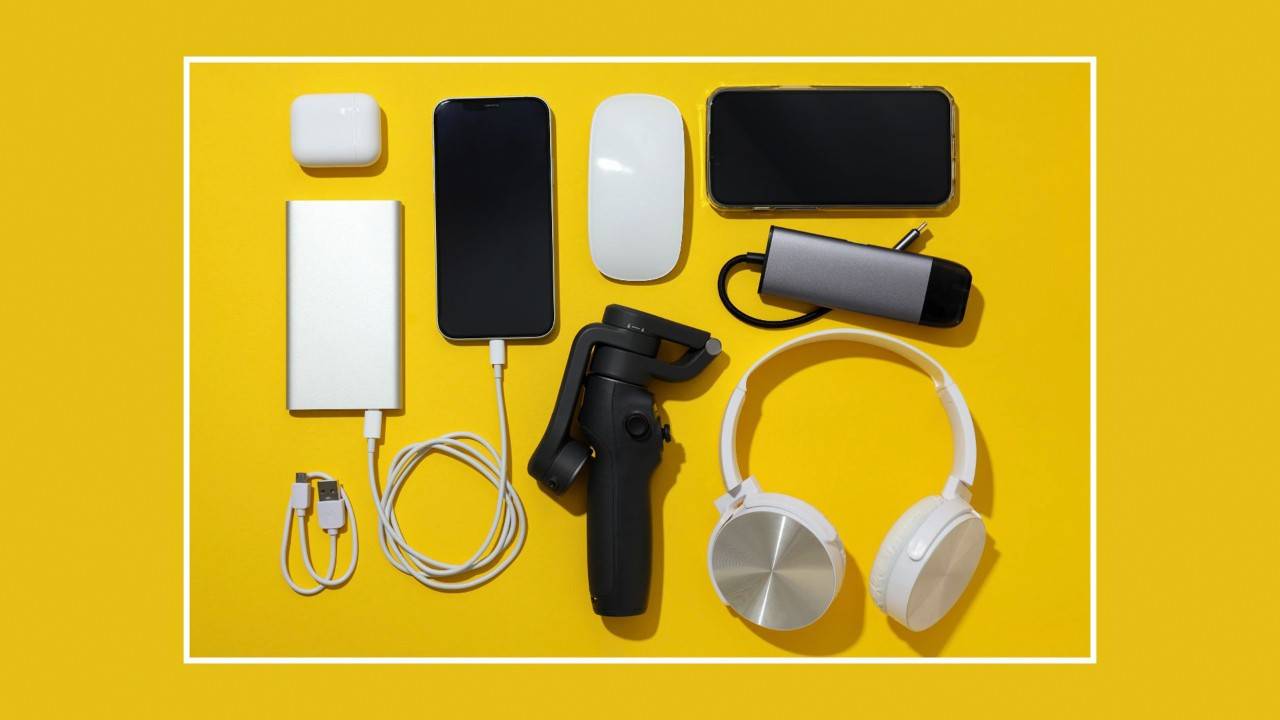
Each Go Bag contains carefully selected items designed to reduce sensory overload and provide comfort in high-stress environments, including noise-canceling headphones, weighted blankets, fidget toys, and other calming materials. The bags are intended to support individuals with a wide range of sensory sensitivities and disabilities—offering practical tools to help restore a sense of calm and safety during crisis situations.
Ben’s project resulted in three tangible outcomes: in-depth research, a formal report prepared for the Partnership for Inclusive Disaster Strategies, and the creation of the Go Bags themselves. Together, they represent a model the Red Cross envisions scaling for broader use in disaster response nationwide.
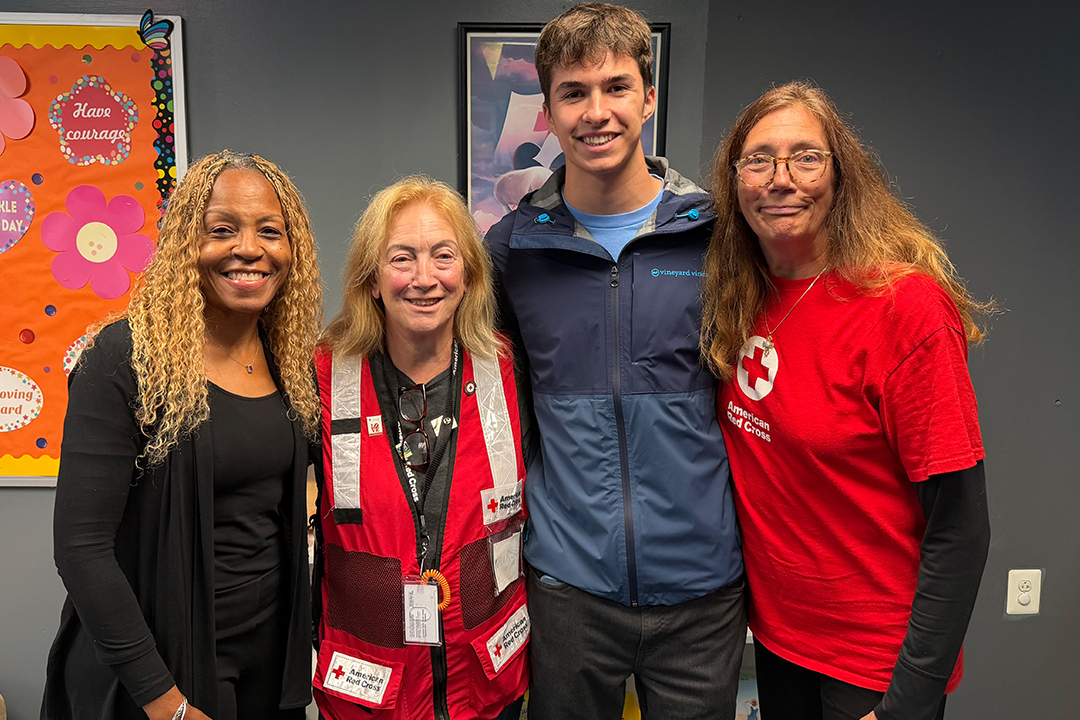
High school senior Ben Michel collaborated with the American Red Cross Southeastern Pennsylvania Region to create sensory go bags for the Red Cross House in Pennsylvania. Pictured (from left): Maureen Smith-Streeter, regional client care manager; Diane Grenz, disaster disabilities integration regional coordinator; Ben Michel; and Linda Scheuermann, disaster disabilities integration regional lead. Submitted photo
Building upon Strong Community Partnerships
This initiative builds on earlier momentum by the American Red Cross to support neurodiverse individuals and families during disaster recovery. In 2025, the Eagles Autism Foundation awarded a $25,000 grant to the Red Cross House in Philadelphia—a one-of-a-kind disaster recovery center in West Philadelphia where families can stay following a disaster.
That grant funded staff training and facility enhancements to better support autistic children and their families during emergency stays, most commonly following home fires. Trainers from the Kinney Center for Autism Education and Support at Saint Joseph’s University provided hands-on education to Red Cross staff, deepening understanding of sensory sensitivities and best practices for inclusive care. The funding also enabled the creation of quiet spaces, sensory-friendly play areas, and the purchase of specialized calming materials, many of which informed the design of the Sensory Go Bags.
Why Sensory Go Bags Matter
Disasters are stressful for everyone. For individuals with sensory sensitivities, the noise, crowds, unfamiliar environments, and loss of routine can be overwhelming. Sensory Go Bags provide immediate, practical support, helping individuals regulate, feel safe, and remain calm until additional assistance is available.
The American Red Cross responds to an emergency approximately every eight minutes. These kits help ensure that disaster relief efforts meet people where they are and that individuals with disabilities and sensory needs are not overlooked during moments when support matters most.
Looking Ahead
Ben hopes to pursue a future career that blends business, service, and advocacy for people with disabilities, scaling inclusive models like the Red Cross House to reach more communities. His project stands as a powerful example of how youth leadership, collaboration, and thoughtful design can drive meaningful change in disaster preparedness and response.
Get Involved
Visit redcross.org to learn more about disaster recovery services and local volunteer opportunities.
---------------
- Written by Terri Seydel
Support all the urgent humanitarian needs of the American Red Cross.
Find a drive and schedule a blood donation appointment today.
Your time and talent can make a real difference in people’s lives. Discover the role that's right for you and join us today!