By Gregor Elgee, Northwest Region
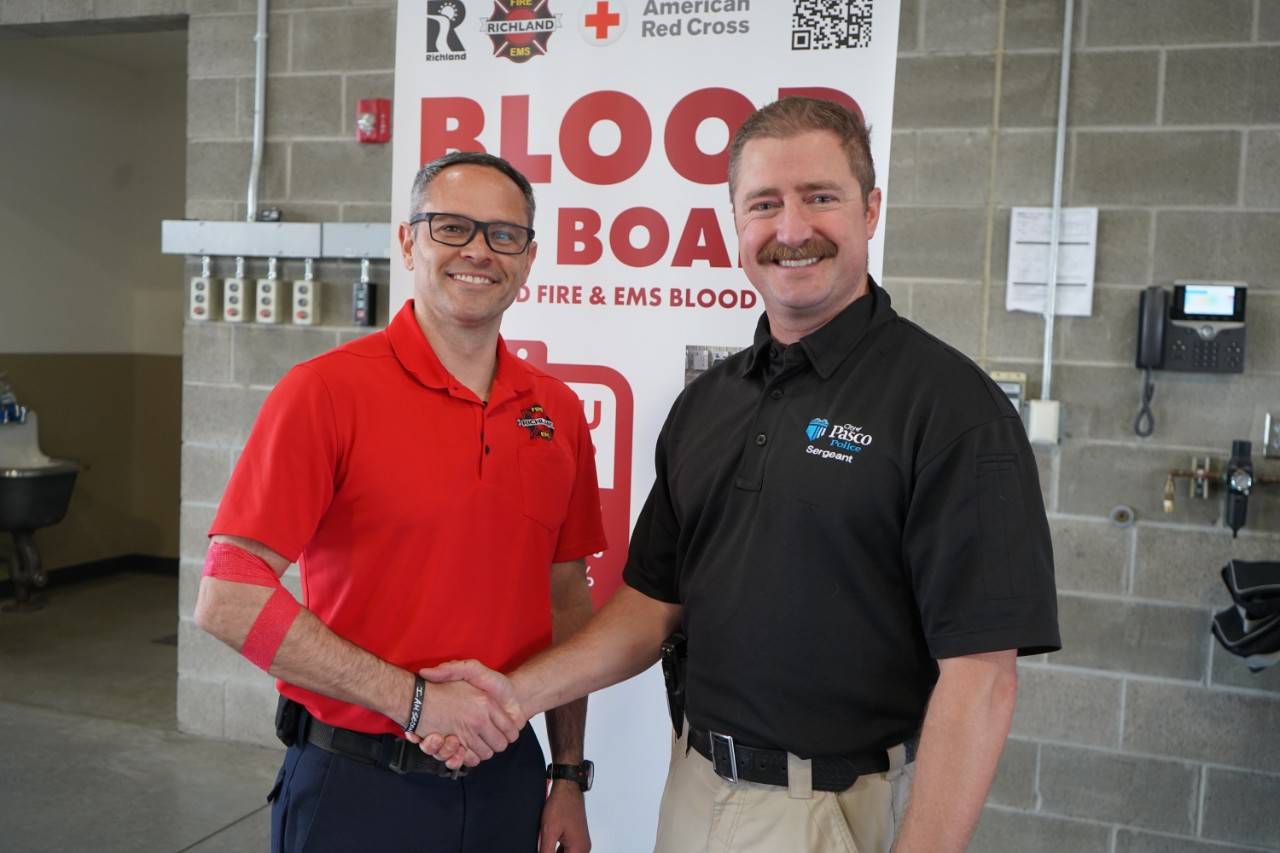
Richland Fire & Emergency Services is working to launch a prehospital blood program in partnership with the American Red Cross, an effort that could make donated blood available to patients before they even get to the hospital. As more EMS and air ambulance programs around the country begin carrying blood, Richland’s initiative reflects a larger shift toward getting lifesaving care to patients sooner, especially in cases involving traumatic injury or serious blood loss.
Severe bleeding after trauma remains one of the leading causes of potentially preventable death in the United States. Giving blood earlier can help stop bleeding from becoming harder to control. For Battalion Chief Andy Sabin, the value of the program is clear.
“There is no doubt in my head,” Sabin said, “that once we institute this, we will save somebody’s life that otherwise would not have been saved.”
Sabin said trauma patients will likely make up the largest share of people who could benefit from blood in the field, including people injured in car crashes, farm equipment accidents and other serious emergencies involving major blood loss.
While the idea may feel new, the ability to give blood before a patient reaches the hospital has been around for years. In many ways, Richland’s effort is part of a larger movement to bring lessons from military medicine into civilian emergency care.
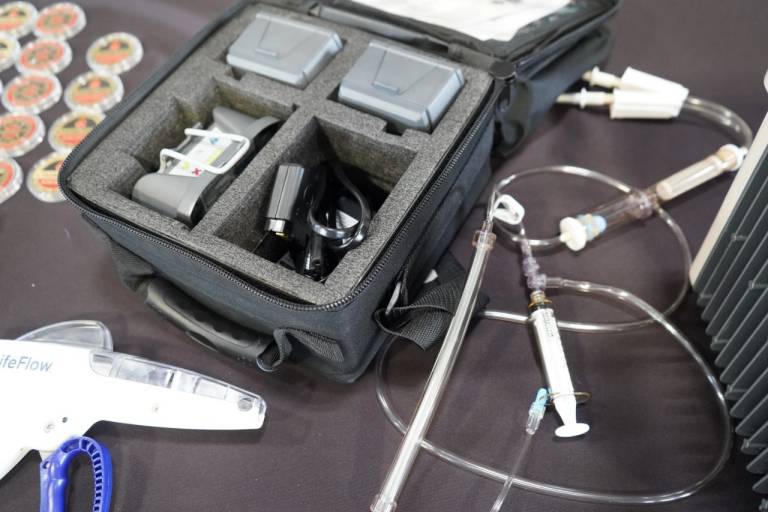
In practical terms, the process is not as unusual as it might sound. Sabin said paramedics are already familiar with giving someone an IV. “This is just basically a hot swap of that equipment to be able to initiate the blood,” he said.
Sabin said the learning this new skill won’t take long. “All of our paramedics can learn how to do [it] in one day,” he said. In other words, one of the most promising aspects of prehospital blood is that it does not require emergency responders to completely change how they work. Instead, it builds on skills they already use and adds a lifesaving capability that can be put into practice relatively quickly. If more EMS agencies across the country are able to adopt that model, the potential impact could be significant: a faster path to training, faster access to blood in the field and, ultimately, more lives saved before patients ever reach the hospital.
From the Red Cross perspective, that expansion marks an important shift.
“It is a newer venture for the Red Cross,” said Justin Yamada, an account manager with the Red Cross. He explained that the organization has long served hospitals across the country and is now placing more focus on prehospital partners as well, including ambulance companies, Life Flight providers and other organizations with the ability to transfuse blood products on the way to a hospital. “The overall intent,” he said, “is improving survival rates.”
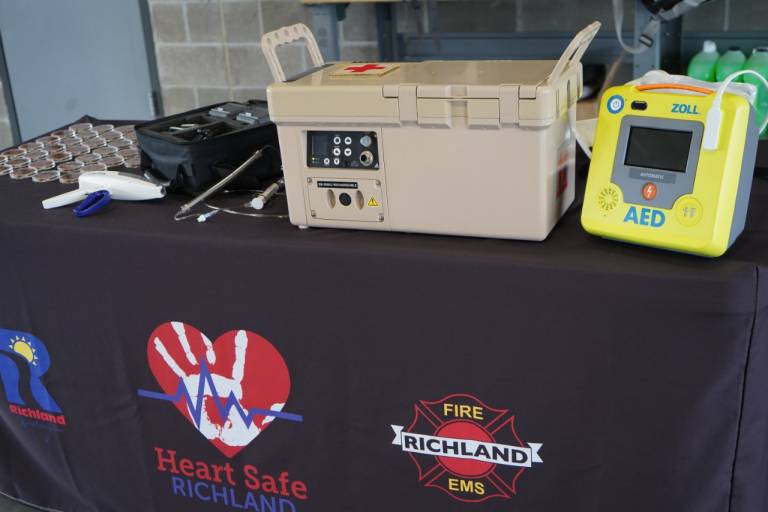
Sabin said Richland’s model is designed to be practical. The department plans to carry two units of blood in a temperature-controlled blood cooler placed on a centrally located command vehicle. When a critical call comes in, that vehicle can respond with the blood, bring it to the ambulance on scene and allow paramedics to begin transfusion in the field. If the blood is used, the department can coordinate replenishment. If it is not used, it can be rotated back into the broader medical system before it expires.
That kind of careful stewardship matters to both partners.
Sabin said Richland Fire wanted to make sure it was not simply taking blood out of the system without helping refill it. That is one reason the department has embraced local blood drives as part of the effort. “We’re going to make sure that we host blood drives and make sure that we’re contributing back to the system if we’re going to be taking any of it out,” he said.
Yamada said a stable blood supply is essential to making programs like this possible. He also said Richland Fire has stood out for the way it has approached the partnership.
“I have been highly impressed with their drive to deliver the mission on their end,” Yamada said. “They have even more of an opportunity to save lives now,” he said, “and be a part of the lifesaving mission with the American Red Cross and Richland Fire and EMS. We can’t do any of this without strong donations.”
Support all the urgent humanitarian needs of the American Red Cross.
Find a drive and schedule a blood donation appointment today.
Your time and talent can make a real difference in people’s lives. Discover the role that's right for you and join us today!