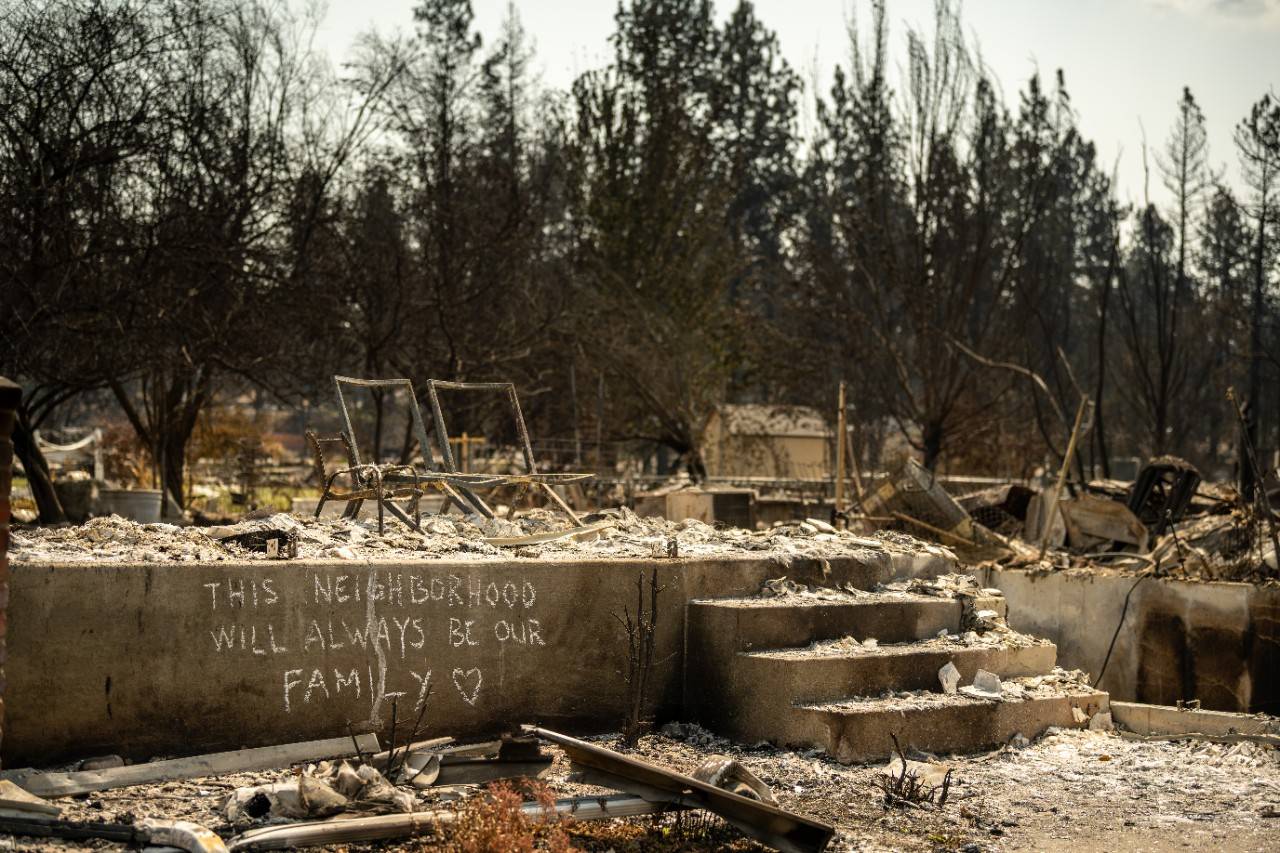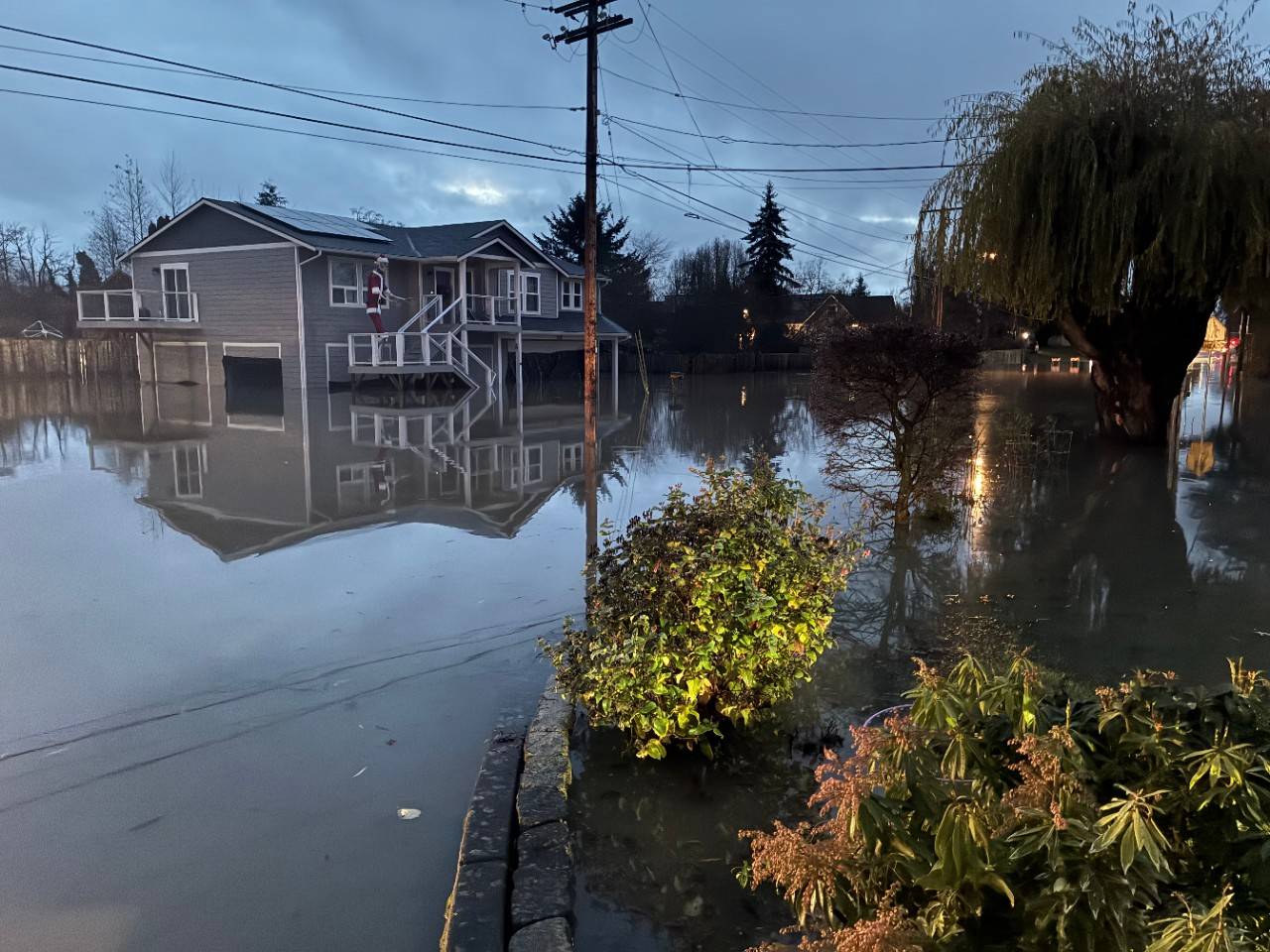
This photo shows flooding in Northwest Washington during Decembers flooding.
By Meteorologist Ted Buehner, Northwest Region
November is historically the wettest month of the year. It also ranks as the number one month for river flooding. The primary reason is that there is often little mountain snowpack to soak up those warmer rainy days when snow levels rise.
However, after a dry start to the month, November is well on its way to living up to its reputation as the wettest month of the year, as a parade of wet weather systems lines up across the North Pacific.
What Is An Atmospheric River?
As the Pacific Northwest moves through this flood season, that typically extends into March, the term atmospheric river will occasionally be used. What is an atmospheric river, also known as a pineapple express?
Atmospheric rivers bring the bulk of middle-latitude rainfall from the subtropics into both the Northern and Southern Hemispheres. Many atmospheric rivers do not result in river flooding, but some deliver heavy rainfall over several days, along with elevated snow levels in the mountains, resulting in swelling rivers.
Some of the more prolific atmospheric rivers in recent years sparked the major floods of November 1986, November 1990, November 1995, November 2006, January 2009, November 2015, November 2021 and just last year in December. Total rain amounts in the Cascades reached as high as 30 to 40 inches of rain. Snow levels also rose to between 6,000 and 8,000 feet for these warm, wet events.
Notice that many of these significant flood events from an atmospheric river occurred in the month of November. November is the number one month for river flooding.
Once a mountain snowpack is established during the winter season, the snow acts like a sponge and absorbs much of the warmer rain. Only lower-elevation snow contributes to runoff into rivers. As a result, significant flooding can and does occur from December into March, but often less frequently than in November.
Moisture from the subtropics frequently moves into the middle latitudes around the globe, including the Pacific Northwest. If you are interested in monitoring the latest developments in this transport of moisture north into the North Pacific, there is a helpful and very illustrative weather satellite loop showing what is called precipitable water. Be sure to adjust the dates to your desired range. In this satellite weather loop, the North Pacific and the Pacific Northwest are in the upper middle of the images.
Also, once soils reach full saturation, these kinds of heavy rain events can trigger landslides.
Red Cross Response and Support
The American Red Cross responds to those in need of help during significant flood events such as those experienced last December. The response offers shelter, food, and comfort to those who have had to evacuate flooded areas.
There are steps that can be taken to better prepare for flooding. The Red Cross has helpful guidance on its flood preparedness webpage: https://rdcrss.org/3XoRMHY
What Is a 100-Year Flood?
During the flood season from late October through March, when many rivers can rise well above flood stage, the term “100-year flood” can be used. What does that mean really mean though?
The term “100-year flood” is often misunderstood. Some people think, “I just survived a 100 year flood, so I am good for another 99 years.” However, that is not the case.
The term actually means there is a 1% chance of this kind of significant flood on a specific river in any given year.
As an analogy, imagine a six-sided die. What are the odds of rolling a four? One in six, right? Now roll it again. What are the odds of getting a four again? The same - one in six.
Those odds are the same for a 1% chance flood, or 100-year flood. If there was a 100-year flood this season, next season there is still the same 1% chance of another 100-year flood. That situation has occurred a number of times in Pacific Northwest history.
As always during flood season, remain vigilant and prepared in case there is an extended heavy rain event resulting in significant flooding. Each season, there is a 1% chance of a 100-year flood on each of the region’s rivers.
Flood season is an annual reality in the Pacific Northwest, but preparation can make a significant difference. Taking steps now to understand your flood risk, create an emergency plan and build an emergency kit can help keep you and your loved ones safe when waters rise.
Support all the urgent humanitarian needs of the American Red Cross.
Find a drive and schedule a blood donation appointment today.
Your time and talent can make a real difference in people’s lives. Discover the role that's right for you and join us today!