By Airik Myers, Northwest Region
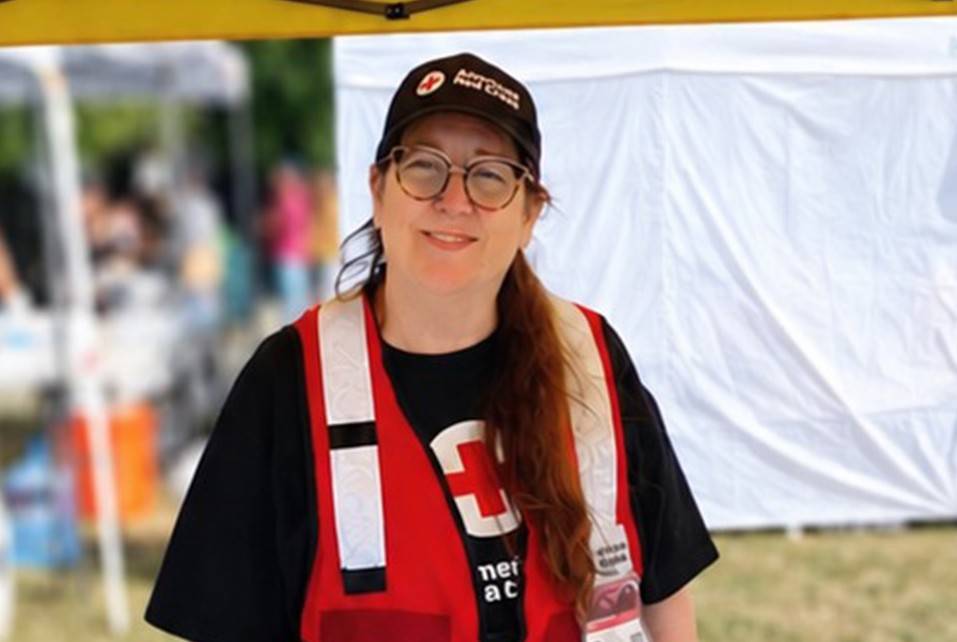
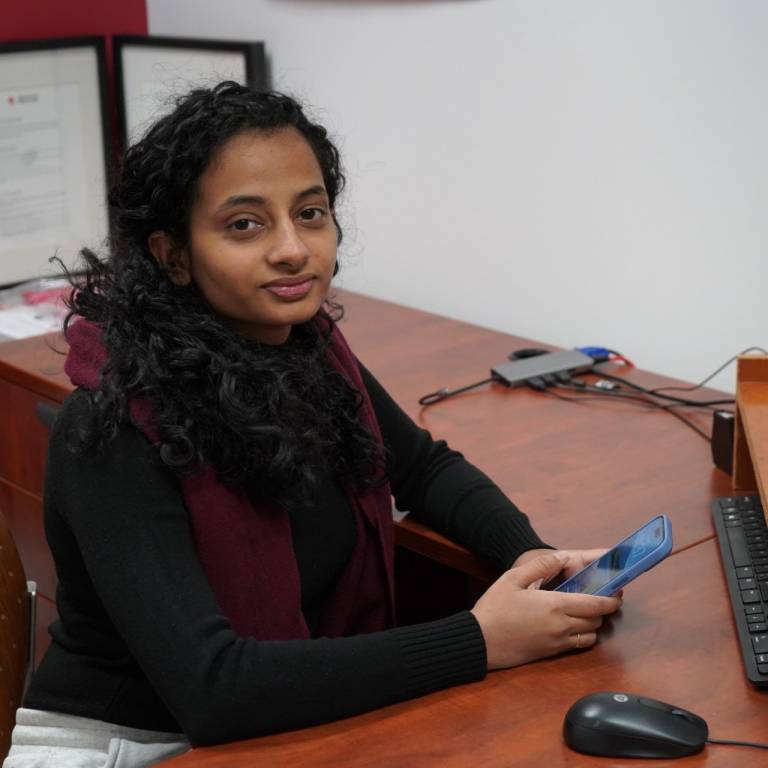
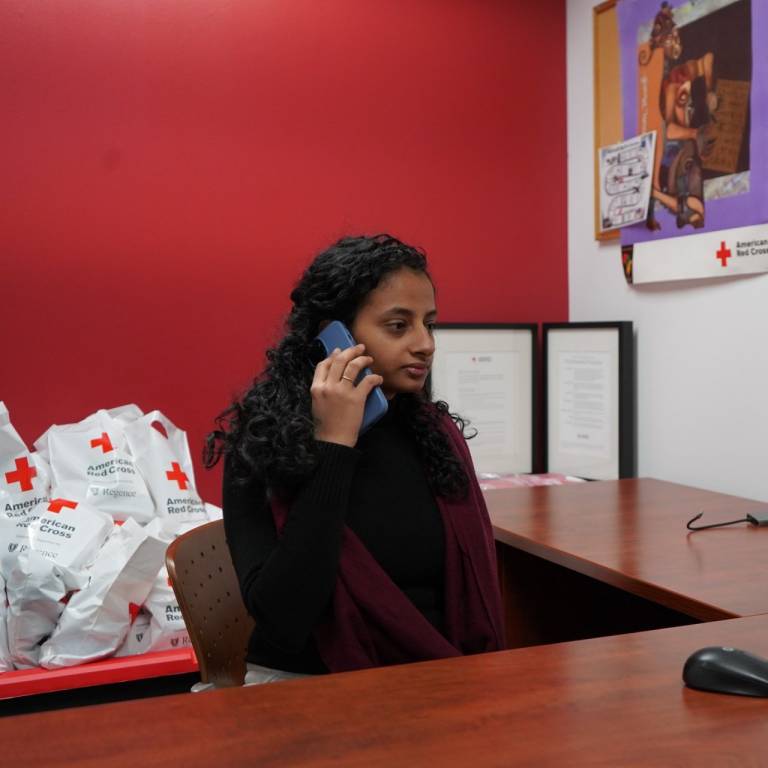
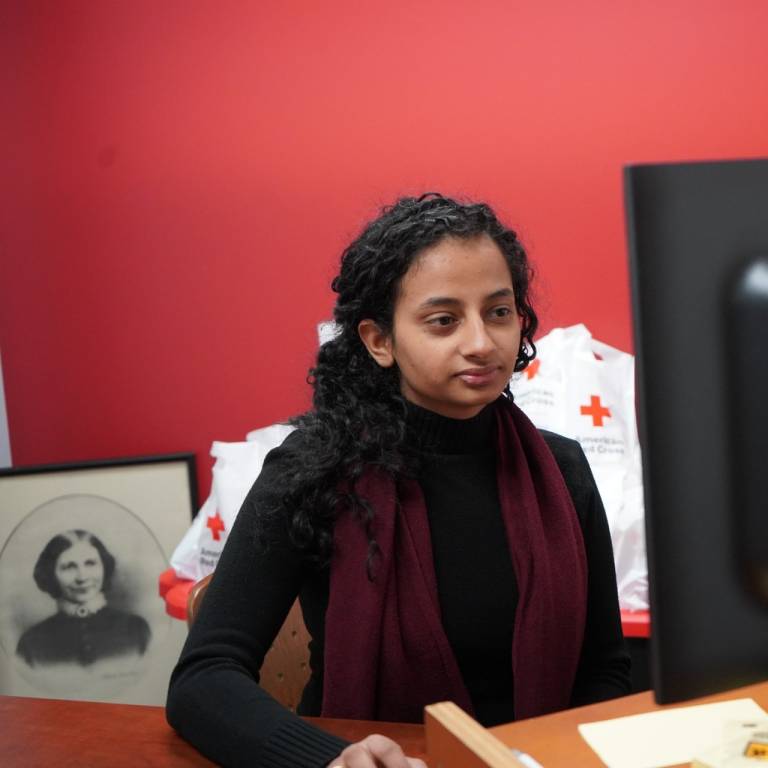
When Sujata Pokharel moved from Nepal to Seattle to begin a master’s program in sustainability at Harvard Extension School, she knew she wanted to stay connected to meaningful work. She had grown up hearing about the Red Cross and its global impact, so when her husband told her about the Restoring Family Links (RFL) program, she felt an immediate pull to get involved.
“I wanted to engage with the Red Cross because helping people reconnect with their families felt meaningful,” she said.
Sujata joined the RFL team in June 2025 and has been supporting cases ever since, even while balancing graduate studies and an international internship. For her, the mission resonates on a deeply personal level. She grew up in a rural village in Nepal where family extended far beyond the home. Neighbors were relatives in spirit, and the community functioned as one interconnected whole.
“Family is very important in my culture. Everyone in my village felt like family,” she said. “So when I see people who have lost contact with their loved ones, it is sad. I feel grateful that we in the Red Cross can help rebuild those connections.”
The Importance of Community and Service
Sujata's childhood was also shaped by Nepal’s civil war, a time when many families in her region lost contact with relatives. Although her own family remained together, she had witnessed the emotional toll that separation took on those around her. Those memories stayed with her and continue to guide her work today.
Before coming to the United States, Sujata worked as a cancer research scientist. While the work was important, she felt distant from the people she hoped to help. “I wanted more direct impact,” she said. “That is why I shifted my career path and why I decided to volunteer with the Red Cross.”
Her graduate studies reflect that same commitment. During a recent internship back in Nepal, she worked with a climate activism and research organization focused on the challenges facing farmers, many of whom are on the frontlines of climate change. She conducted field research, listened to the indigenous people, and even brought their stories to the 2025 U.N. Climate Change conference (COP30) in Brazil.
“When you are in the community, you see things differently,” she said. “People with little formal education have so much knowledge. Listening to them changed my perspective.”
Climate-driven disasters have affected Sujata’s own family as well. During recent unseasonal flooding in Nepal, her parents lost half of their rice harvest. Roads closed, homes were destroyed, and communities were cut off. “These are the kinds of stories that often do not make the news,” she said. “My family was fortunate, but many others lost everything.”
She also remembers the 2015 earthquake in Nepal, when her entire community lived together in a large tent for months, sharing food and supporting one another. “That communal support gives me hope. People helped each other without expecting anything in return.”
Why Restoring Family Links Matters
For someone who has seen firsthand how a crisis can separate families, RFL’s mission within Red Cross feels especially important. “RFL is about connecting people who have lost contact with their family because of disasters, wars, or other crises,” she said. “It is very valuable work.”
She believes many people in the United States do not realize how often family separation happens globally or that the Red Cross offers this service. “Even I did not know about RFL before joining,” she said. “People know the Red Cross for blood donation or disaster response, but not this.”
Despite a demanding academic schedule, Sujata remains committed to volunteering. She credits her motivation and her cultural background for helping her stay grounded. “Growing up Hindu, service is an important part of life,” she said. “Even when I am busy, I make sure to devote some time to seva.”
Her most meaningful moments as a Red Cross volunteer come from knowing she is helping someone take a step toward reunion. “Just being that link between people who are separated from their loved ones gives me so much satisfaction,” she said.
When asked what makes someone a strong RFL caseworker, Sujata does not hesitate. “Empathy,” she said. “You do not need any special skills. You just need to be kind and able to make someone feel safe.”
Her approach reflects the same values that shaped her childhood, her studies, and her humanitarian work: listen first, honor people’s experiences, and meet them with compassion. And for the families she supports through the Red Cross and RFL, that compassion can be the first step toward finding their way back to one another.
Support all the urgent humanitarian needs of the American Red Cross.
Find a drive and schedule a blood donation appointment today.
Your time and talent can make a real difference in people’s lives. Discover the role that's right for you and join us today!