By Gregor Elgee, Northwest Region
More than a month after atmospheric river-driven flooding swept across Washington State, many communities are still in recovery. The water is gone, but the impacts are not. Roads and bridges remain damaged, households are displaced, and local support systems are stretched. State officials estimate damage to public infrastructure could reach $40–50 million, with assessments still ongoing in some of the hardest-hit areas.
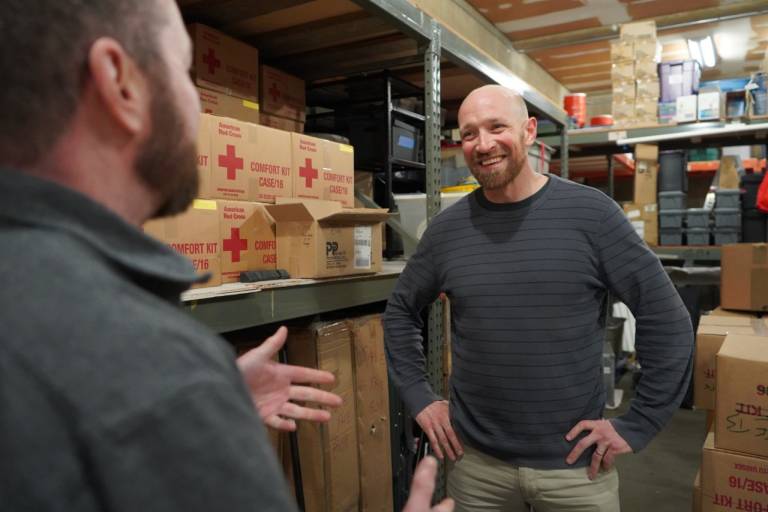
For Blake Audsley, Regional Disaster Officer for the American Red Cross Northwest Region, the aftermath is often the most revealing phase of a disaster.
“Disasters aren’t just the moment when the water rises,” Audsley said. “They ripple outward —affecting housing, food access, financial stability, and long-term well-being.”
Audsley’s perspective is shaped by years of humanitarian work, including international disaster response. He sees disasters less as isolated events and more as disruptions to systems people rely on every day. The storm itself may last hours or days, but the consequences can last months or years.
Public attention tends to focus on evacuations, shelters, and dramatic imagery during the crisis. But Audsley emphasized that recovery is slower, quieter, and often more uneven — especially for people with limited financial resources or insurance coverage.
“Once the water goes down, people are still dealing with debt, displacement, and difficult choices about where and how to rebuild,” he said. “Those challenges don’t always show up on camera, but they shape people’s lives for a long time.”
Research consistently shows that recovery is influenced by conditions that existed before the disaster. Many of the Washington communities affected by December’s floods have high numbers of renters and households without flood insurance, which can make recovery slower and more uncertain. These vulnerabilities often determine who is able to rebuild quickly and who is left in instability.
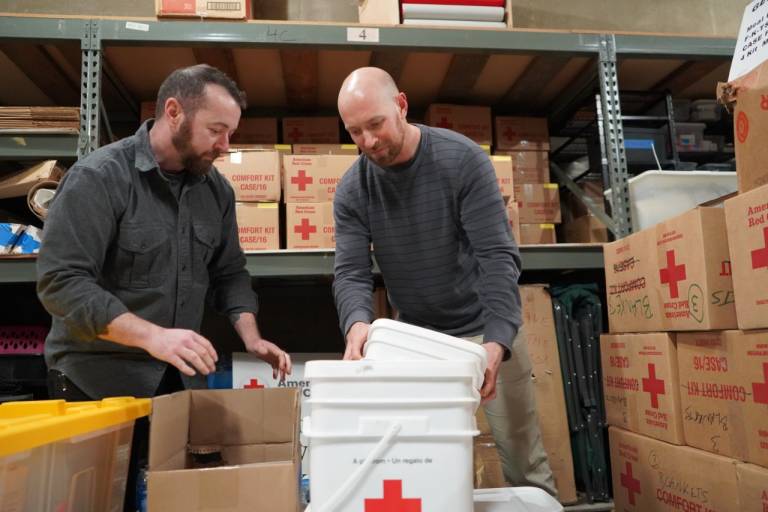
In the immediate aftermath of the flooding, state and local officials coordinated evacuations, infrastructure repairs, and emergency response alongside the National Guard and local agencies. As the response phase transitioned into recovery, organizations like the Red Cross shifted focus toward helping households stabilize, connecting people to resources for food, housing, health care, and financial assistance.
Audsley stressed that the storm is just one part of the disaster response cycle. In his view, recovery reinforces preparedness.
“Preparedness is part of building resilient communities; at the same time, we’re helping people get back on their feet in a way that makes them stronger going forward,” he said. “If we can support households through recovery, we’re also helping them be better prepared for whatever comes next.”
That work often involves partnerships with food banks, housing providers, mental health services, and community organizations to ensure people don’t fall through the cracks once shelters close and public attention fades. Flooding, in particular, can leave uneven damage patterns — some neighborhoods recover quickly, while others lag behind for years depending on their socioeconomic vulnerability and access to services.
As climate-driven disasters become more frequent and less predictable, Audsley noted that recovery efforts are happening under increasingly strained conditions.
“We’re seeing more disasters, in more places, but with finite resources,” he said. “That means we have to be nimble, coordinated, and focused on using what we have in the most effective way possible.”
Looking ahead, he hopes communities treat this flood season not as an anomaly, but as part of a broader climate reality.
“Most people don’t think a disaster will happen to them until it does,” he said. “Disasters of this magnitude are a reminder that preparedness saves lives, and shortens the recovery process so that communities can return to normal faster.”
As Washington continues to rebuild, the Red Cross remains focused not only on meeting immediate needs, but on strengthening long-term community resilience — so that when the next atmospheric river arrives, households are better positioned to weather both the storm and its aftermath.
Support all the urgent humanitarian needs of the American Red Cross.
Find a drive and schedule a blood donation appointment today.
Your time and talent can make a real difference in people’s lives. Discover the role that's right for you and join us today!