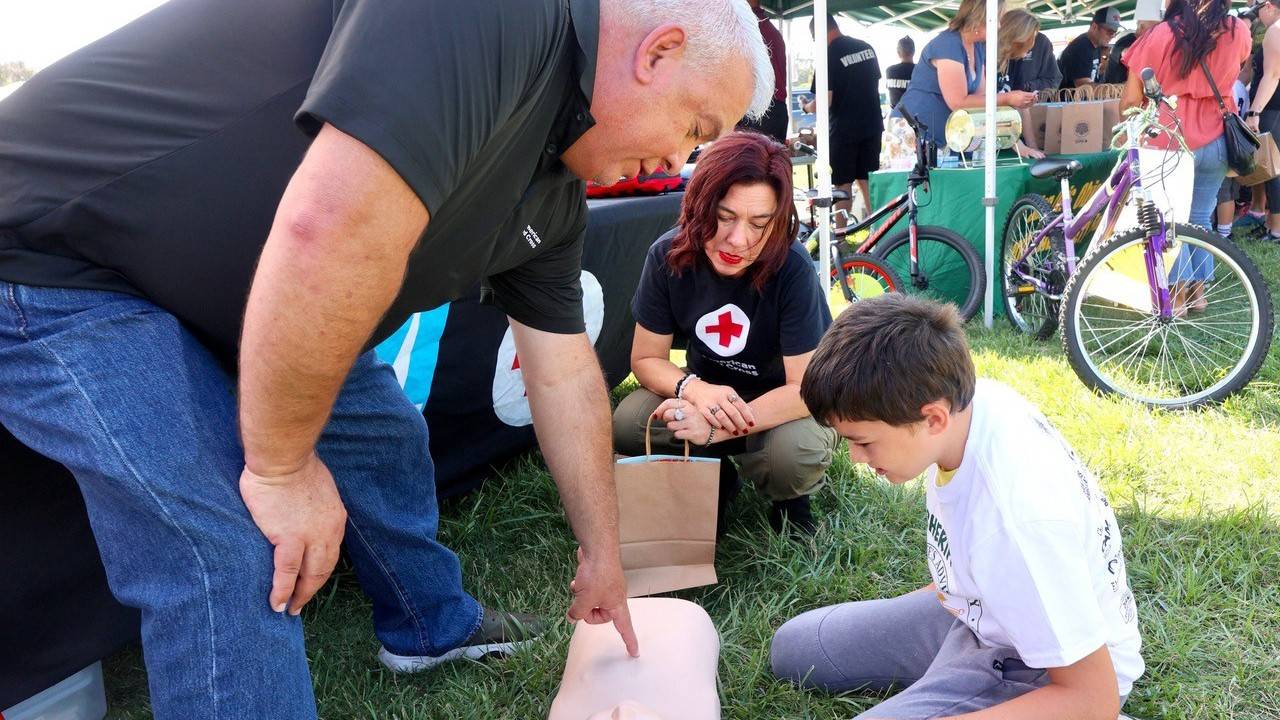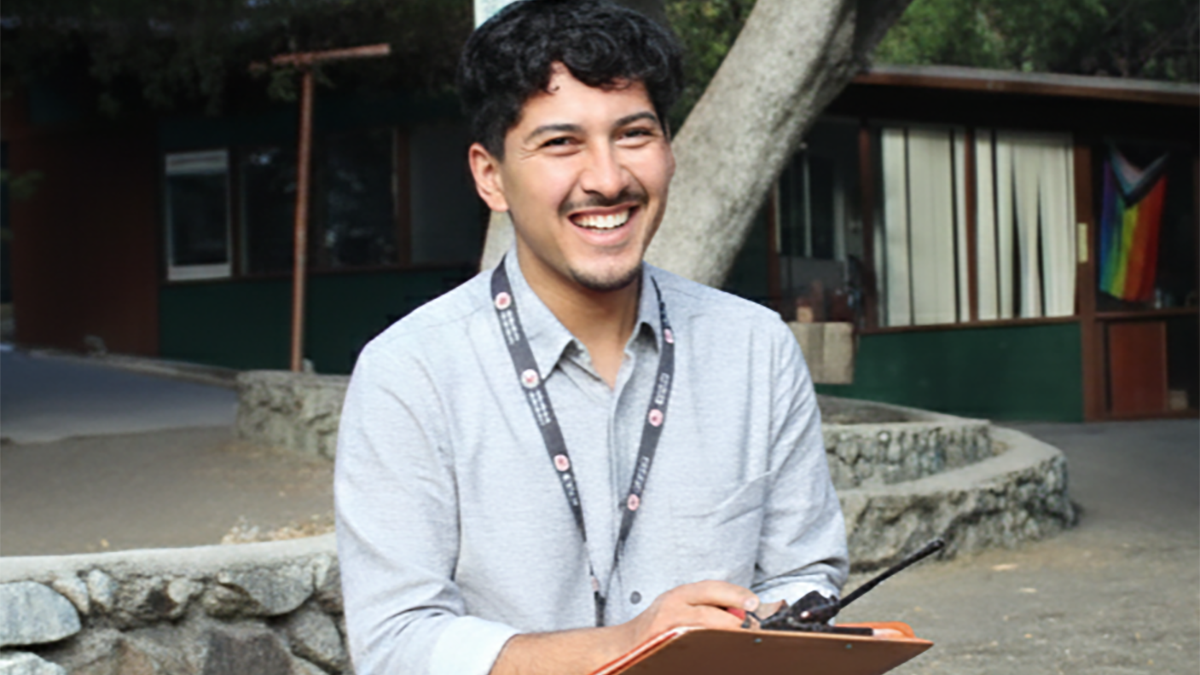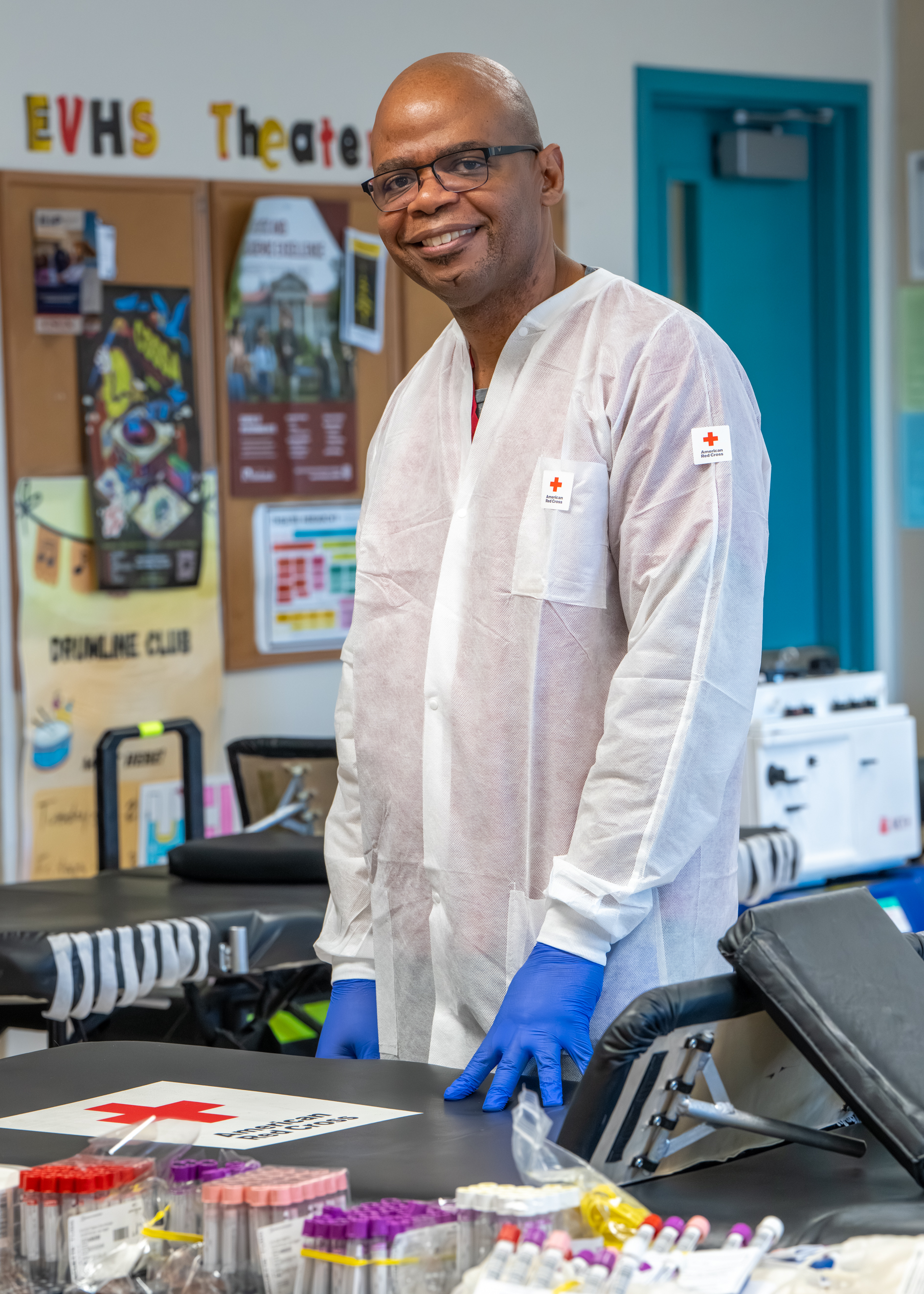
During Phlebotomist Recognition Week, Feb. 9–13, the Red Cross honors phlebotomists like David Nettles, whose nearly 20-year Red Cross career has evolved from supporting blood drives to collecting lifesaving donations. (Photos by Mimi Teller/American Red Cross).
Mike Tierney/American Red Cross
During Phlebotomist Recognition Week, February 9–13, the American Red Cross recognizes the skilled professionals who serve as the lifeline of its blood collection efforts. Whether working at blood drives or blood donation centers, phlebotomists play a vital role in collecting lifesaving donations, caring for donors and ensuring blood is safely delivered to patients in need. For Van Nuys resident David Nettles, that role represents the next chapter in a long and evolving Red Cross career.
Nearly 20 years ago, Nettles, 54, launched his Red Cross career as a mobile operator with the blood collection team, a hands-on role supporting blood drives in communities across the region. He was responsible for transporting blood collection supplies and equipment to and from blood drive sites and assisting with post‑blood collection processes to ensure donated blood was handled, packaged and transported properly.
As his responsibilities grew, his role evolved into a mobile unit assistant, and he later added donor-facing duties, including conducting health histories to help determine donor eligibility and support a safe donation experience.
After 16 years, Nettles decided it was time to expand his career horizons. He chose to take on a role that proved just as challenging to master as it is to pronounce: phlebotomist.
“My sister said to me, ‘If [Red Cross] is willing to teach you, why not learn a new skill?’” shared Nettles, while working a blood drive at East Los Angeles high school.
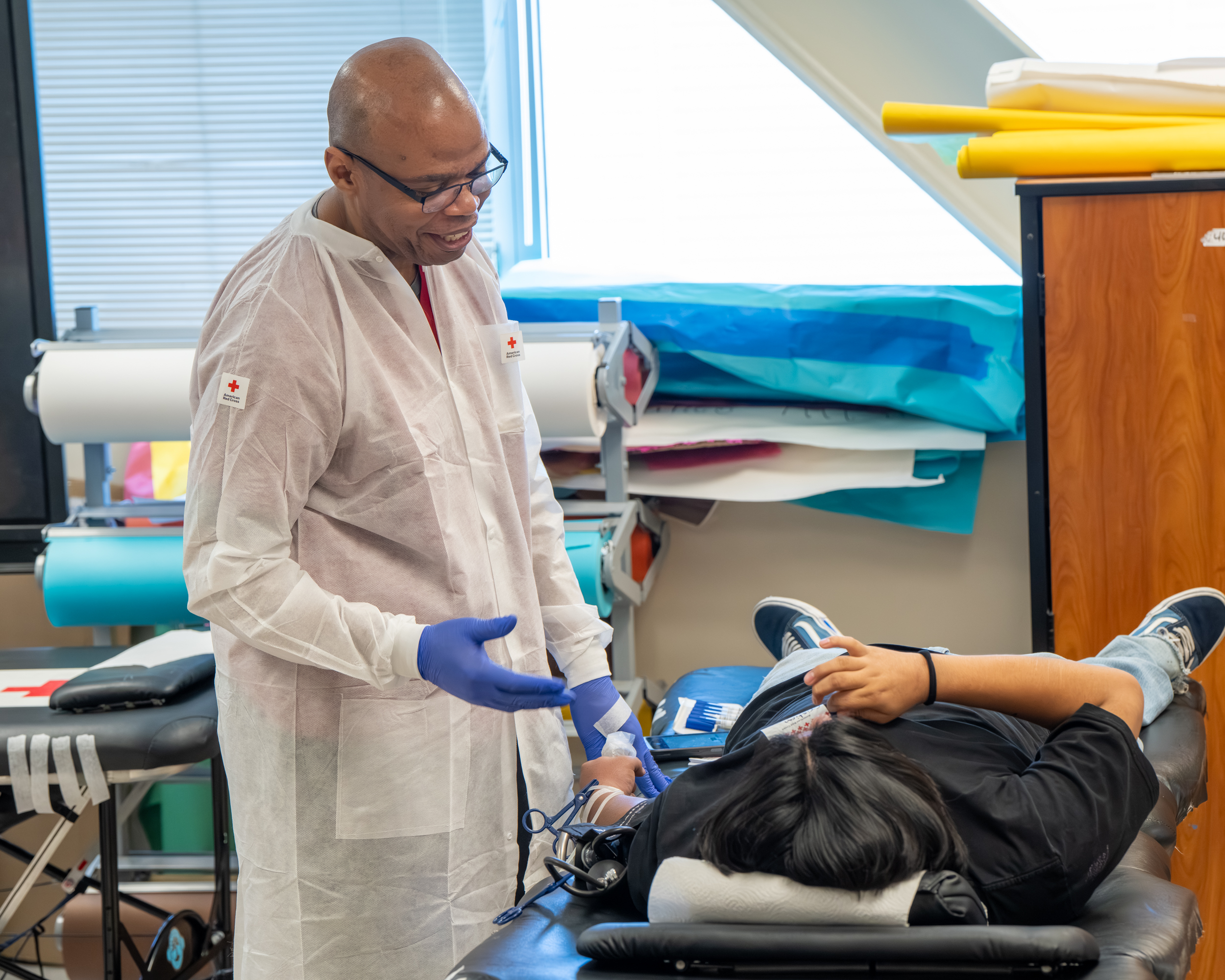
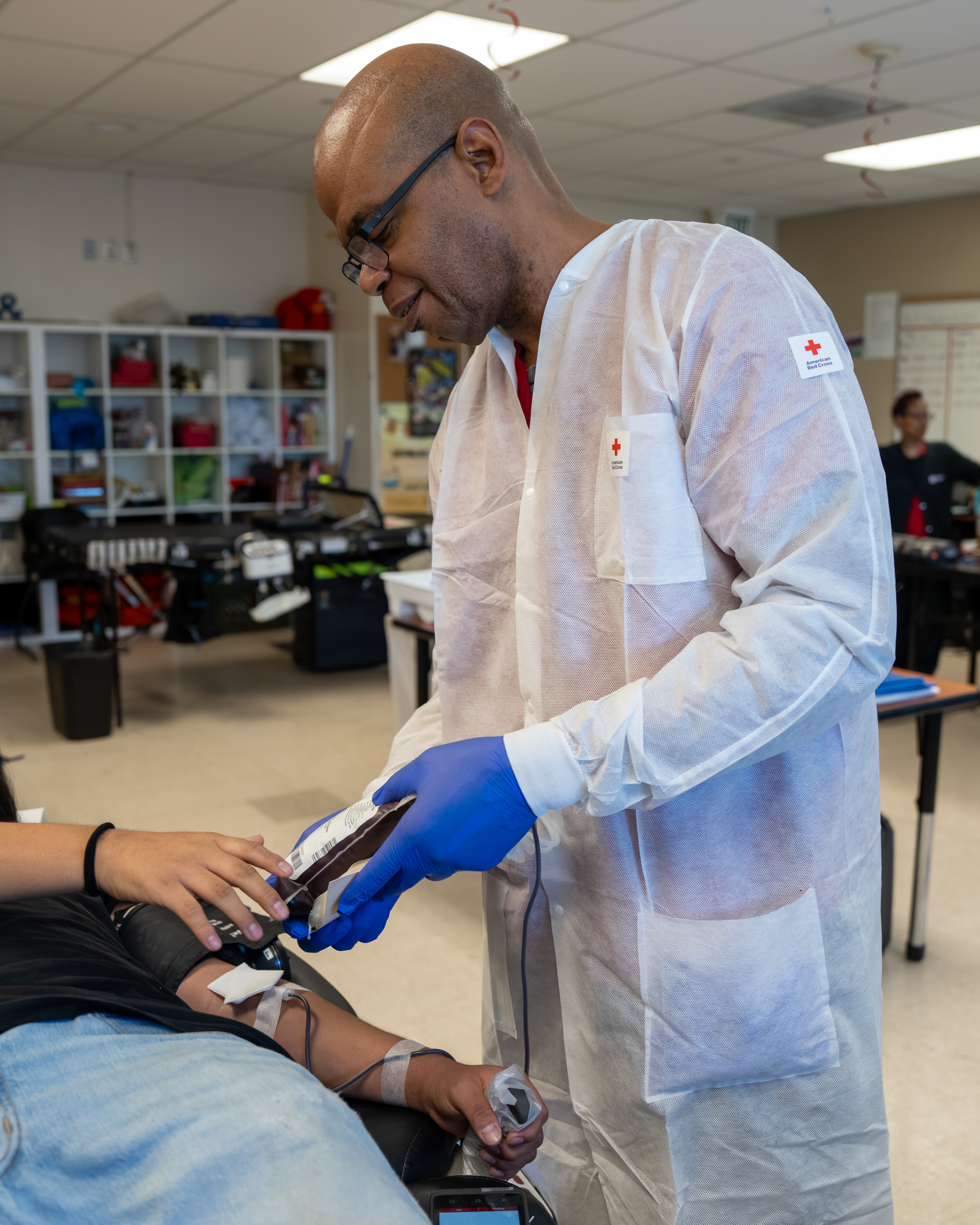
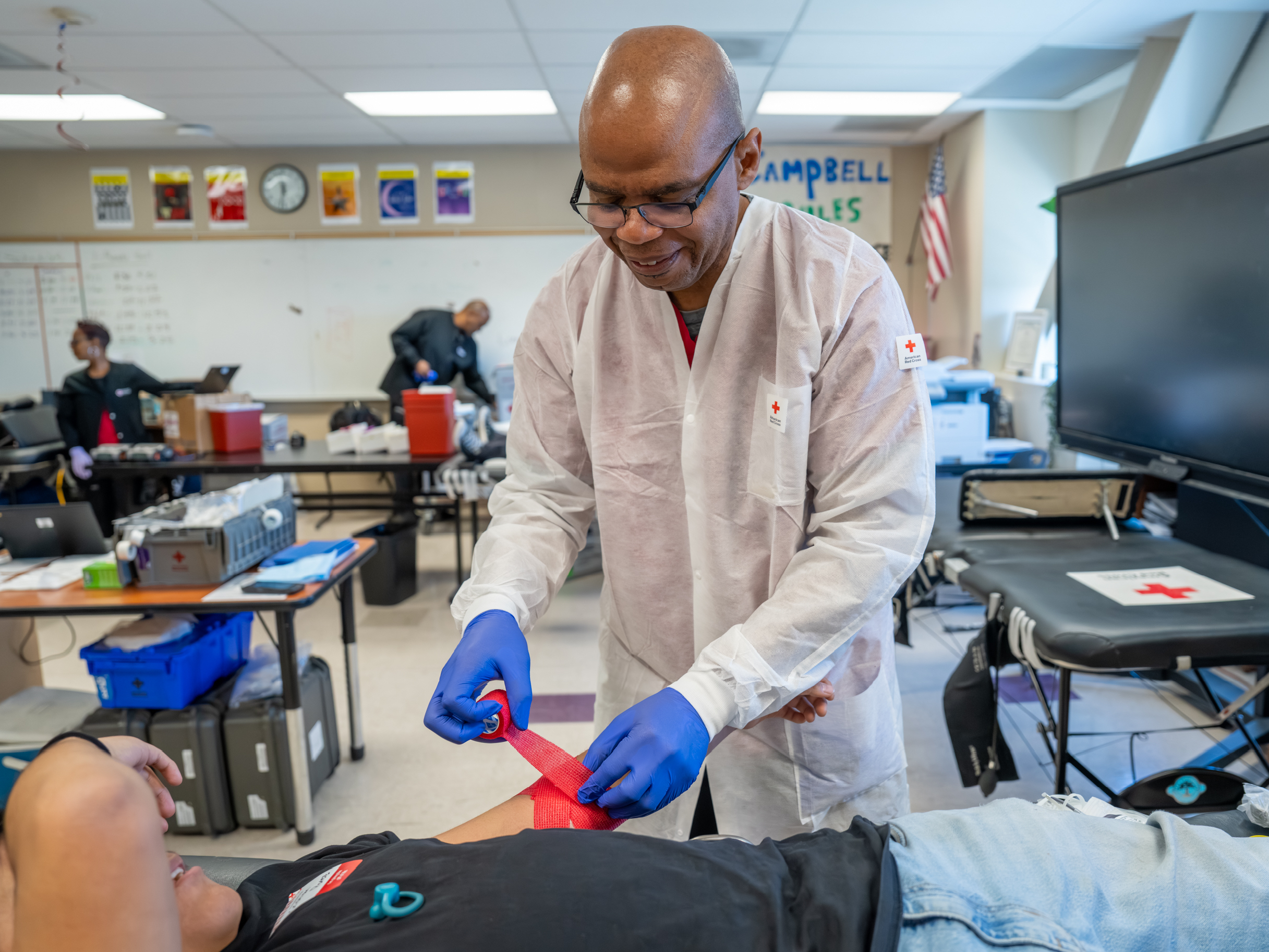
Nettles says he was lured by the appeal of acquiring a fresh skill at his age and to contribute more to the everyday mission of the Red Cross.
“Seeing a first-time donor or a returning donor who had been unable to donate because of their blood pressure or insufficient veins, complete that donation and know their blood is going to help someone makes me feel good.”
Nettles noted that the job requirements include an effective bedside manner, a term generally associated with doctors.
“I will introduce myself, let them know I’ll be assisting in the process,” he explained. “Sometimes, they don’t want the small talk. Let’s get to it. Even then, I still try to make small talk to help them relax. You have to have a lot of patience — make them feel comfortable.”
Nettles’ calm nature particularly came in handy during a power outage. In the pitch-black room, a young woman in the midst of having blood drawn asked that the needle be removed.
“I reassured her,” he said while complying, “gently placing my hand on her arm and telling her, ‘We’ll get through this.’ ”
His words were so comforting that, once the power returned, she asked to resume the process. (Citing Red Cross rules, he had to tell her rescheduling was the only option.)
Nettles especially appreciates hearing from donors on a return visit after the Red Cross notifies them where their previous pint wound up and how it was used.
“They say, ‘Oh, my blood went to so-and-so hospital, and it helped patients in a burn unit or having a baby.’ That really makes me feel good.”
As he continues his journey as a phlebotomist, Nettles remains focused on the same mission that first drew him to the Red Cross: helping others when it matters most.
During Phlebotomist Recognition Week, those looking to honor phlebotomists and blood collection staff can make a lifesaving impact by scheduling a blood donation at redcross.org/blood or by calling 1‑800‑RED CROSS (1‑800‑733‑2767).
Individuals inspired by Nettles’ story can also explore career opportunities with the Red Cross at redcross.org/careers and learn how to be part of a mission that saves lives every day.
About the American Red Cross:
The American Red Cross shelters, feeds and provides comfort to victims of disasters; supplies about 40% of the nation’s blood; teaches skills that save lives; distributes international humanitarian aid; and supports veterans, military members and their families. The Red Cross is a nonprofit organization that depends on volunteers and the generosity of the American public to deliver its mission. For more information, please visit redcross.org or CruzRojaAmericana.org, or follow us on social media.
Support all the urgent humanitarian needs of the American Red Cross.
Find a drive and schedule a blood donation appointment today.
Your time and talent can make a real difference in people’s lives. Discover the role that's right for you and join us today!