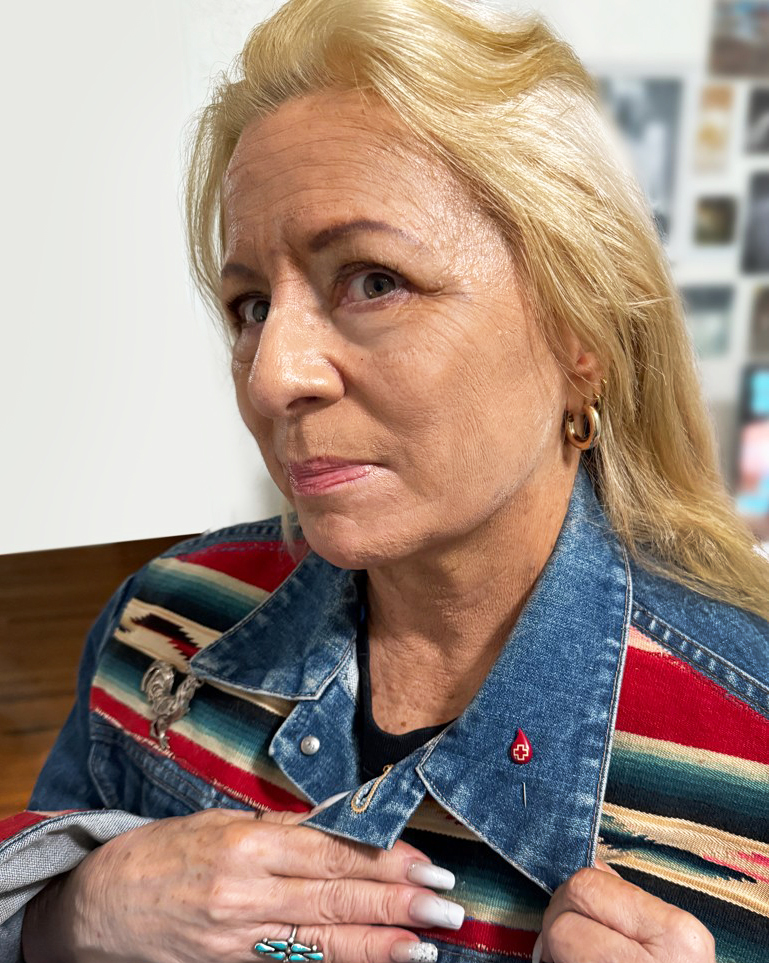
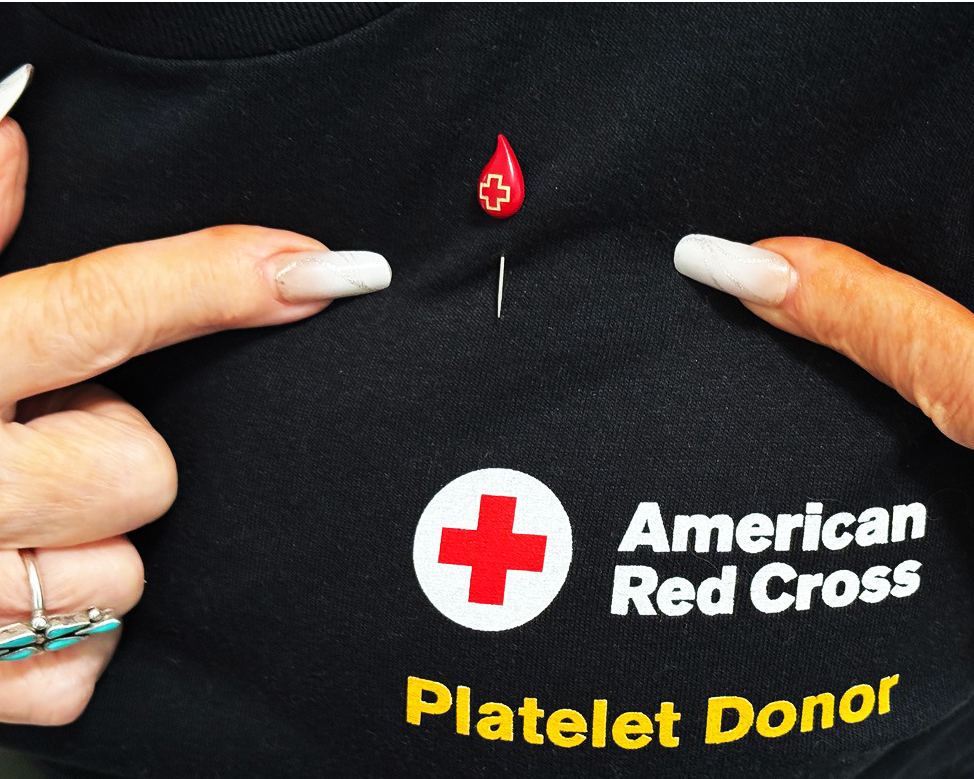
Victoria grew up admiring a glass jar in her grandmother’s home, filled with tiny Red Cross pins shaped like blood drops—each one honoring a lifesaving donation. That simple jar sparked a lifelong commitment to service. (Photo courtesy of Victoria Thomas).
By Alexis Quevedo/American Red Cross
Throughout history, Native American women have embodied resilience, compassion and service. During World War I, women such as Iroquois nurse Charlotte Edith Anderson Monture and Ruth Hills Wadsworth served with the American Red Cross and the U.S. Army Nurse Corps. More than 10,000 Native Americans volunteered, leaving a legacy of care that continues to inspire generations.
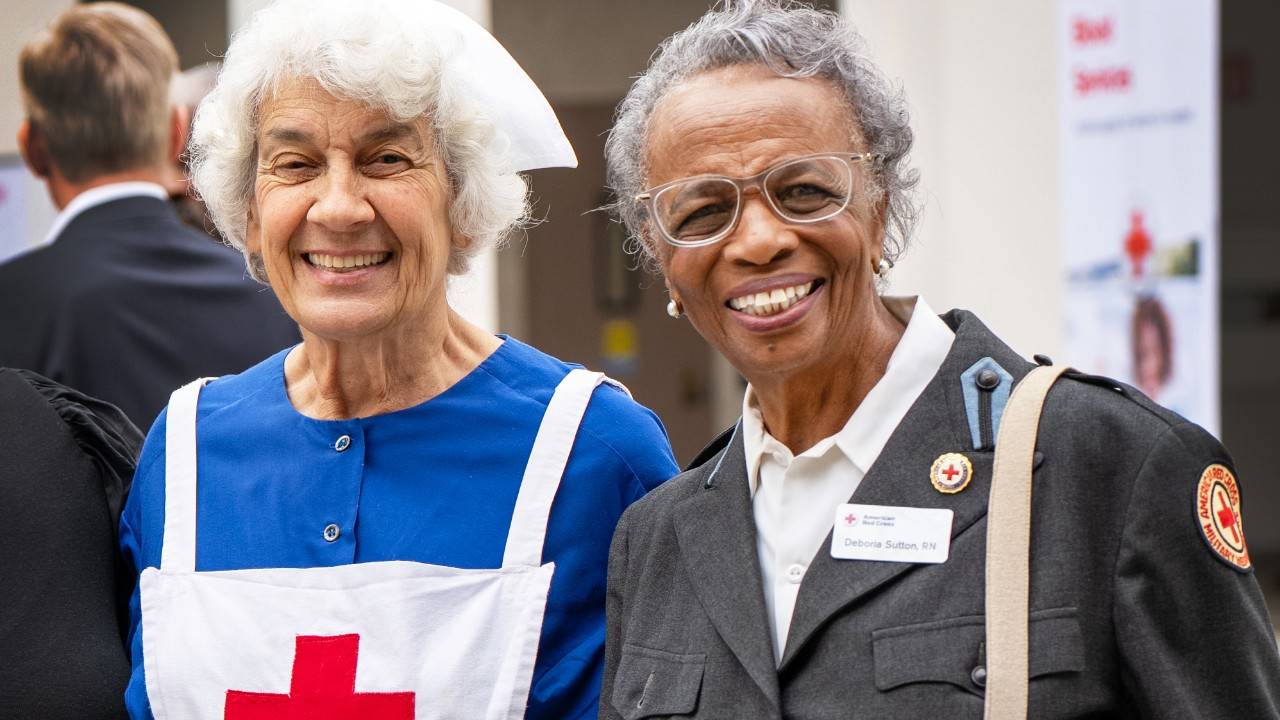
That same spirit lives on in Victoria Thomas. Her connection to the Red Cross began in childhood, rooted in the example of her grandmother, a Gray Lady. Gray Ladies were Red Cross volunteers who wore gray uniforms and provided vital support to the organization’s humanitarian mission. Her grandmother, a registered nurse, dedicated her time and compassion to helping others during the war.
In her home, Victoria’s grandmother kept a glass jar filled with Red Cross lapel pins shaped like tiny red blood drops that she passed out to people who donated blood.“She had hundreds of them,” Victoria remembers. “As a kid, I thought it was a candy jar. But those pins represented every act of service.”
The jar became a symbol of pride and purpose, shaping Victoria’s view of what it meant to serve her community.
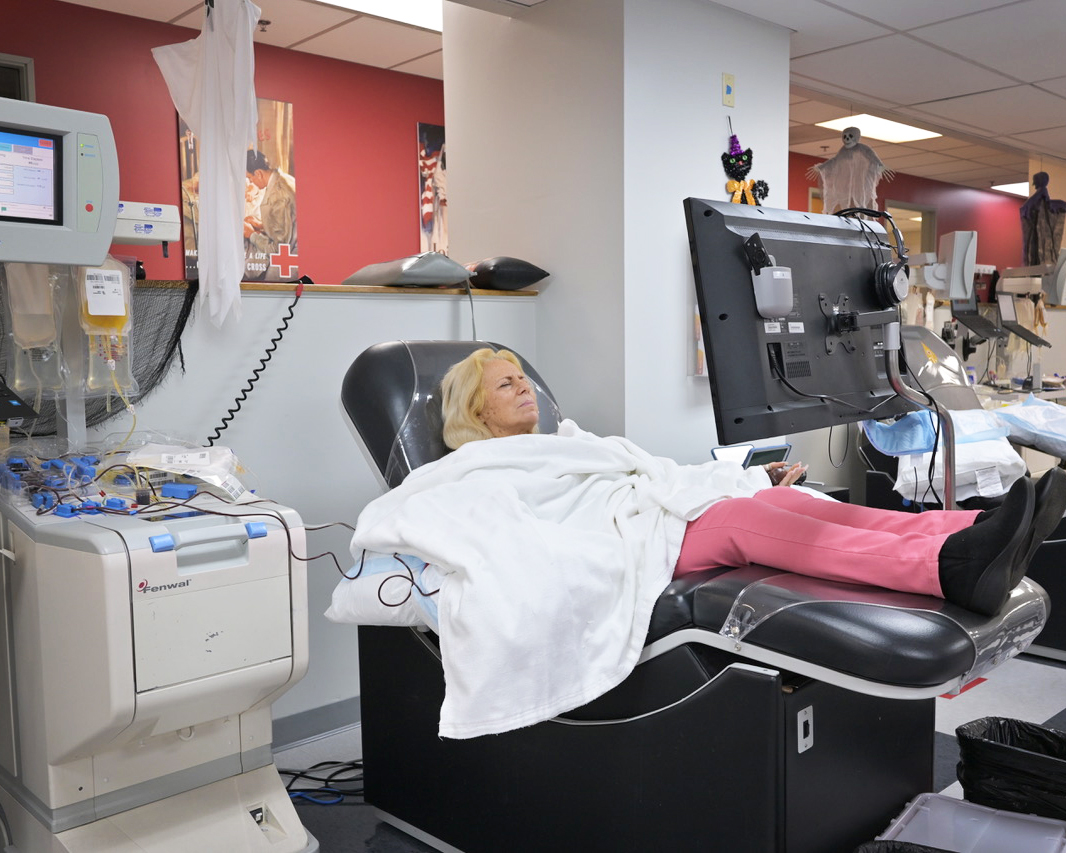
Today, Victoria carries that legacy forward through blood and platelet donation. As a type O donor — the most common blood type among Native Americans — she knows her contributions are especially critical. Type O blood is in constant demand: O negative is the universal donor for emergencies, and O positive is the most common blood type overall. Among Native Americans, 80% to 90% have type O blood, making donors like Victoria vital to maintaining a diverse and reliable blood supply.
Victoria finds comfort in knowing that her donation may help someone survive, even if she never knows who they are.
“It’s a drop in the ocean,” she adds, “but every drop matters.”
“[My grandmother] believed in helping others, and that was passed down to me,” Victoria says. “Donating blood is a form of advocacy that reminds me I can still make a difference.”
When asked what Native American Heritage Month means to her, Victoria reflects on her grandfather’s story. He was Mohawk, part of the Haudenosaunee Confederacy, also known as the Iroquois Nation. As a child, he was forcibly removed from his family under assimilation policies and taught French and English while his own language and traditions were suppressed. At 14, he left the orphanage where he had lived from age 8 to 14 on the New York state–Canadian border. He was sent to a sponsor family in New York City and put to work in a garment factory. Though Victoria never met him, learning his story has deepened her understanding of identity, resilience and belonging.
“This month is about reopening the conversation,” she says. “Native culture was suppressed for so long, but it can still be uncovered. We can be more empowered through it.”
Victoria proudly wears one of her grandmother’s original blood-drop pins on her lapel. It often sparks conversation, giving her a chance to share her story and honor the woman who inspired it. Each time she donates, she carries that same legacy forward — one drop, one pin, one act of service at a time.
All blood types are needed, but type O is in highest demand. O negative is vital in emergencies, and O positive is the most common type. If you’re type O, your donation can make a lifesaving difference. Schedule your donation today at redcross.org/blood. Every drop matters.
About the American Red Cross:
The American Red Cross shelters, feeds and provides comfort to victims of disasters; supplies about 40% of the nation’s blood; teaches skills that save lives; distributes international humanitarian aid; and supports veterans, military members and their families. The Red Cross is a nonprofit organization that depends on volunteers and the generosity of the American public to deliver its mission. For more information, please visit redcross.org or CruzRojaAmericana.org, or follow us on social media.
Support all the urgent humanitarian needs of the American Red Cross.
Find a drive and schedule a blood donation appointment today.
Your time and talent can make a real difference in people’s lives. Discover the role that's right for you and join us today!

/RCO_MEPS.jpg.transform/1288/q70/feature/image.jpeg)