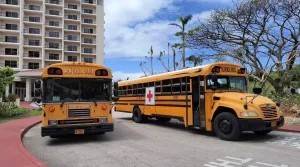
Local school bus drivers helped distribute food in Guam after a typhoon.
By Alex Keilty
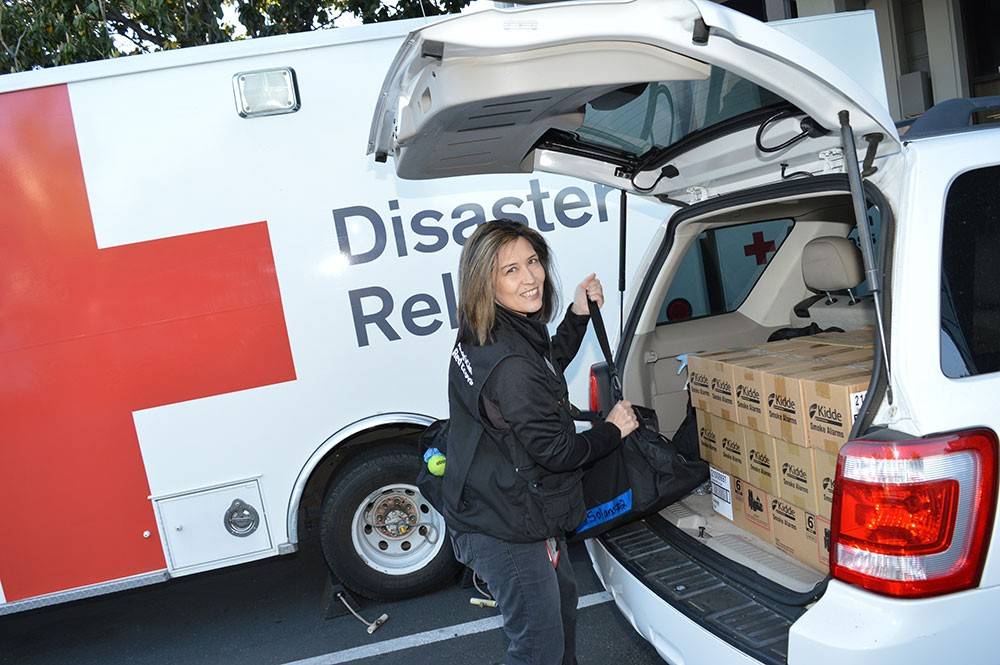
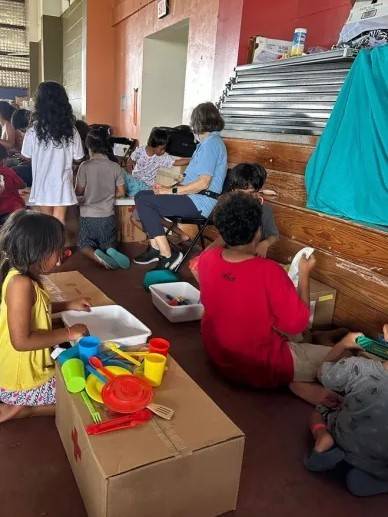
After a massive typhoon hit Guam in 2023, people on the islands were struggling to feed their families. While the American Red Cross had set up a shelter to house people whose homes had been damaged, there were many people in the community who were not staying at the shelter but still needed food and water. Red Cross leaders wondered, how can we get food to the local community, when there are no street signs for navigating and we don’t have a fleet of vehicles here? Bus drivers were the answer! So, the Red Cross worked with the school district in Guam to distribute meals on school buses because the drivers knew the streets well and had transportation available already.
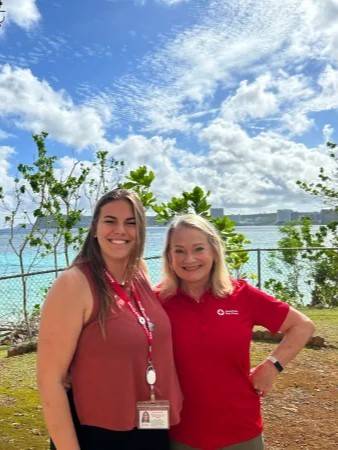
After some time, Red Cross leadership was considering ending the feeding program in the community, but the volunteers in the field were concerned. They drove around to all the local bodegas and there was “nothing there” on the shelves, says Briana Taylor, Red Cross volunteer. “We went back and said, ‘You can’t stop feeding until we have food in the markets.’ People wouldn’t have had any resources to provide food for their families.”
These are two examples of why the work of the Community Engagement and Partnerships (CEP) team is so important at the Red Cross. They illustrate how volunteers work with existing groups to fill a need during a disaster and how their success at gathering information in the field can inform Red Cross headquarters to make effective decisions. Red Cross volunteers who do the role of CEP work with external non-governmental organizations (such as community groups, churches, etc.) to build capacity, coordinate activities, integrate expertise and provide channels to reach all disaster-affected communities, particularly traditionally underserved populations.
Volunteers like Briana will first gather information when arriving at a disaster-hit community. We are “going out there and really understanding at a grassroots level what is happening,” says Briana. She looks at Red Cross reports, news updates and social media to see who is affected and if there are already community groups helping people.
Next, they identify needs that may be met through partnerships, always asking the question, “Can we fill it with partner resources instead of using donor dollars?” says Briana. For example, if the Red Cross needs more shelter workers, can a partner – such as a local church – supply them? What other goods or services are needed but can’t be filled internally, for example meals, language translation, baby supplies and childcare, transportation and pet sheltering?
A very important part of the role for CEP volunteers is establishing priorities. “During a disaster, everything is an emergency,” says Briana. “You have to step back and observe what is the most critical piece to start with.”
A big priority for the Red Cross is helping vulnerable people – those who can get left behind in a disaster. People with disabilities, language or cultural barriers, those afraid to access government or Red Cross services, people with no fixed address or those with pre-existing financial stress can all be unfairly impacted.
Briana has been a Red Cross volunteer since 2005, when seeing the devastation after Hurricane Katrina motivated her to help. Since joining the Red Cross she says, “I have never been bored a day in my life.”
Jamshid Kiani, Red Cross training manager, agrees that it’s a busy role, “CEP volunteers don’t sit around and do nothing. They are attending meetings, talking to partners and feeding information back to the organization.”
These days, Briana volunteers at disasters once or twice a year and focuses on supervising her team. When recruiting new volunteers, she says she looks for “someone with a certain set of social skills who can be diplomatic, who really cares and is a part of their community.”
According to Briana, that is the kind of person who will be able to build relationships with local people and learn from the community leaders who are already there.
If you are interested in helping people affected by disasters please visit redcross.org.
Support all the urgent humanitarian needs of the American Red Cross.
Find a drive and schedule a blood donation appointment today.
Your time and talent can make a real difference in people’s lives. Discover the role that's right for you and join us today!