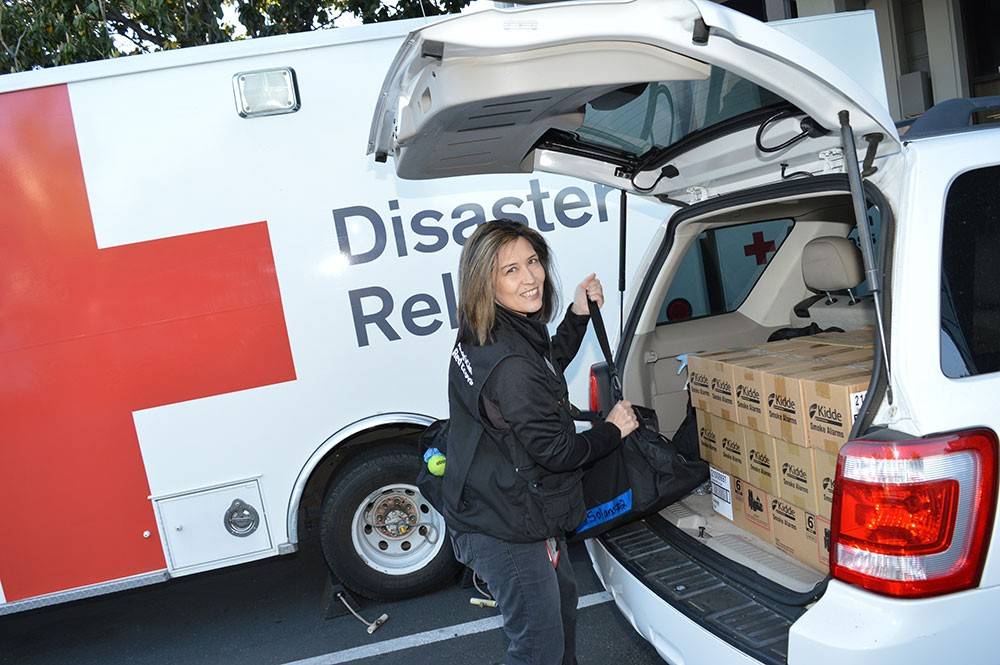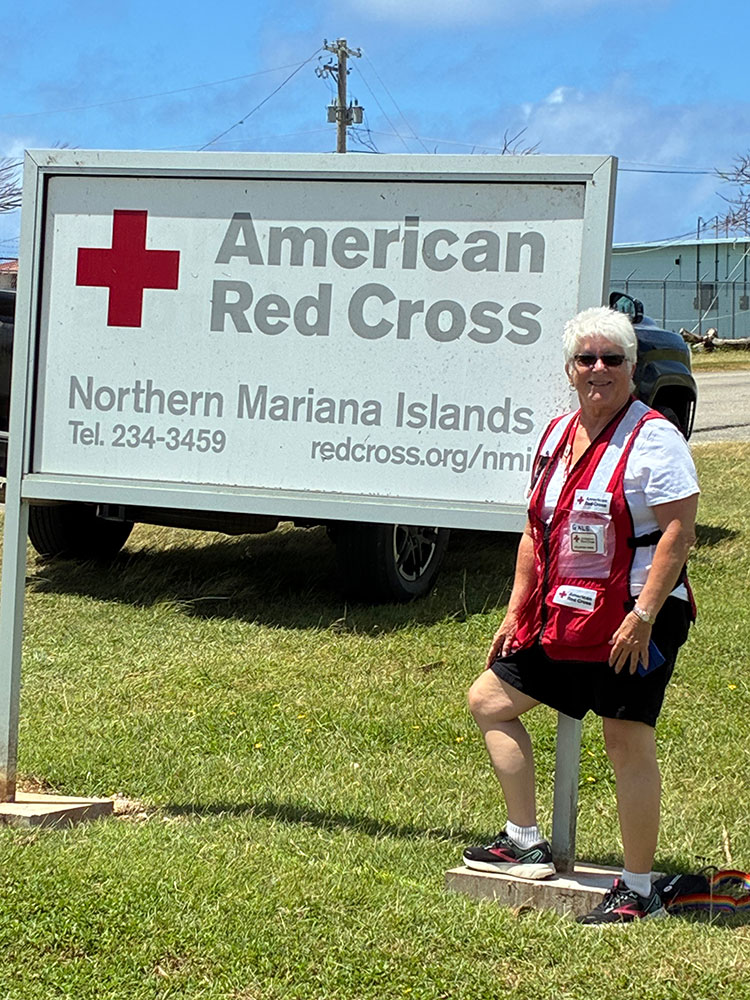
Red Cross volunteer Gale Carli in Saipan.
by Julie Uiterwijk
When retired nurse Gale Carli from San Mateo County arrived in Saipan seven days after Super Typhoon Sinlaku devastated the U.S. territory in the western Pacific Ocean, the signs of destruction were impossible to miss.
“The electricity was off, so driving was treacherous,” Carli recalled. “There were trees down, power poles down, lights down, and you could tell that something disastrous had happened.”
Sinlaku, an exceptionally powerful Category 5-equivalent storm, blew through the Northern Mariana Islands in mid-April, unleashing catastrophic flooding and sustained winds approaching 180 miles per hour. The storm left the tourism-dependent island struggling to recover. Trees were stripped bare, roads were littered with debris, and much of the lush tropical landscape had turned brown after exposure to salt water.
Nick Widmer, deputy regional disaster officer for the American Red Cross Northern California Coastal Region, witnessed the aftermath firsthand.
“Sinlaku sat on the island of Saipan for about 48 hours and just dropped salt water… This is an island known for being lush and green,” Widmer said. “That salt water killed pretty much every tree on the island… And so, there’s a lot of homes that are destroyed, a lot of trees that fell across the island onto a lot of homes.”
Encounters like this underscore the kind of work Carli has dedicated herself to.
At 73 years old, Carli remains deeply committed to service. A nurse for more than five decades, she has worked in medical-surgical units, trauma intensive care, air ambulance transport, nursing education and administration. Since joining the Red Cross in 2019, she has completed five disaster deployments, including shelter operations in Redwood City earlier this year.
When the call came to assist in Saipan, she accepted immediately. Within five days, she completed health screenings, secured a temporary nursing license and prepared for a grueling 22-hour journey that took her from San Francisco to Tokyo, then Guam and finally Saipan.
Once on the island, she joined a team of Red Cross nurses providing disaster health services across seven shelters serving residents of all ages, from newborns to seniors. Carli supervised eight nurses while helping coordinate care that included medication replacement, chronic disease management and obtaining essential medical equipment.
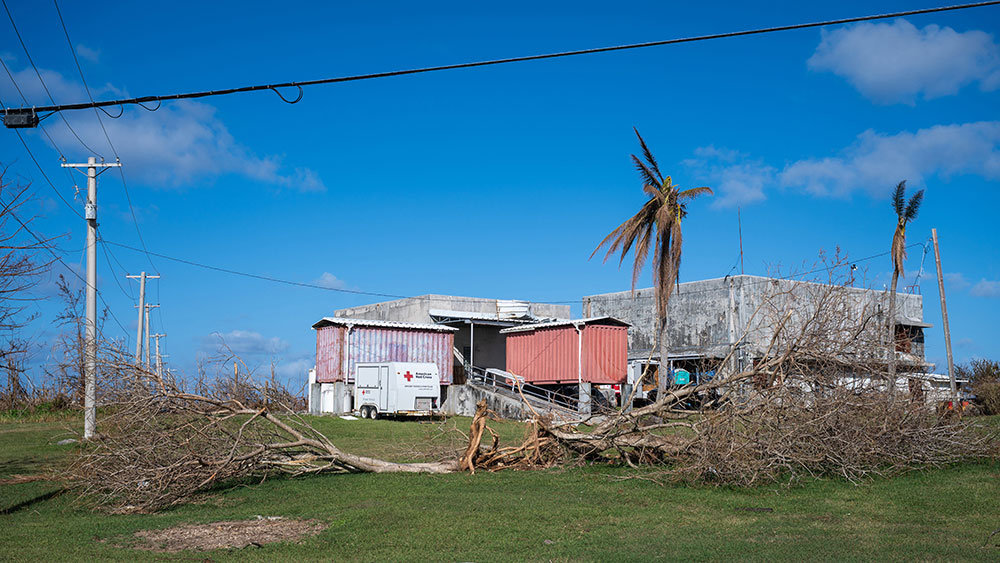
Red Cross Northern Mariana Islands Chapter Office after Typhoon Sinlaku devastated areas of Saipan.
The challenges were significant. Island supplies were quickly exhausted, requiring shipments from the mainland. Many shelter residents initially slept on floors and ate military-style field rations until cots and hot meals arrived. Some shelters lacked running water, showers and air conditioning.
The tropical heat only added to the difficulty.
“It was hot as hell and humid,” Carli said and returned home with a tan that prompted friends to ask if she had been on vacation.
Despite the destruction, the challenges and the conditions, what stood out to her was the remarkable attitude of the local people. Residents who had lost homes, possessions and livelihoods consistently focused on helping others. Within shelters, community leaders emerged naturally. Neighbors assisted one another with mobility challenges, meals and personal care. Complaints were rare.
Widmer saw the same spirit.
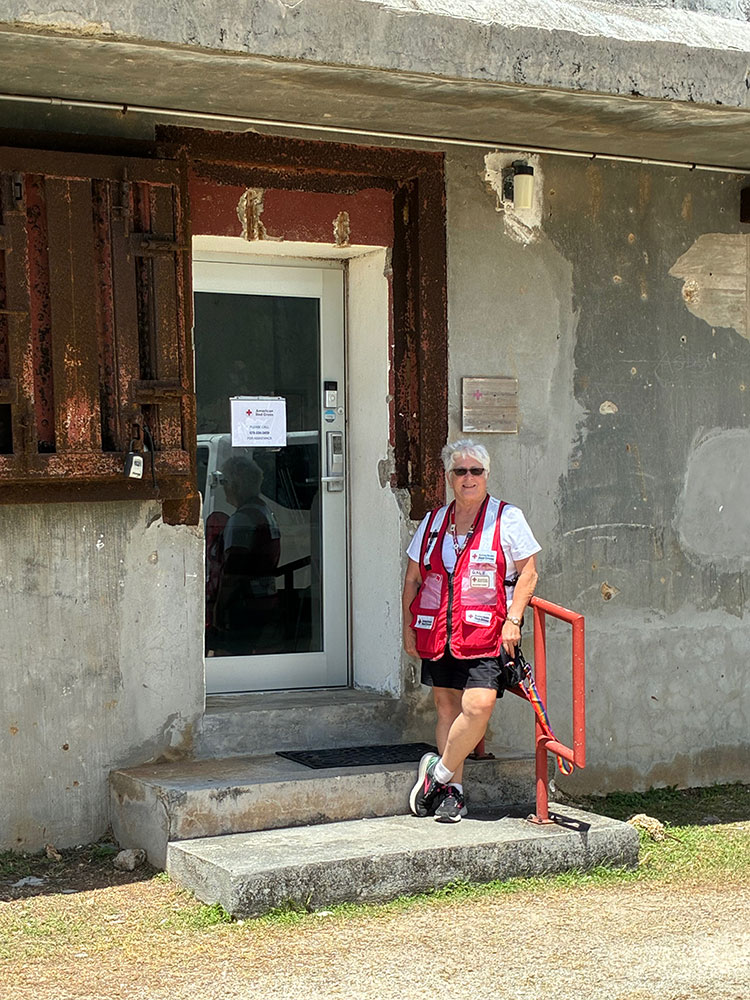
Volunteer Gale Carli at the Red Cross office in Saipan. The building is a former WWII bunker.
“The people here are some of the most amazing, resilient survivors we’ve ever had,” he said. “You can sense the passion they have for their community, and everyone here wants to help.”
That sense of generosity left a lasting impression on Carli.
“I can’t come up with enough adjectives to explain how kind and generous the people of Saipan were,” she said. “It was one of the best experiences of my life.”
One memory in particular remains vivid. Carli’s day off during the deployment happened to fall on Mother’s Day, which was also her late mother’s birthday. Still grieving her mother’s death two years earlier, she attended a local church service. What she witnessed was extraordinary.
“The people were so joyous and loving and giving,” she said. “The donation basket was overflowing with dollars, and these people had just lost everything.”
The experience reinforced a lesson she had seen repeatedly throughout her nursing career but never quite on this scale: resilience is often strongest in those facing the greatest hardship.
Over the course of her three-week deployment, Carli watched daily signs of recovery emerge. Generators came online. Utilities gradually returned. Communities began rebuilding. She also formed deep bonds with fellow Red Cross responders from across the country.
“Even all the years of working in a hospital, this was the best group of nurses, people I didn’t know, who got together for this single cause,” she said.
Looking back, Carli says the deployment changed her perspective.
“The experience made me appreciate how precious life is, and how you can live through a disaster, and become a better person after it,” she said.
For many responders, the images of fallen trees, flooded neighborhoods and darkened streets will remain unforgettable. But for Carli, the enduring memory is something far more powerful: a community that chose generosity over despair, gratitude over anger and hope over loss.
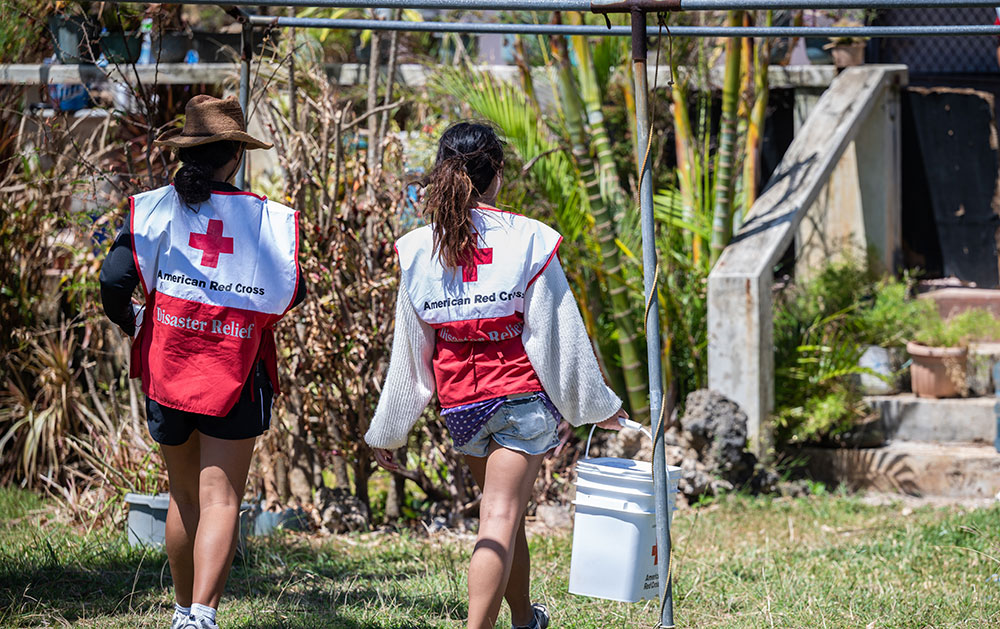
Two Red Crossers help distribute supplies in communities hit hard by Typhoon Sinlaku.
To help people affected by the Super Typhoon Sinlaku, and now Super Typhoon Bavi, please visit redcross.org.
Support all the urgent humanitarian needs of the American Red Cross.
Find a drive and schedule a blood donation appointment today.
Your time and talent can make a real difference in people’s lives. Discover the role that's right for you and join us today!