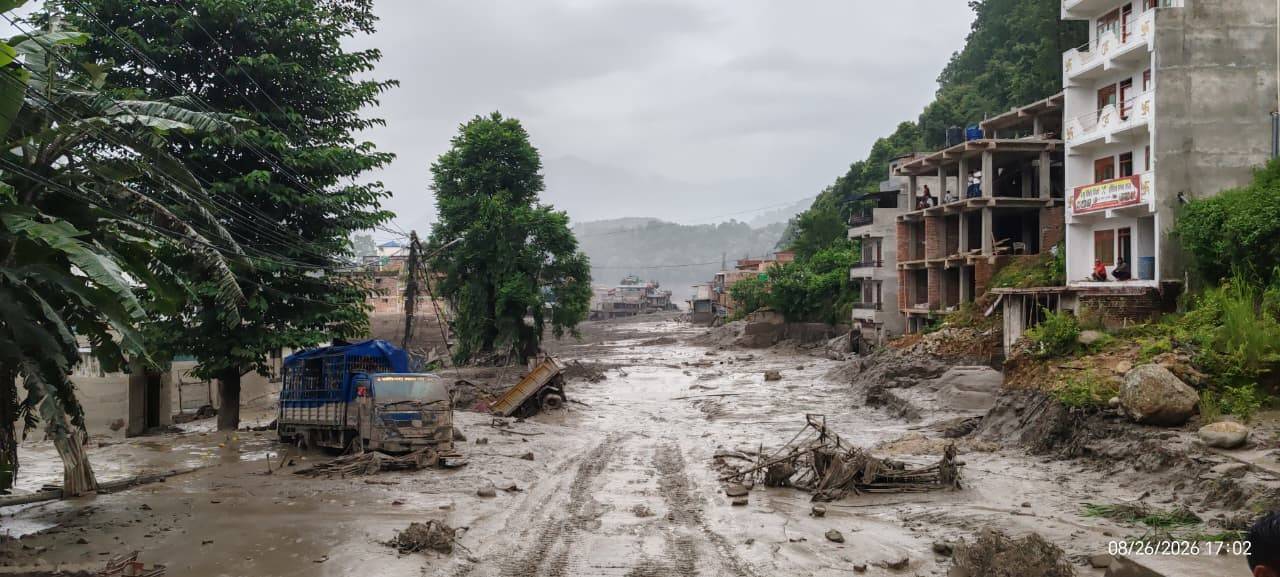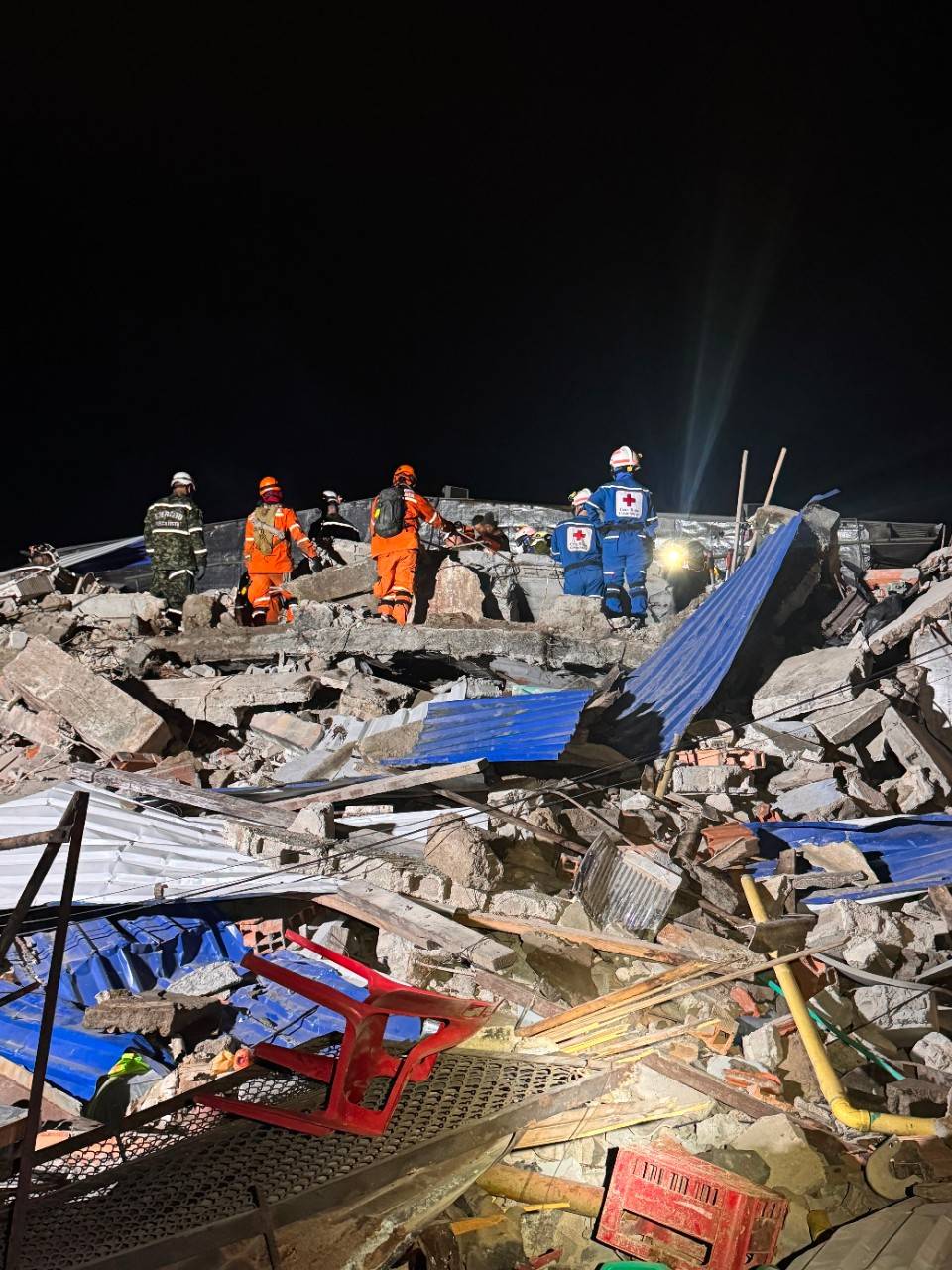
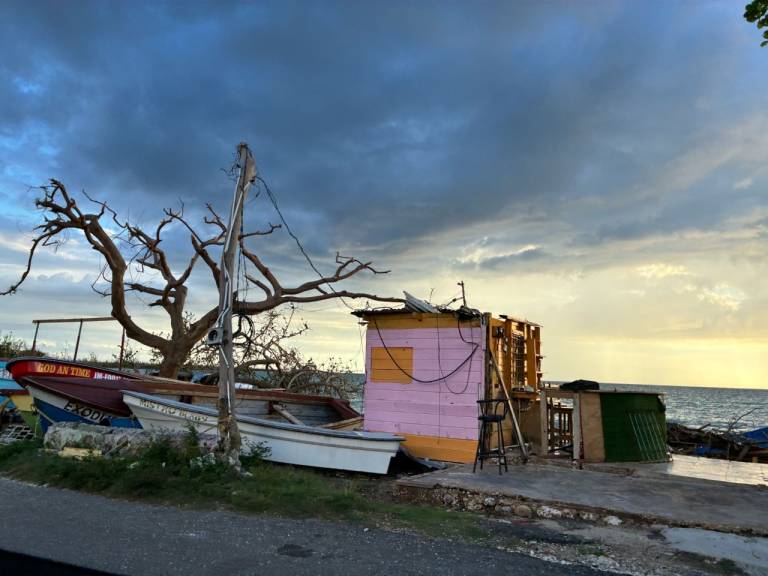
In the weeks since Category 5 Hurricane Melissa tore through Jamaica, families and communities have been steadily working toward recovery. In the storm’s wake, nearly half a million people lost power, and downed poles and damaged infrastructure cut off entire communities from electricity and communication. Winds topping 150 miles per hour flattened trees, bamboo and crops, and much of western Jamaica went dark. Roofs collapsed, metal sheeting tore loose and whipped through neighborhoods, and some homes were blown off their foundations, leaving behind scattered debris, personal belongings and pockets of flooding.
Support from around the world has remained steady, including from across the global Red Cross and Red Crescent network, whose members have joined the Jamaica Red Cross and other local responders to deliver aid and accelerate recovery.
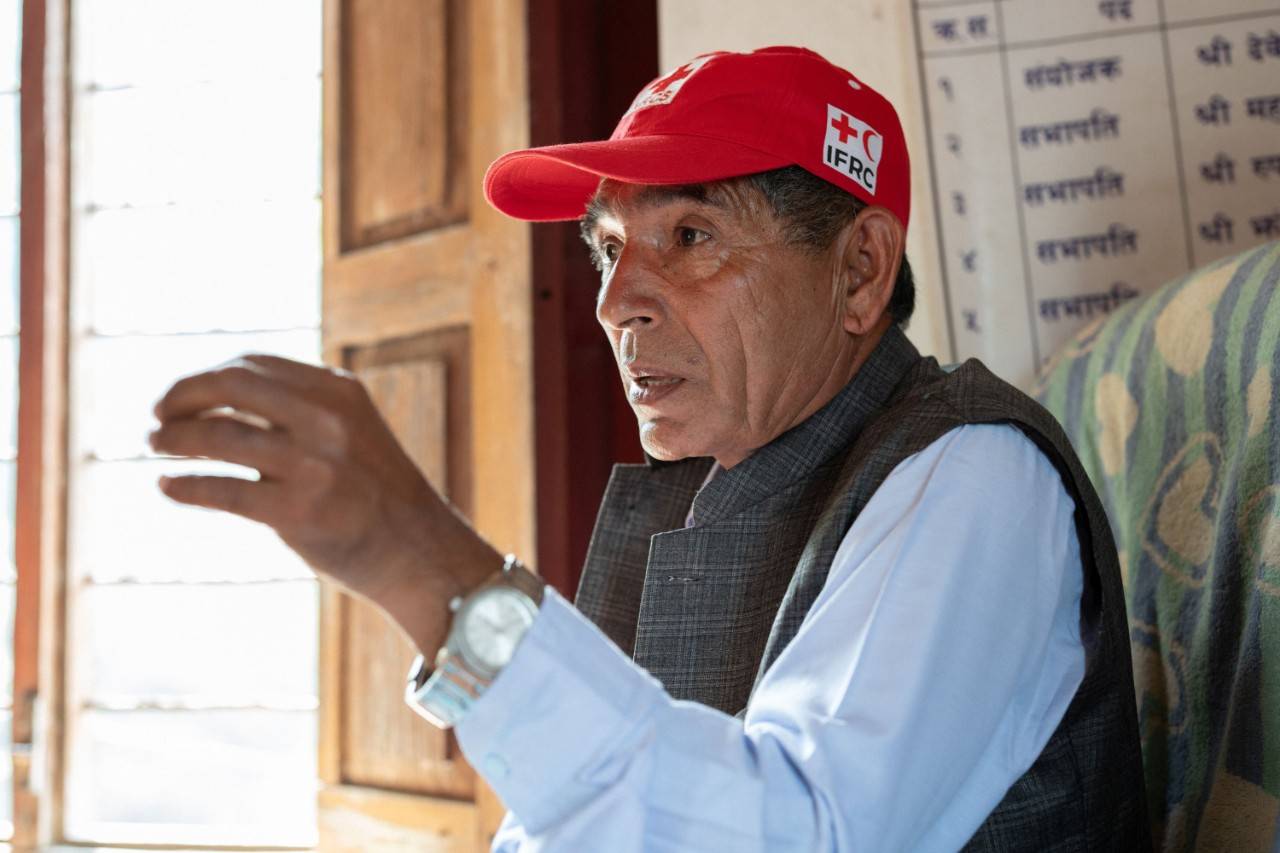
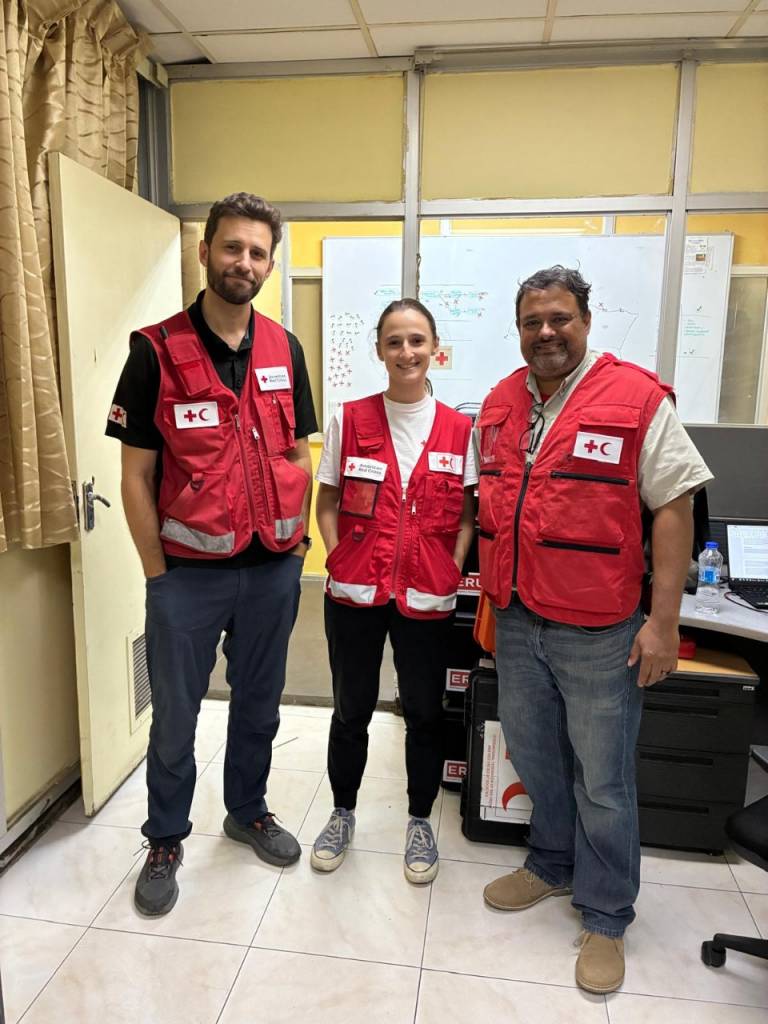
Colin Chaperon, an American Red Cross employee and a member of the International Federation of Red Cross and Red Crescent Societies (IFRC) response team, deployed to Jamaica to serve as a Membership Coordinator. He worked closely with the Jamaica Red Cross and the French Red Cross on water and sanitation efforts, and coordinated with the International Committee of the Red Cross (ICRC) on family tracing as part of the Restoring Family Links program. In the role, Colin also assisted in organizing support from Caribbean national Red Cross societies, including fundraising and surge deployments, as well as sorting donated goods. He also welcomed government donors and visitors who wish to understand the scope of the response.
For him, the work carries deep meaning. Seeing the breadth of the destruction underscores how vulnerable many families remain and why coordinated relief matters.
“People’s lives and livelihoods have been shattered, in some cases again, as some people were previously impacted by Hurricane Beryl and now Hurricane Melissa. Seeing the sheer destruction across Jamaica reminds me how fragile life is for millions of people,” Colin said. “The journey to recovery will take time and will require a mosaic of support at national, local, community and household levels.”
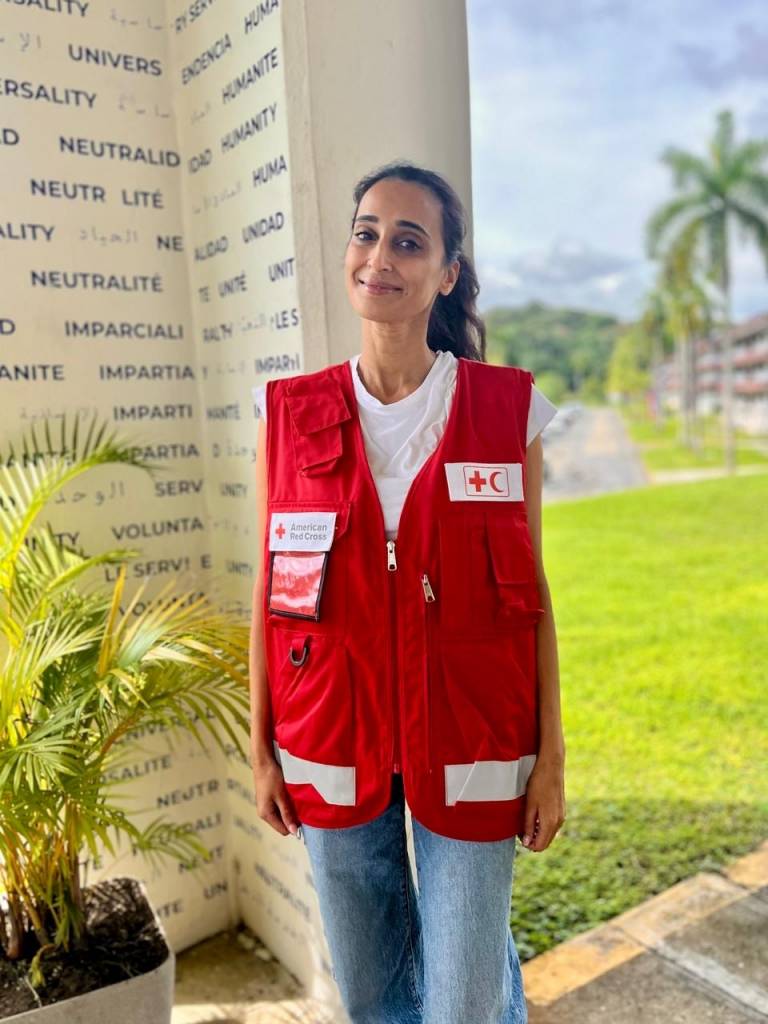
Akriti Farmahan, an American Red Cross volunteer who was based in Panama for several weeks, was supporting communication efforts tied to Hurricane Melissa. She helped coordinate messaging and the flow of information between all parts of the Red Cross Movement, from the IFRC to the ICRC to local Red Cross societies.
“While being behind the scenes doesn’t come with the same adrenaline as working on the ground, it gives me a different kind of fulfillment,” Akriti said.
From her perspective, this work goes beyond updates; it’s lifting the voices of communities still recovering a month after the storm.
“As I went through the material coming in, especially the images, quotes and footage on mental health after trauma, I began to develop stories behind what was captured,” she said. “My role was to strategically consider how this content could be used to help the world see what is happening on the ground, and I think that’s an important job."
Jeff Paddock, a Cash and Voucher Assistance Coordinator for the IFRC and an employee of the American Red Cross, has been traveling across Jamaica to meet families and see the damage firsthand. He explained the purpose of his deployment and how it ties into the broader response.
“Our motivation for being in Jamaica is to serve the Jamaica Red Cross as best we can,” Jeff said. “Right now, that means supporting relief efforts and helping move critical supplies into the hardest-hit areas.”
For Jeff, the role brings a strong sense of purpose, allowing him to continue the organization’s long tradition of delivering care and assistance when people need it most. His efforts, along with hundreds of other volunteers, are strengthening the ability of the Jamaica Red Cross to deliver economic support so people can regain stability.
“As markets and banks slowly come back online, we want to make sure people can access the financial aid they need so they can drive their own recovery with dignity,” he added.
As part of the world’s largest humanitarian network, the American Red Cross supports international disaster and crisis responses when global Red Cross and Red Crescent teams request our help. In 2025 alone, the American Red Cross supported relief efforts in 23 countries, providing more than $16 million in assistance, and deploying 16 disaster specialists. The organization also helped strengthen disaster preparedness in 14 countries, including Guatemala, Indonesia and Palau.
“The contributions from sister-to-sister national societies, including the American Red Cross, are very much needed to support the immediate needs of persons directly impacted by this devastating disaster,” Colin added.
After the devastation caused by Melissa — and as Jamaica still recovers from Hurricane Beryl — the global Red Cross network is not only responding to the emergency but walking alongside communities for the long road ahead.
About the American Red Cross:
The American Red Cross shelters, feeds and provides comfort to victims of disasters; supplies about 40% of the nation’s blood; teaches skills that save lives; distributes international humanitarian aid; and supports veterans, military members and their families. The Red Cross is a nonprofit organization that depends on volunteers and the generosity of the American public to deliver its mission. For more information, please visit redcross.org or CruzRojaAmericana.org, or follow us on social media.
Support all the urgent humanitarian needs of the American Red Cross.
Find a drive and schedule a blood donation appointment today.
Take a class and be ready to respond if an emergency strikes.