Updated January 13, 2026
Influenza cases are on the rise across most of the country.
The Centers for Disease Control and Prevention (CDC) reports flu activity is high or very high in 48 states and jurisdictions, describing the flu season as moderately severe.
So far, at least 15 million illnesses have been reported this flu season, as many as 180,000 people have ended up in the hospital, and 7,400 deaths from flu have been reported.
The American Red Cross offers important information about the flu ─ symptoms, how to treat it, how to care for someone who is sick. What should you know and do?
Do I have the flu?
Common flu symptoms include high fever, severe body aches, headache, being extremely tired, sore throat, cough, runny or stuffy nose, vomiting and diarrhea (more common in children.
Who is at high risk for complications from the flu?
Flu is particularly dangerous for people 65 and older, pregnant women, young children and people of any age who have chronic health problems, including asthma, diabetes, heart disease and weak immune systems. Learn more here.
How long am I contagious?
People with flu are most contagious during the first three days of their illness. You may be able to spread the flu before you even know you are sick. Some otherwise healthy adults may be able to infect others beginning a day before they develop symptoms and up to five to seven days after becoming sick.
How can I help prevent the flu?
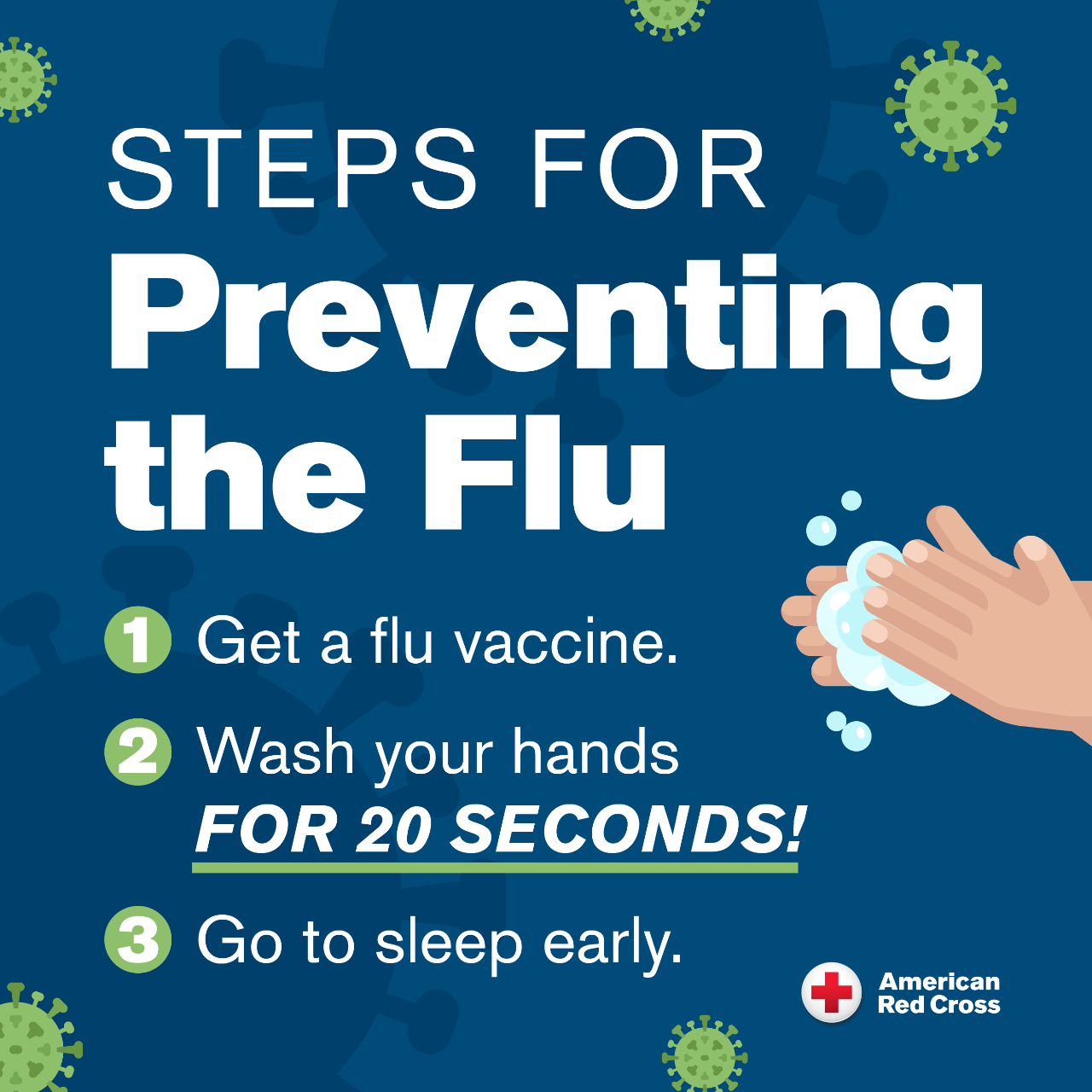
If you are sick, stay home. Avoid close contact with people who are sick. Cover your mouth and nose with a tissue when coughing or sneezing to prevent those around you from getting sick. Wash your hands often. Avoid touching your eyes, nose or mouth.
I’m taking care of someone with the flu. What should I do?
Designate one person as the caregiver. Avoid sharing pens, papers, clothes, towels, sheets, blankets, food or eating utensils unless they have been cleaned between uses. Disinfect doorknobs, switches, handles, computers, telephones, toys and other surfaces that are commonly touched around the home or workplace. Wash dishes in the dishwasher or by hand using very hot water and soap. Wash clothes as you normally would, using detergent and very hot water. Wear disposable gloves when in contact with or cleaning up body fluids.
Is it too late to get a flu vaccine?
It’s not too late to get a flu shot, which health experts say can still prevent severe illness even if someone gets infected. According to the CDC, only about 42% of adults and children have gotten a flu vaccination so far this year.
If I get a vaccine, can I still donate blood?
Receiving the flu vaccine has become a regular part of flu season for many. The American Red Cross encourages individuals to protect their own health this cold and flu season by receiving a vaccination for flu, COVID-19 or RSV. Receiving any of these vaccines causes no wait period to donate and does not affect donation eligibility.
Are blood donations down after the holidays?
The American Red Cross is facing a growing risk of a blood shortage following the recent holidays, distributing blood products faster than they are coming in.
How do I make an appointment to give blood?
If you are feeling well and show no symptoms of infection, please come in to donate. You can find a blood drive or schedule a donation appointment by using the Red Cross Blood Donor App, visiting RedCrossBlood.org or calling 1-800-RED CROSS (1-800-733-2767). For more information on requirements for donating blood, please check the Eligibility Criteria page.
What Red Cross apps should I download?
Download “Emergency” for short guides to help you prepare, receive National Weather Service alerts, view live weather maps, and find open Red Cross shelters and services near you. The First Aid app puts expert advice for common emergencies at your fingertips. Search “American Red Cross” in app stores or go to redcross.org/apps.
About the American Red Cross:
The American Red Cross shelters, feeds and provides comfort to victims of disasters; supplies about 40% of the nation’s blood; teaches skills that save lives; distributes international humanitarian aid; and supports veterans, military members and their families. The Red Cross is a nonprofit organization that depends on volunteers and the generosity of the American public to deliver its mission. For more information, please visit redcross.org or CruzRojaAmericana.org, or follow us on social media.
Support all the urgent humanitarian needs of the American Red Cross.
Find a drive and schedule a blood donation appointment today.
Take a class and be ready to respond if an emergency strikes.