Two years ago, two powerful hurricanes came ashore just 13 days apart. The storms caused devastation across several states,impacting many of the same families, leaving them no time to recover.
First came Hurricane Helene, the storm making landfall two years ago today. Hurricane Milton followed just two weeks later with some families still in Red Cross shelters when the second hurricane hit.
What was once extraordinary is becoming routine as climate change intensifies weather events and leaves communities facing repeated cycles of devastation and recovery.
Think Sinlaku and Bavi striking Saipan and adjacent Pacific islands just weeks apart. Or flood waters surging in Kerrville, Texas, last month, inundating the same community that suffered devastation and loss of life in July 2025.
For many, Hurricane Helene and Milton are far in the rearview mirror, having been usurped in the public consciousness by many other disasters – fires, floods, tornadoes and a host of other emergencies. But for the individuals and families whose homes were damaged or destroyed, the recovery is far from over.
RED CROSS RESPONSE
The Red Cross has been supporting people in Florida, Georgia, North Carolina, South Carolina and Tennessee ever since the back-to-back storms made landfall. With prepositioned relief materials already in place as the storms approached, Red Cross disaster teams quickly opened shelters, providing comfort and care as people fled the surging floodwaters and the mudslides that followed.
As is the case for most disasters, the immediate aftermath was characterized by neighbors helping neighbors and communities showing up to offer what they had. But in the weeks and months that followed, community cohesion dissipated as public attention shifted. Families were left to pick up the pieces as they tried to recover.
The Red Cross was there through it all, offering shelter in the days immediately following the disaster. Then came three rounds of direct financial assistance, giving families the dignity and autonomy to meet their needs, replacing lost items, paying for temporary housing, repairing damaged vehicles, and many other challenges.
LONG-TERM RECOVERY
The Long-Term Recovery team worked alongside community partners to support standing up long-term recovery groups, coordinate efforts from local stakeholders to address unmet needs, distribute emergency supplies, and begin the important work of preparedness and mitigation ahead of future disasters.
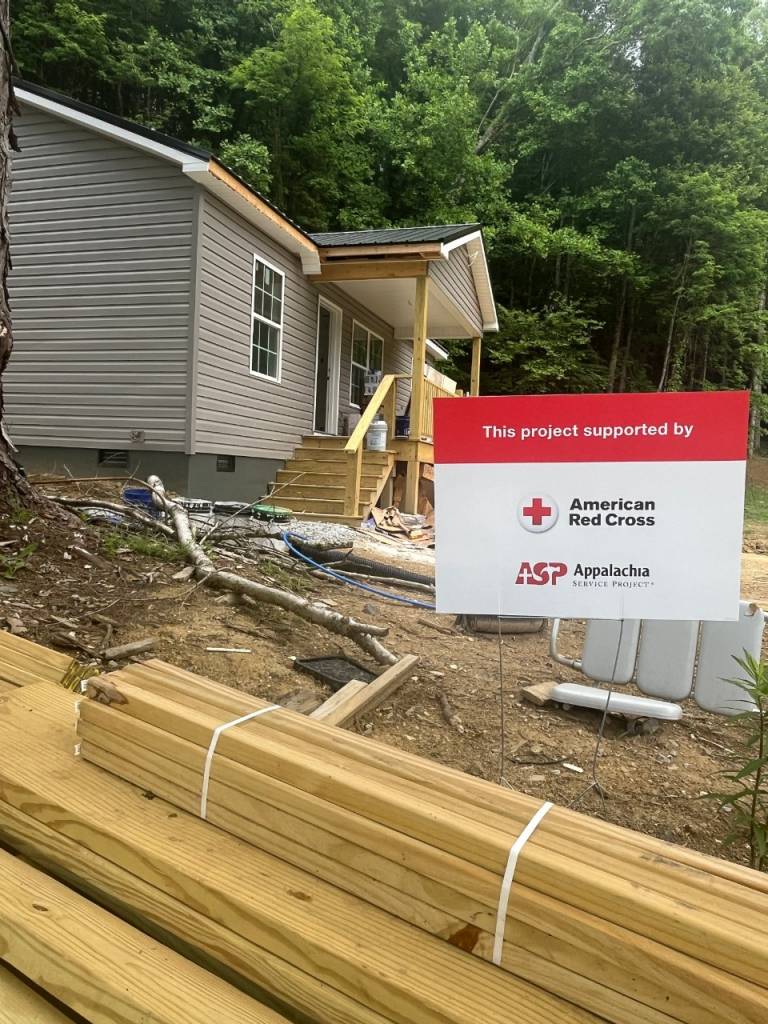
The Long-Term Recovery grants program has awarded grants to community organizations to support projects like home repair and rebuilding, legal services, and mental health services.
The most recent round of financial assistance surprised people, coming as it did nearly two years later when many other organizations and agencies had moved on. “I can’t believe it was that easy,” said Melinda in Tennessee. “I appreciate you guys so very much.” "Am I out of the woods yet? No," said James in South Carolina. "But I can see the light." The impact was not lost on the Red Cross caseworkers who had raised their hands to help distribute this assistance. Many were from the affected communities themselves, working through their own recoveries as they helped their communities heal and rebuild.
CONNIE’S STORY
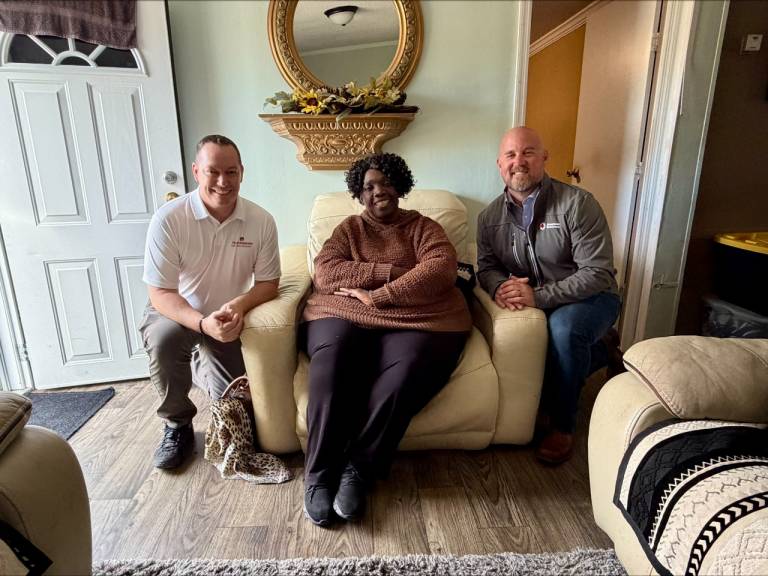
Connie lived in Douglas, Georgia before Hurricane Helene hit. Recovery is a team effort, and this was certainly the case for her. During a site visit, members of the Red Cross Long-Term Recovery team joined partners in surveying the repair work in her home. Connie pointed to the ceiling, indicating the repairs done by Team Rubicon, and to the floor, which was repaired using funds from an additional round of financial assistance provided by the Red Cross. Together, they had made it possible for her to return to a home that was safe and secure. “Thank you for helping me… I don’t know how I’d do it on my own.”
THE LAST STEP
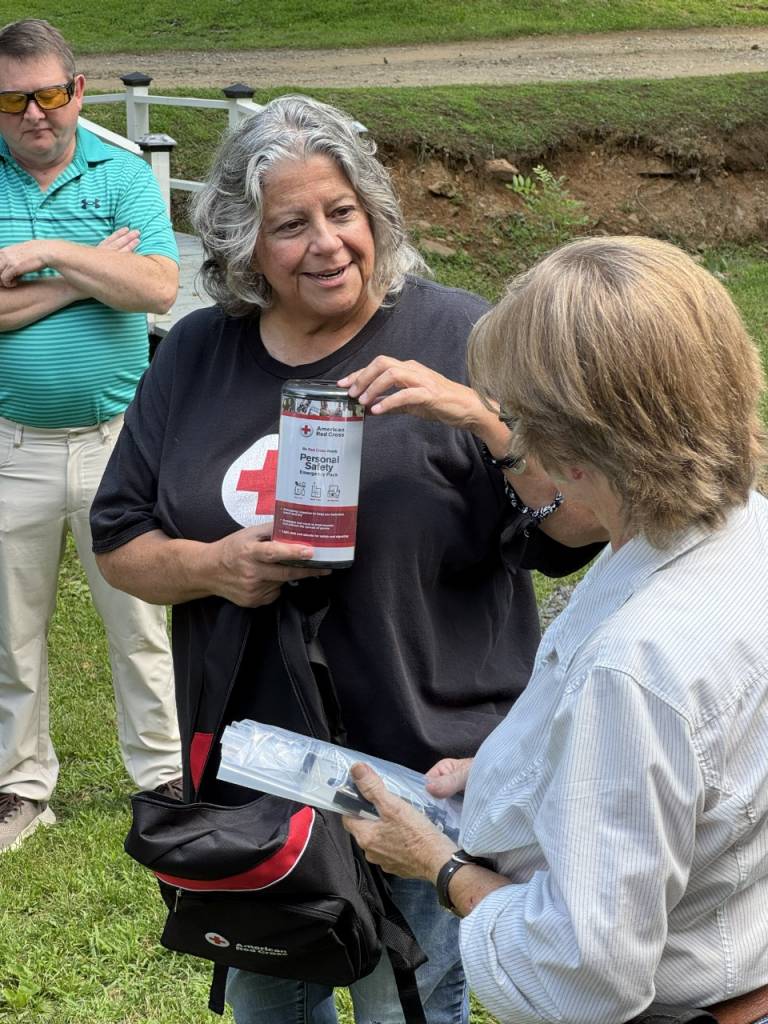
The first step in the disaster cycle is preparedness, and for long-term recovery, it’s also the last, as we work to ensure we leave affected families more prepared for the next disaster. For example, as Helene operations close in TN, GA and SC, long-term recovery teams there are focused on preparedness. This includes coordinating CPR classes for local partners, distributing preparedness materials and disaster backpacks, and leading presentations for community groups.
COMMUNITY MOBILIZATION
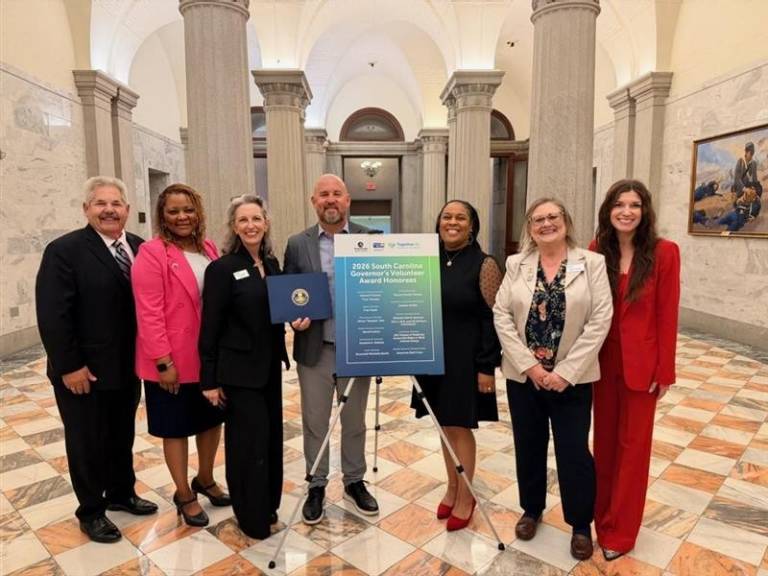
The behind-the-scenes collaboration and coordination with partners helps disaster recovery run smoothly, or not. Nowhere was this more apparent than when Habitat for Humanity, a national disaster partner, nominated the Red Cross Long-Term Recovery team for the South Carolina Governor’s award, for the work it had done serving Helene-affected families in that state.
“Since day one, the Red Cross has been in the room, not to mention in the field, immediately working towards relief and recovery,” said Nancy Lee, executive director of Habitat for Humanity South Carolina. “To Habitat for Humanity, the Disaster Recovery Volunteer Group title is simply synonymous with the American Red Cross. Housing recovery from Hurricane Helene will take years; we are grateful to know Red Cross will be working alongside us every step of the way.”
There is no higher praise than to be recognized by the fellow humanitarians we work alongside day after day and will inevitably work alongside for years to come. The team worked with dozens of partners across five states, each with their own expertise and connection to their community. This is what community mobilization is all about.
LOOKING AHEAD
We know that disasters like these are becoming increasingly common. They will continue to impact communities across multiple states, causing widespread devastation and becoming a recurring reality.
But through it all, with our partners, we will continue to carry out our humanitarian mission, to support those most in need. There will never be another Helene or Milton, but we will be ready for whatever comes next.
For more stories from this operation, visit the Hurricane Helene story map, the Hurricane Milton story map and the Hurricane Helene Two-Year Report.
About the American Red Cross:
The American Red Cross shelters, feeds and provides comfort to victims of disasters; supplies about 40% of the nation’s blood; teaches skills that save lives; distributes international humanitarian aid; and supports veterans, military members and their families. The Red Cross is a nonprofit organization that depends on volunteers and the generosity of the American public to deliver its mission. For more information, please visit redcross.org or CruzRojaAmericana.org, or follow us on social media.
Support all the urgent humanitarian needs of the American Red Cross.
Find a drive and schedule a blood donation appointment today.
Take a class and be ready to respond if an emergency strikes.