2025 has been a difficult year for thousands of families devastated by disasters across the country. Through it all, people stepped up to care for each other through the American Red Cross.
In a powerful display of community, local volunteers — who make up 90% of our workforce — teamed up with partners to deliver shelter, food, comfort, health services and recovery support after this year’s disasters. This included the most destructive winter wildfires in California, devastating floods in Alaska, tornado outbreaks across the Midwest, and severe storms and flash floods nationwide.
Beyond large-scale disasters like these, every day Red Cross volunteers across the country also responded to home fires.
It takes a village to overcome these overwhelming events. We’re grateful to everyone who pitched in — from volunteers helping neighbors nearby, to those delivering aid in a different state, to donors whose generosity became a blanket around a family’s shoulders.
Here is a quick look back at some of the amazing work that Red Crossers were able to accomplish with the help of donors from coast to coast.
LOCAL HOME FIRES are the most frequent disaster to which Red Cross volunteers respond. Our Disaster Action Teams (DAT) work year-round in their communities to help families stay safe. They help people like Michael Baker of West Virginia, who knows first-hand the value of smoke alarms and the Red Cross Home Fire Campaign.
Baker lit a fire on an ordinary cold morning, not expecting it to have lasting impacts on his life. “It was chilly, and I started a fire,” Baker said. “The next thing I know, the fire went straight through the roof.”
He had recently moved into the home over the summer and didn’t know the chimney had been capped. Within minutes, smoke filled the rooms. Baker said he’s usually a light sleeper, and that helped. The first alarm went off, and he was already on his feet.
“When the second one went off, my roommate came out, got the kids and went out the back glass door and was safe,” Baker said.
Baker explained that the alarms did exactly what they were meant to do. They bought everyone the time they needed to get out before the fire spread. They met in the detached garage. “Once those alarms went off, all we had to do was get out. We did not have to stop and think. It was automatic,” he said.
That preparation came from a visit they received in July, when Red Cross volunteers installed smoke alarms in Baker’s home and showed them how to respond to a fire as part of a Sound the Alarm event. During these visits, Red Crossers educate families about home fire safety, help them create escape plans and install free smoke alarms, which can cut the risk of death by half.
Baker remembers the installation as simple and fast. He trusted the team to place each alarm exactly where it would matter most. One near the kitchen, one close to his room, and another in the hallway. He now tells others that this kind of help is worth it. He believes it made the difference between a frightening morning and a tragic one.
“If you value your life, which is the most important thing you have,” said Baker. “Make sure you get smoke detectors in because they do save lives. Especially if you’re a heavy sleeper, those things will go off.”
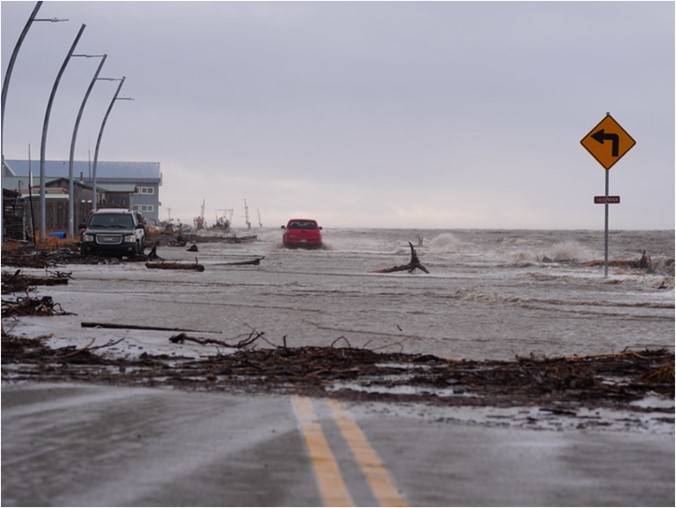
TYPHOON HALONG IN ALASKA When people think about places that experience hurricanes and typhoons, Alaska generally does not come to mind. However, over the weekend of October 11, remnants of Typhoon Halong slammed into Western Alaska and destroyed several coastal villages, forcing the evacuation of as many as 2,000 people after their communities were left in ruins by the storm.
This disaster response presented logistical challenges unique to Alaska’s geography and environment. Most impacted areas were only accessible by air or sea, so evacuees were airlifted from villages first by helicopter to a temporary shelter, then by way of a military cargo plane to Anchorage — nearly 500 miles away. Red Cross responders provided immediate sheltering and met with each evacuated household to assess their immediate personal, health, and mental health needs as they began recovery planning.
Although logistically challenging, our disaster workforce was still able to support and connect with community members in emergency shelters and as they moved into longer term housing options.
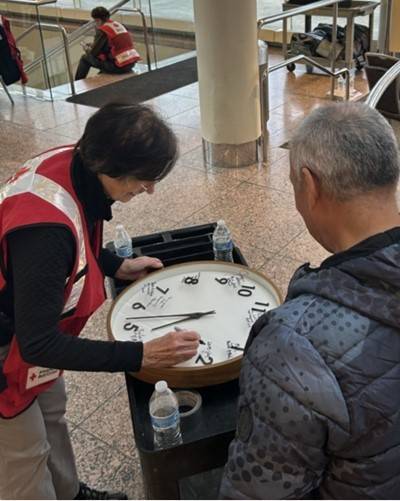
In the Egan Center in Anchorage, a clock hung on the wall for the duration of the emergency sheltering operation. As individuals moved to longer term sheltering, community member Elsie Snyder requested to keep the clock as a reminder of the Red Cross and the time they spent together. Elsie invited shelter workers to each sign their name on the clock.
The clock is now hung in Elsie's temporary home, where it reminds her family of where Red Cross volunteers became members of their family. Elsie continued to return to the Egan Center while it was still operating as an emergency shelter, so she could visit and be close with the volunteers that helped her and her family.
"A sense of belonging started with them as we stepped in, as each fostered into recognition of our values and connection of our community."
The community members in Alaska had a profound impact on the Red Crossers that answered the call to respond after Typhoon Halong. It was an honor to work with community and government partners to provide effective and culturally informed care to families like Elsie's as they embarked on their own unique recovery journeys.
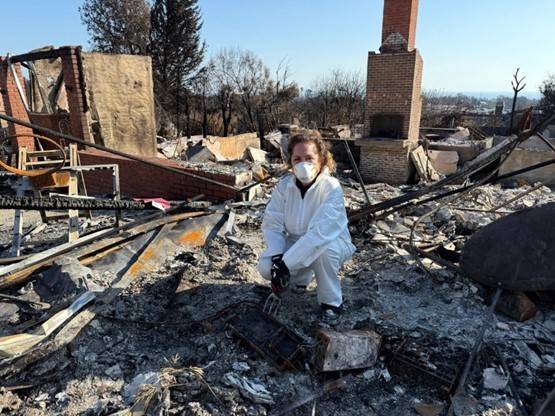
LOS ANGELES WILDFIRES In January of 2025, a fire sparked in Southern California that would change the lives of millions of people. Christine, a Pacific Palisades resident, was one of thousands of people that were forced to evacuate due to the fast-spreading flames.
She remembers feeling “a lump in my throat, right before I drove away from our house.” She rarely captures photos or videos, but for some reason that day, “I whipped out my phone and took a video.” She remembers seeing smoke on the ridge behind their home, but otherwise a brilliant blue sky. She said aloud as she filmed, “Bye, house! We love you so much. We hope you survive this day.”
Sadly, it was not to be. The home was destroyed in the Palisades Fire.
She plans to rebuild her home in Pacific Palisades but worries about her financial ability to do that. “The line keeps moving,” she says. It’s all very uncertain. For now, she’s just taking it one day at a time.
Christine is a single mom and a widow. Her husband died young, she says. He was an artist whose work filled the walls of the home where they raised their son together. She saved just one small painting when they evacuated. Losing the house wasn’t just about the physical structure; it was losing the last remnants of her husband and the life they built together.
After the fire, she says she shut down emotionally. Despite seeing people on the news weeping over their lost homes, she found that she could not. “When the Red Cross called me, she asked me for my address. She was so kind, so calm.” For the first time, she cried. “It released me to cry. That was important.”
The Immediate Assistance she received from the Red Cross helped her replace essentials that could not wait like pajamas, toothpaste. She was shocked by “the amount [of items] you need just to take care of yourself, your son, your dog.” The funds she received gave her the backup she needed to help pay for those things.
Months later, when the Red Cross texted her about an additional round of financial assistance, Bridge Assistance, she initially thought it was a mistake. “You guys already texted me,” she explained, sure she’d be told she was ineligible.
Instead, she was told it was additional assistance to what she had already received. She was stunned to receive such grace from strangers. Other organizations don’t trust you to know what you need, she said, often providing support with strings attached. “It was so touching,” she said of the assistance she received from the Red Cross. “It was as if the Red Cross was saying ‘we trust you to know what you need.’”
For her, it was a full circle moment. A former Red Cross donor herself, she felt “total gratitude.” She now knows firsthand how the money donors like her give gets into the hands of real people, delivered quickly and with kindness. For her, it was “a hand being held out, this little moment of grace.”
“I trust you,” she says, when asked why she donated to the Red Cross in the past. “Still on my knees, with humbleness and gratitude. You guys make the process not just human and kind, but easy. This is why you are so special.”
Right now, “we need all the love we can get,” she concluded. “A sense that the world is kind.” This is what she got from the Red Cross.
LOOKING AHEAD When a disaster occurs, people need immediate relief and recovery support. Every eight minutes, the Red Cross responds to a disaster somewhere in our country. Thanks to our generous donors and selfless volunteers, we'll continue to be there when disasters strike, providing relief and hope in people's darkest hours.
Annual Disaster Giving Program (ADGP) Thanks to the dedicated commitment of our American Red Cross Annual Disaster Giving Program (ADGP) and Disaster Responder members, the Red Cross stands ready to act at a moment’s notice. Their forward-thinking generosity keeps us prepared for crises of all kinds, ensuring we can be there wherever and whenever we’re needed most.
Mission Leader Members: Amazon; American Airlines; Bank of America; The Church of Jesus Christ of Latter-day Saints; Costco Wholesale; Dollar General; Lowe's; State Farm
ADGP $1M Members: Anheuser-Busch Foundation; Caterpillar Foundation; Chick-fil-A; CMA CGM Foundation; Delta Air Lines; Enterprise Mobility Foundation; FedEx; Honda; Lilly Endowment Inc.; McDonald’s Corporation; Merck; Nationwide Foundation; The Pfizer Foundation; The Starbucks Foundation; Takeda; Truist Foundation; VSP Vision; Walmart and the Walmart Foundation; Wells Fargo Foundation
ADGP $500k Members: ALDI; Altria Group; Aon; Baxter International Foundation; Bread Financial; Capital One; Citi Foundation; The Clorox Company; Danaher Foundation; Darden Foundation; Delta Dental; Edison International Foundation; Energy Transfer/Sunoco Foundation; Ford Philanthropy; Fox Corporation; GE Aerospace Foundation; General Motors; Google.org; Harbor Freight Tools Foundation, LLC; HCA Healthcare; The Home Depot Foundation; The J.M. Smucker Company; Johnson Controls Foundation; ; The Kroger Co. Foundation; Liberty Mutual Insurance; Lockheed Martin Corporation; Marathon Petroleum Corporation; Mastercard; Microsoft; Mondelēz International Foundation; New Balance Foundation; Northrop Grumman Foundation; NTT Data; Paul Davis Restoration; PayPal; PepsiCo Foundation; PetSmart Charities; Southeastern Grocers and the SEG Gives Foundation; Stryker; Suburban Propane; Target; The TJX Companies, Inc.; Toyota; United Airlines; UPS; USAA; U.S. Bank Foundation; Visa Foundation; The Walt Disney Company; The Wawa Foundation; Wesco; Wingstop Restaurants; Zoetis Foundation
Disaster Responder Members: 7-Eleven Cares Foundation; Adobe Foundation; The AES Corporation; Aflac; The Allstate Foundation; American Family Insurance; American Water Charitable Foundation; Ameriprise Financial; Assurant; AvalonBay Communities, Inc.; Avangrid Foundation; Barclays; Bath & Body Works; Build-A-Bear Foundation; Canadian National Railway; CarMax; CDW; Charles Schwab Foundation; Cisco and Cisco Foundation; CNA Insurance; The Coca-Cola Foundation; The Deluxe Foundation; DENSO North America Foundation; DHL Supply Chain; The DICK’S Sporting Goods Foundation; Dollar Tree; Duke Energy; Elevance Health Foundation; Eli Lilly and Company Foundation; Equitable ; Erie Insurance; Fastenal; Grainger; HP Foundation; International Paper; Invitation Homes; John Deere; Johnson & Johnson Foundation; Keurig Dr Pepper; Kimberly-Clark Corporation; The Kraft Heinz Company Foundation ; L’Oréal; The Labcorp Charitable Foundation; Lenovo ; LKQ; Macy’s, Inc.; Major League Baseball; Martin Marietta; Masco Corporation; McKesson Foundation; MetLife Foundation; Mutual of Omaha Foundation; NextEra Energy, Inc.; Nike Foundation; Norfolk Southern; Northwestern Mutual; Novartis US Foundation; Old Dominion Freight Line; Oxy; Pacific Life Foundation; Prudential; Raymond James; RBC Foundation USA; Reckitt; Reynolds American Inc.; RTX; Ryder System, Inc.; Salesforce; Security Finance’s Lending Hand Foundation; ServiceNow; Southwest Airlines; Stanley Black & Decker; Stephens; Tennant Company; Toyota Tsusho America, Inc.; Uber; U-Haul International; Ulta Beauty Charitable Foundation; US Foods; Yum! Brands; Zurich
About the American Red Cross:
The American Red Cross shelters, feeds and provides comfort to victims of disasters; supplies about 40% of the nation’s blood; teaches skills that save lives; distributes international humanitarian aid; and supports veterans, military members and their families. The Red Cross is a nonprofit organization that depends on volunteers and the generosity of the American public to deliver its mission. For more information, please visit redcross.org or CruzRojaAmericana.org, or follow us on social media.
Support all the urgent humanitarian needs of the American Red Cross.
Find a drive and schedule a blood donation appointment today.
Take a class and be ready to respond if an emergency strikes.