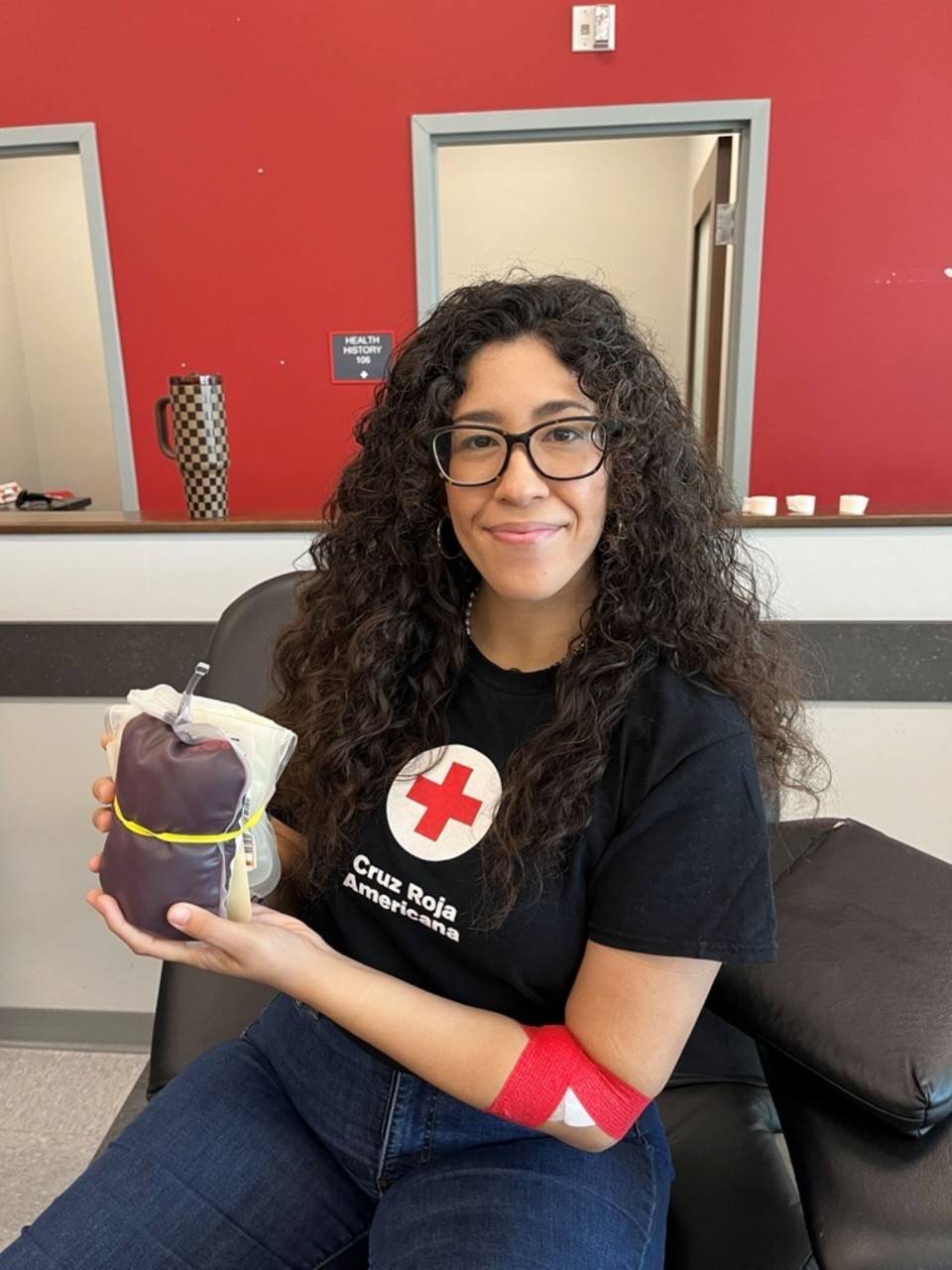
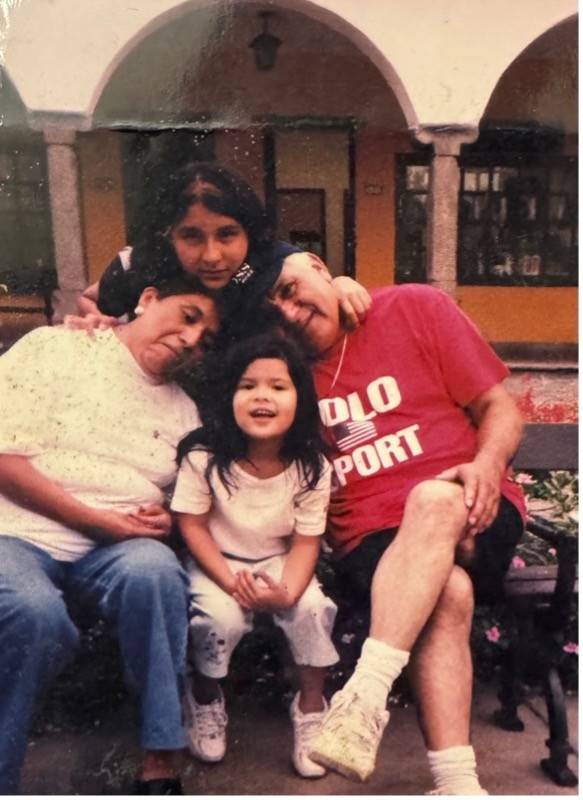
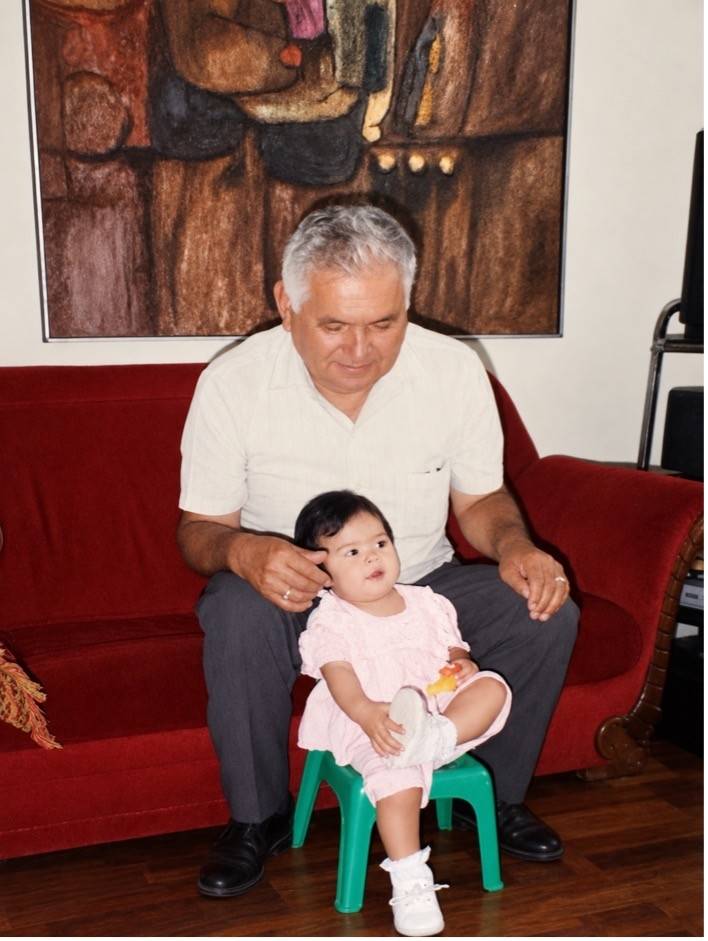
This Hispanic Heritage Month, the American Red Cross honors humanitarians like volunteer Magnolia Chiri Garcia, who are strengthening communities by sharing their skills, resilience, and compassion with others. Inspired by her grandfather's lifelong commitment to service, Magnolia now carries those lessons into every community she serves while being that same role model for her son. In doing so, she is part of a powerful chain of people lifting one another up across generations, a reflection of this year’s Hispanic Heritage Month theme, Comunidad en Acción: Stronger Together.
"Being stronger together means making sure everyone has access to this lifesaving information, regardless of the language that we speak," Magnolia said. "When somebody who's bilingual teaches CPR in Spanish, we're giving that family confidence and skills to step in during an emergency. And it's how we can look out for one another."
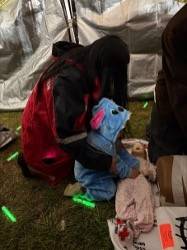
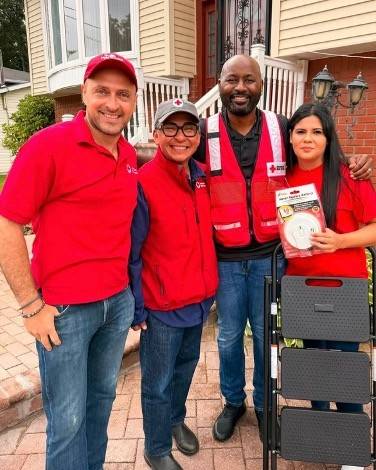
Whether she's teaching Hands-Only CPR, installing smoke alarms, or supporting families after a home fire, Magnolia uses her passion for service and bilingual skills to help people prepare for and respond to emergencies.
Magnolia is passing those values on to the next generation and to her greatest admirer: her 2-year-old son. She shows him how communities become more resilient when neighbors show up for each other.
"Everything I do is true to an example I want to set for my son," Magnolia said. "I want him to understand that true strength is found in kindness, compassion, and showing up for others when they need us most."
From Training to Lifesaving Action
While attending a doctor's appointment, Magnolia suddenly found herself facing a real-life emergency when someone nearby went into cardiac arrest. Without hesitation, she rushed over and began CPR, continuing until first responders arrived. Because of her quick action and training, the individual survived.
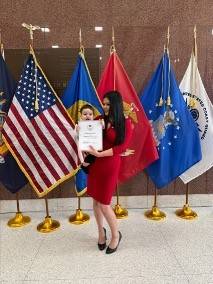
For her lifesaving efforts, Magnolia received the American Red Cross Certificate of Merit, the highest-ranking lifesaving award granted to Red Cross-trained individuals whose actions save or sustain a life. Her family and her little boy were by her side throughout the ceremony.
"All the pictures were taken with my son, so it was amazing because he could see that Mommy saved somebody," Magnolia said. "And I was able to with the training from the Red Cross."
Magnolia's ability to step in during an emergency was years in the making. She was first trained by the Red Cross as a teenager, becoming CPR certified at age 14 while working as a lifeguard. Later, she became an EMT while volunteering with the American Red Cross of Greater New York.
Overcoming Adversity
But during an EMT shift at 18 years old, Magnolia faced an emergency of her own. While helping a patient in an ambulance, an oxygen tank broke loose and struck her in the head, causing a traumatic brain injury.
"When I got out of the hospital, I realized I was missing pieces," she said. "I wasn't remembering my day-to-day, I didn't really remember going to college. I felt very alone."
One person made sure she never faced that journey by herself: her grandfather. He traveled to the U.S. from Peru to support her recovery and remained by her side as she worked to rebuild her confidence and independence. When Magnolia decided to go back to school, he even accompanied her to her classes.
While her recovery was long and painful, Magnolia remained focused on getting back to helping others. Even while she was still healing, she constantly asked when she could return to serving her community. That determination reflects the example she learned from her grandfather and continues to guide her today.
Building the Foundation to Bridge Communities
Growing up in Peru until she was 11 years old, Magnolia frequently volunteered alongside her grandfather while her father, who served in the military, was deployed. Together, they delivered toys during the holidays and helped provide meals to people in need.
"I was probably six or seven years old watching him, and now, my son watches me from a distance like that," Magnolia said.
She says her experience in Peru also helps her connect with many of the Spanish-speaking families she serves through the Red Cross. Her goal is to ensure these communities gain access to lifesaving skills, preparedness information, and support in the language they are most comfortable speaking, while helping people feel understood and empowered to ask for help when they need it most.
"My parents came here not speaking English, so I understand how important it is for people to feel seen and comfortable asking for help," Magnolia said. "When I go to home fires, I can see how they're broken inside, but they say, ‘No, I'm okay, I don't need help,’ It's a culture thing. But because I’m Peruvian, I can relate, and they realize I’m safe to talk to.”
For Magnolia, helping build stronger communities also means breaking down barriers that can prevent people from accessing lifesaving information. She notes that CPR training for the public is not as common in Peru and is typically geared toward medical professionals. By teaching CPR and promoting Red Cross training opportunities, Magnolia is helping more families understand that lifesaving skills are accessible to everyone.
"Cardiac arrest can really happen to anybody,” Magnolia said. “It doesn't judge you by the color of your skin, your religion, or anything else.”
For Magnolia, that message is personal. Heart disease has affected multiple members of her family. Her father survived two heart attacks, and both her grandfather and aunt sadly passed away following cardiac emergencies. Magnolia hopes more families, particularly those who may not have had access to CPR education in the past, feel empowered to become trained and prepared.
By learning CPR, families and communities can be stronger together by being better prepared to respond to emergencies when seconds count. Take that first step in building resilience by getting trained. Find a CPR class near you: https://www.redcross.org/take-a-class.
About the American Red Cross:
The American Red Cross shelters, feeds and provides comfort to victims of disasters; supplies about 40% of the nation’s blood; teaches skills that save lives; distributes international humanitarian aid; and supports veterans, military members and their families. The Red Cross is a nonprofit organization that depends on volunteers and the generosity of the American public to deliver its mission. For more information, please visit redcross.org or CruzRojaAmericana.org, or follow us on social media.
Support all the urgent humanitarian needs of the American Red Cross.
Find a drive and schedule a blood donation appointment today.
Take a class and be ready to respond if an emergency strikes.