Did you know spring is the most active weather season of the year? Spring weather can lead to wildfires, tornadoes, flooding, severe thunderstorms and damaging winds. Continue reading to learn more about what threats this spring may bring, and what you should do to get your household ready.
Q. Will there be a lot of wildfires this year? What parts of the country are at risk for fires?
A. This year, the wildfire risk is high with dry conditions covering 40% of the country. Experts say the highest risk will be highest across the Four Corners (southwestern corner of Colorado, southeastern corner of Utah, northeastern corner of Arizona, and northwestern corner of New Mexico). Elevated risks are also showing across Florida and parts of the mid-Atlantic region. You can find wildfire safety steps here.
Q. Is this going to be a busy season for tornadoes?
A. Reports indicate there may be fewer tornadoes this spring compared to last year. However, severe thunderstorms are more likely to trigger damaging winds and torrential rain.
Q. Where are severe thunderstorms most likely to occur in the coming weeks?
A. Experts report severe weather threatens the Mississippi Valley into the Gulf states, especially during March and April. In these areas, storms are more likely to produce damaging straight-line winds and flooding downpours, and tornadoes will still pose a threat. Check out our tornado safety information.
Q. Can we expect a lot of flooding this year? Where?
A. The National Weather Service reports there will be a below-average to normal risk for flooding across much of the U.S. due to dry soil conditions. The biggest threats include ice jams in the Midwest/Great Lakes, potential for moderate flooding in the Ohio/Mississippi Valleys, and high tide flooding in coastal areas through April 2026. Find flooding safety steps here.
Q. Now I know the risks. How do I get my household ready?
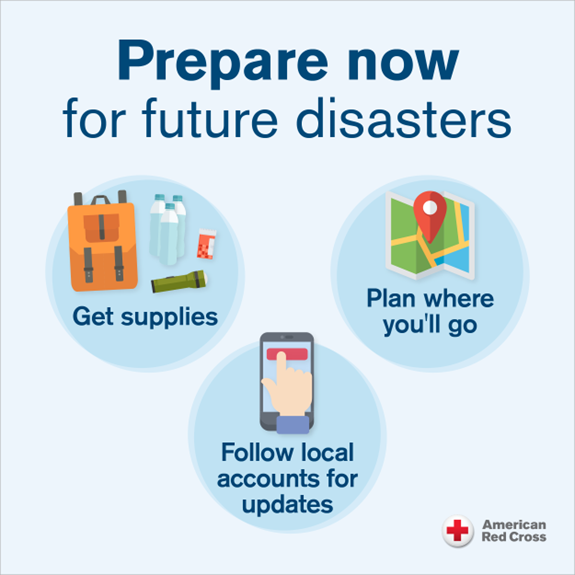
A. The first steps involve planning ─ it’s your best defense. Depending on the emergency, you may need to stay where you are or go somewhere else to stay safe. If you may need to leave, think about where you’ll go, how you’ll get there, where you’ll stay and what you’ll take with you. Plan well in advance if you’ll need help leaving or if you use public transportation. Don’t forget to include pets in your plans.
Also plan on how you will reconnect with loved ones if you are separated or if the phone or internet is down. Write down important phone numbers on a contact card and carry it with you. Decide how you will monitor local weather and news reports even if the power goes out. Have a backup battery or another way to charge your cell phone, and a battery-powered or hand-crank radio. Finally, sign up for free emergency alerts from your local government.
Q. Where do I sign up for local emergency alerts?
A. Visit your local government’s emergency management website — or the emergency preparedness page — and look for information about staying informed or signing up for their emergency alert system or public safety messages. Then follow the site’s instructions to create an account or provide your contact information. Typically, local emergency alerts can be sent to your phone via text, email or other methods.
Q. Why is it important for me to prepare for a disaster?
A. Disasters can happen anywhere, anytime. They can be as small as a stovetop fire or as large as a massive earthquake. In fact, the Red Cross responds to about 60,000 disasters every year in the U.S. By having an emergency plan and critical supplies ready, you can react quickly when a disaster strikes — even if you don’t have much warning.
Q. I have a disability; are there specific steps I should consider when preparing for disasters?
A. Being prepared for a disaster is important for everyone. Depending on your needs, there might be additional considerations for your emergency planning. The Red Cross recommends reviewing your family plan regularly and thinking through your specific needs. We have more information here to help you prepare.
Q. Okay, our plan is finished. What’s our next step?
A. Now it’s time to gather your supplies and organize them into a go-kit and a stay-at-home kit. Your go-kit should include three days of supplies that you can carry with you and phone or device chargers. Your stay-at-home kit should have two weeks of food and water, and a one-month supply of medications and medical supplies. Keep your personal, financial and medical records in a safe place that’s easy to access (ideally, make hard copies and a secure electronic backup). Consider keeping a list of your medications and dosages on a small card to carry with you.
Customize your kits to meet your specific needs. Do you have young children? If so, include bottles, formula, wipes and diapers. If you have pets include leashes, carriers, food, bowls, litter, litterbox and photos of you with your pet in case you are separated. Include any medical supplies that family members may need, such as hearing aids with extra batteries, glasses, contact lenses, syringes, etc.
Other basic supplies include: a gallon of water per person per day; non-perishable, easy-toprepare food; a can opener; a flashlight; a battery-powered or hand-crank radio; extra batteries; chargers for your devices; a multi-purpose tool; a first aid kit; sanitation and personal hygiene items; maps of the area; an emergency blanket; extra cash; family and emergency contact information; and a change of clothes.
TWO MORE THINGS Once you’re prepared, check with loved ones and neighbors to see if they need help with their plan. Consider taking a first aid and CPR course so you’ll know what to do in an emergency if help is delayed. Visit redcross.org/TakeAClass or call 1-800-RED CROSS (1-800-733-2767) to register for a class
About the American Red Cross:
The American Red Cross shelters, feeds and provides comfort to victims of disasters; supplies about 40% of the nation’s blood; teaches skills that save lives; distributes international humanitarian aid; and supports veterans, military members and their families. The Red Cross is a nonprofit organization that depends on volunteers and the generosity of the American public to deliver its mission. For more information, please visit redcross.org or CruzRojaAmericana.org, or follow us on social media.
Support all the urgent humanitarian needs of the American Red Cross.
Find a drive and schedule a blood donation appointment today.
Take a class and be ready to respond if an emergency strikes.