The American Red Cross is responding across multiple states as critical wildfire weather continues across the Plains and heavy snow and rain affect all of California.
Critical fire weather continues in New Mexico, Texas, Oklahoma and Missouri where multiple fires are already burning. Meanwhile, in California, nonstop storms are causing heavy snow in the mountains and heavy rain along the coast and across the valleys. Almost 64,000 customers are without power. The steady stream of storms will continue until late next week, burying parts of the Sierra Nevada mountains under as much as 16 feet of snow. Across the state, people face the danger of avalanches, flooding and landslides.
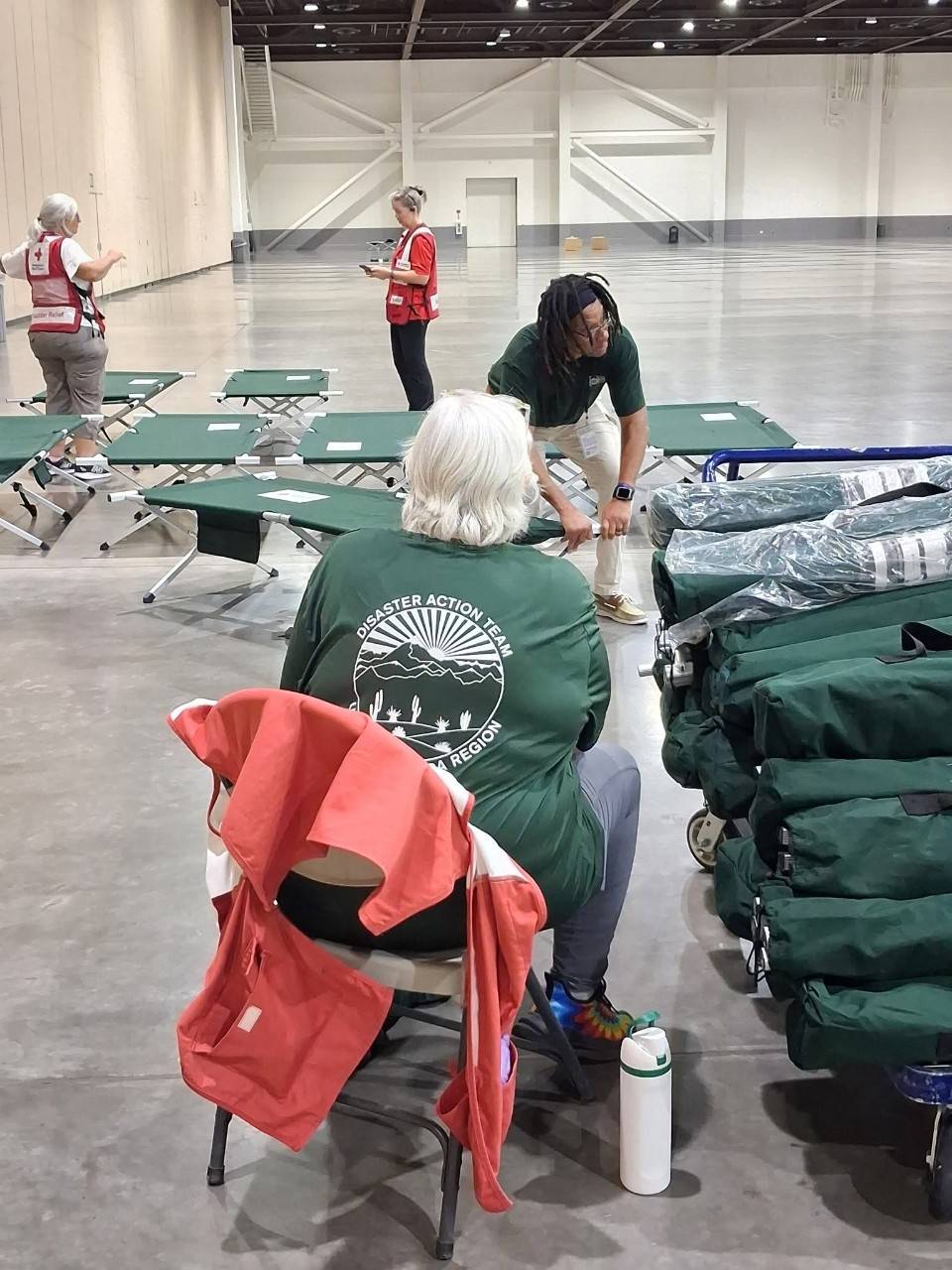
As the situation continues to evolve, the Red Cross and partners are working with state and local officials to ensure help is being provided where needed. Shelters are open in California and Texas and additional Red Cross disaster teams are standing by to respond if needed. Here are steps people can take to help them stay safe.
Download the free Red Cross Emergency app here for real-time alerts, expert advice in English and Spanish, and available disaster shelter and support locations.
Get ready now in case you have to evacuate. Remain vigilant and be alert for any new warnings for your community.
- If you need to leave your home, think about where you’ll go, how you’ll get there, where you’ll stay and what you’ll take with you. Don’t forget to include pets in your plans.
- Write down important phone numbers on a contact card and carry it with you.
- Monitor local weather and news reports even if the power goes out. Have a backup battery or another way to charge your cell phone, and a battery-powered or hand-crank radio.
- Gather critical supplies — like food, water and medicine — and organize them into a go-kit and a stay-at-home kit. Your go-kit should include three days of supplies that you can carry with you. Your stay-at-home kit should have two weeks of food and water and a one-month supply of medications and medical supplies.
- If you have pets, include leashes, carriers, food, bowls, litter, litterbox and photos of you with your pet in case you’re separated. If you have young children, include diapers, wipes and formula.
- Keep your personal, financial and medical records in a safe place that’s easy to access (hard copies or securely backed up). Consider keeping a list of your medications and dosages on a small card to carry with you.
Find shelter locations on redcross.org, the free Red Cross Emergency app or by calling 1-800-RED CROSS (800-733-2767). You can also follow your local Red Cross or emergency officials on social media, sign up for free local government alerts or monitor local news.
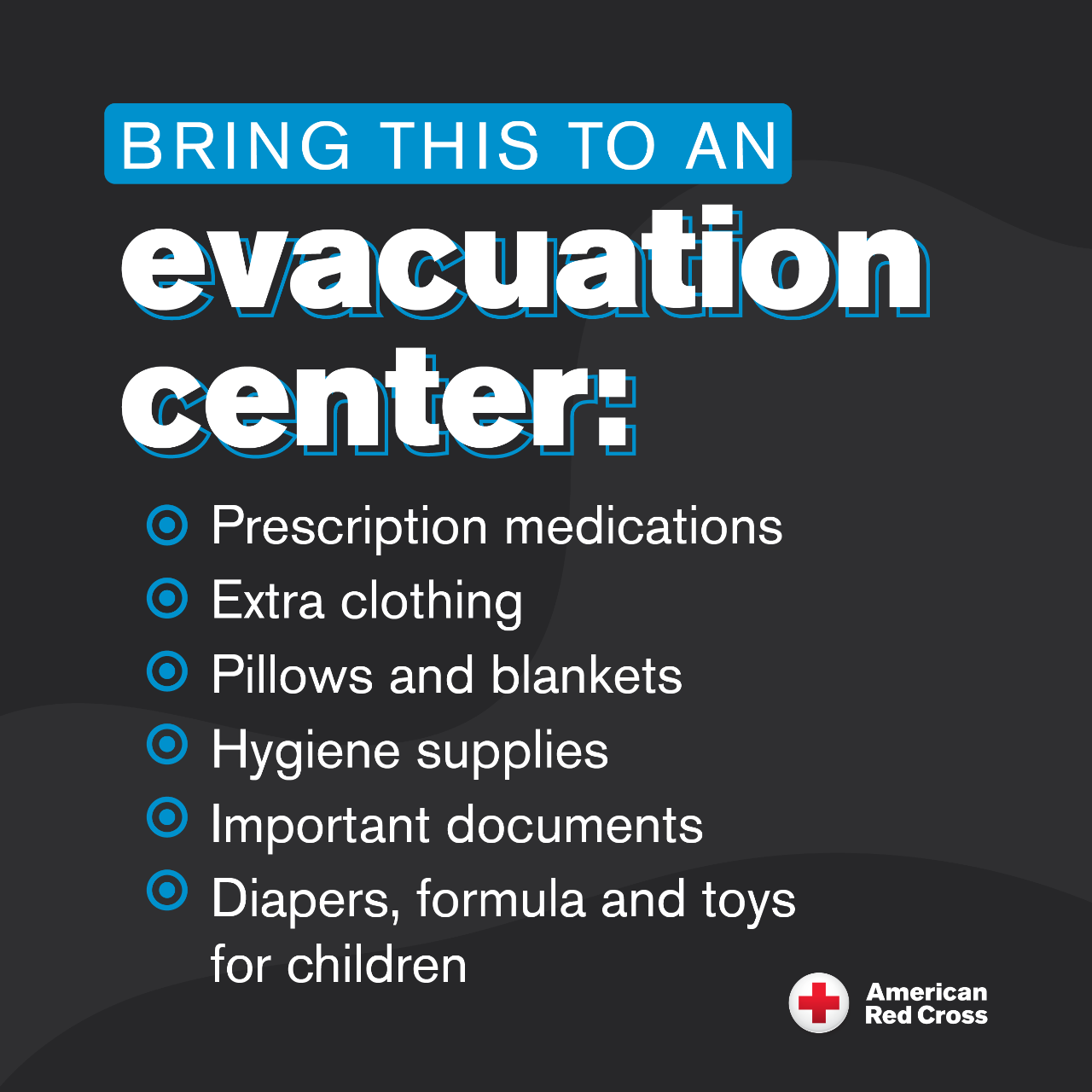
- If possible, we encourage people who plan to stay in a shelter to bring prescription medications, extra clothing, pillows, blankets, hygiene supplies, other comfort items and important documents.
- We do everything we can to accommodate service animals and pets comfortably in our shelters. Sometimes, pets may need to be housed in a different location with support from local partners.
A wildfire can spread very quickly, leaving you little time to get to safety. Be prepared to evacuate at a moment’s notice and obey all instructions from officials.
- If you feel you’re in danger, leave immediately. You might not get an official notice to evacuate.
- If you have a car, ensure the gas tank is full and park it facing the direction of your evacuation route.
- Keep your pets in one room, so you can find them quickly if you need to evacuate.
- Monitor local weather and fires near you. Stay up to date on evacuation routes and road closures that could impact your plans.
- Limit exposure to smoke and dust. Keep indoor air clean by closing windows and doors to prevent outside smoke from getting in.
- To help keep your indoor air clean, don’t use anything that burns, such as candles, fireplaces and gas stoves.
WINTER SAFETY: Stay warm indoors. If your home becomes too cold, go to a public library, shopping mall or warming center.
- If you must go outside, wear layers of loose clothing, a coat, hat, mittens and water-resistant boots. Use a scarf to cover your face and mouth.
- Be careful walking on snow or ice and avoid overexertion when shoveling snow. If possible, work with a partner and take frequent breaks.
- FROSTBITE AND HYPOTHERMIA Areas first affected by the cold include your nose, ears, cheeks, chin, fingers and toes.
- Signs of frostbite include pain, numbness or a change in skin color.
- Signs of hypothermia, which can be deadly, often include shivering, confusion, drowsiness and slurred speech.
- Act fast and get out of the cold immediately if you see signs of hypothermia or frostbite. Get emergency medical care right away.
Turn around, don’t drown! Don’t walk, swim or drive through floodwaters.
- Stay off the roads. If you must drive and you encounter a flooded roadway, turn around and go another way.
- Follow evacuation routes and don’t try to take shortcuts because they may be blocked.
- If you’re caught on a flooded road and waters are rising around you, quickly get out of the car, move to higher ground and stay there.
- Check with loved ones and neighbors to see if they need help.
Strong winds can lead to power outages. If the power goes out, turn off and unplug everything to avoid power surges. Leave one light on, so you’ll know when power is restored.
- Use flashlights or battery-operated lanterns — not candles — to help avoid fires.
- Don’t drive unless necessary. Traffic lights will be out, and roads could be congested.
- Decide if you need to leave if your home is too hot or cold, or if you have medical devices that need power.
- Check with loved ones and neighbors to see if they need help.
- Food safety: To prevent illness, keep food cold. When in doubt, throw it out. Eat fresh, perishable foods first. Keep refrigerator and freezer doors closed as much as possible to help keep food cold. Use coolers with ice if necessary. Measure the temperature in your refrigerator and freezer with a thermometer. Throw out perishable food that has been warmer than 40 degrees Fahrenheit.
- Generator safety: If you’re using a generator, keep it dry and don’t use it in wet conditions. Carbon monoxide kills. If you start to feel sick, dizzy or weak, get to fresh air right away.
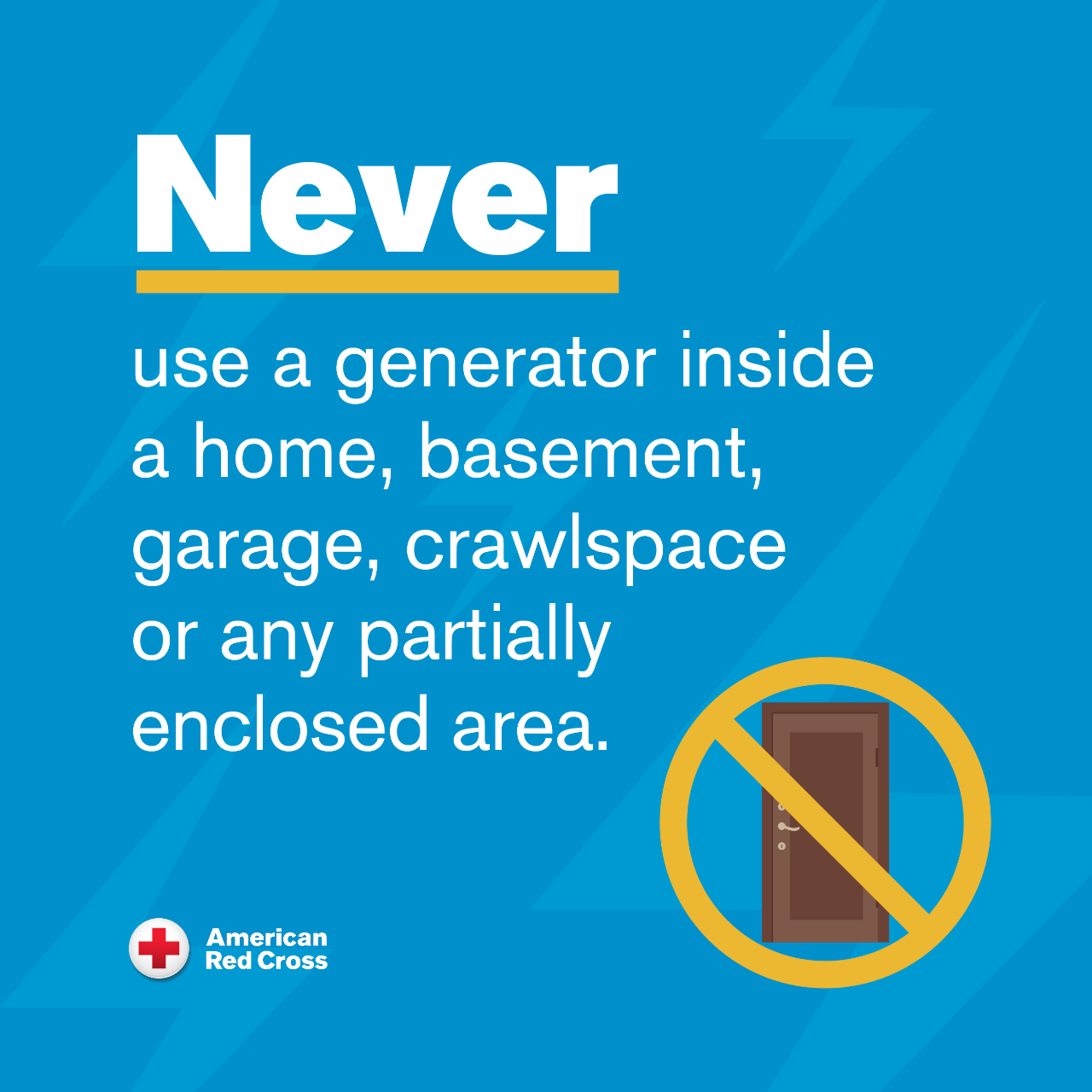
- Never use a generator, grill, camp stove or other gasoline, propane, natural gas or charcoal burning device inside a home, garage, basement or other partially enclosed area. Keep this type of equipment outside and away from doors, windows and vents.
- Plug appliances directly into the generator. Never plug a generator into a wall outlet.
You can visit here for more information on how to stay safe.