The American Red Cross Long-Term Recovery team recently completed financial assistance programs in Washington state and Alaska, supporting those communities still recovering from flooding that left devastation behind in both states in 2025.
This round of assistance provided follow-up financial support for households whose homes were destroyed or suffered major damage. It helped cover essential costs and “bridge the gap” as families recover, especially when long-term aid isn’t yet available.
All told, thanks to the generosity of donors, the two programs provided more than $928,000 to nearly 700 families. The direct assistance, made available to eligible families via electronic funds transfer or cash assistance card, gave them the dignity and autonomy to meet their unique needs, which can include food, childcare, health and mental health needs.
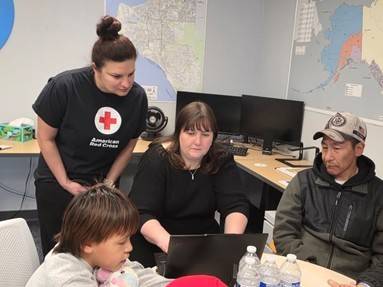
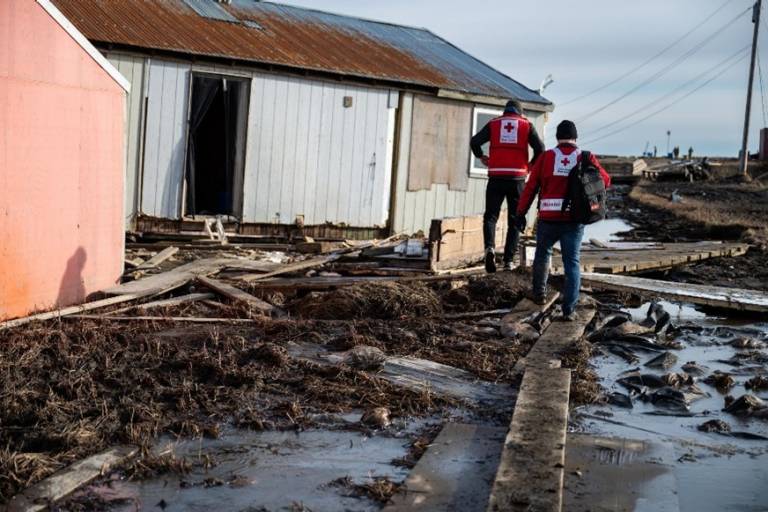
This flexibility was especially important for families displaced by the October 2025 Typhoon Halong in Alaska. The typhoon caused flooding that destroyed coastal villages across western Alaska, forcing the evacuation of as many as 2,000 people. The Red Cross provided shelter, food, relief supplies and comfort for disaster survivors in the immediate aftermath, relocating many of them to Anchorage after their villages were destroyed. The relocation was a culture shock for many displaced families as they adjusted to temporary living in a big city.
"Everyone keeps asking when we are going to go back to the village and I don't have an answer," said Harvey Dock, a resident of the rural Alaskan village of Nightmute. His family, along with hundreds of other families impacted by Typhoon Halong, received additional financial assistance from the Red Cross to help bridge gaps in the recovery process. "This will really help as we decide what we are going to do. I think it will help most with getting around town. We aren't used to that," said Harvey.
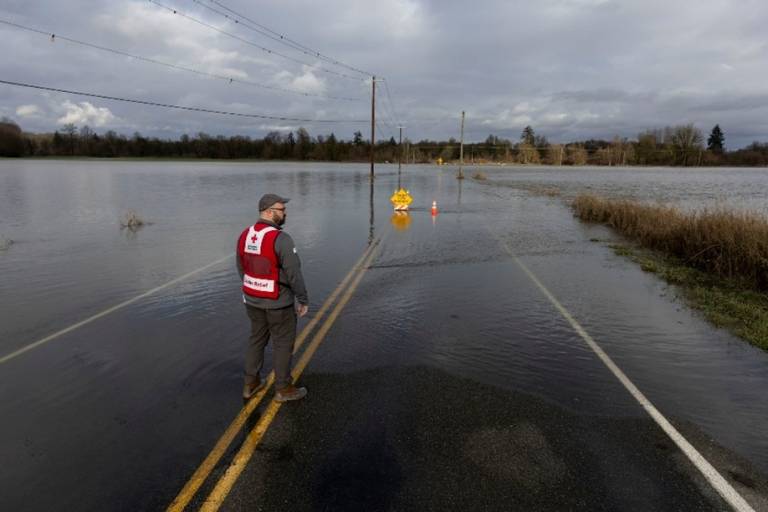
Weeks after Typhoon Halong devastated Alaska, atmospheric rivers inundated communities across Washington state in December 2025, causing flooding, landslides and power outages. Again, the Red Cross provided shelter, food, relief supplies and comfort for disaster survivors. The flooding was not entirely a surprise for Sumas, Washington resident Caleb Lyle.
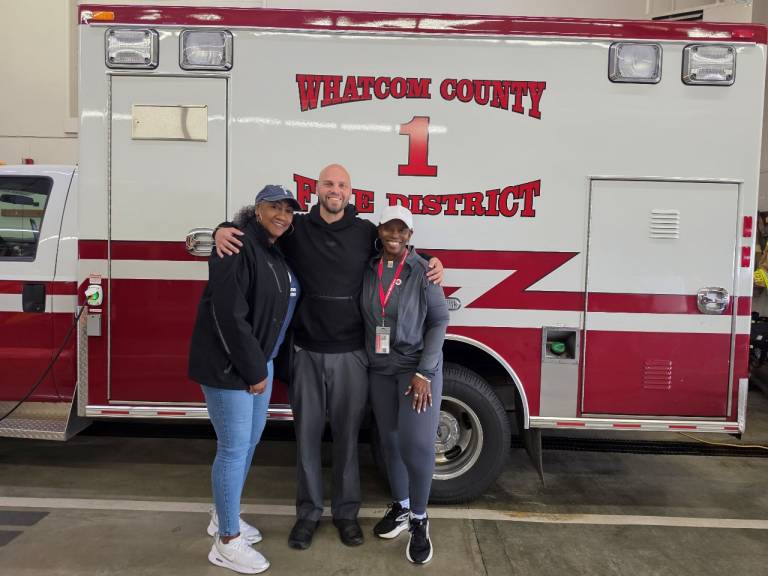
“I bought a house in a floodplain,” he said. “It’s my sword to fall on.” But the damage to his home was extensive, including floodwaters four feet deep soaking into the drywall. When the Red Cross offered assistance, he went to Whatcom County Fire Department to meet with caseworkers in person. When his application for financial assistance was approved, Caleb learned he wasn’t just receiving the assistance – the caseworkers let him know he was the first person in Washington to receive it. “They celebrated like I’d won the jackpot,” he said.
Weathering a difficult disaster like the Washington Floods or Typhoon Halong does not often leave survivors with much to celebrate. But with help from the Red Cross, they have a little more support as they continue on their road to recovery.
WHAT IS LONG-TERM RECOVERY? Following a disaster ─ whether it be a single-family house fire or a catastrophic event ─ the Red Cross mobilizes to meet the immediate disaster-caused needs of individuals, families and communities, providing care, comfort and immediate support. When resources allow, thanks to the generosity of our donors, the Red Cross may provide additional long-term recovery programs to support individual and household recovery and address community-wide needs.
Our Long-Term Recovery programs are community-led, Red Cross supported. The Red Cross coordinates and collaborates with the community and partners, also providing direct services to those impacted by the disaster. Programs and services may include additional direct financial assistance to individuals and households; grants to non-profits and community organizations actively supporting community wide recovery services; advocacy, technical support and convening of partners to support community organizations and more.
About the American Red Cross:
The American Red Cross shelters, feeds and provides comfort to victims of disasters; supplies about 40% of the nation’s blood; teaches skills that save lives; distributes international humanitarian aid; and supports veterans, military members and their families. The Red Cross is a nonprofit organization that depends on volunteers and the generosity of the American public to deliver its mission. For more information, please visit redcross.org or CruzRojaAmericana.org, or follow us on social media.
Support all the urgent humanitarian needs of the American Red Cross.
Find a drive and schedule a blood donation appointment today.
Take a class and be ready to respond if an emergency strikes.