
Iconic Excellence: The Legacy of Dr. Charles R. Drew, a documentary honoring the father of blood banking, is now featured on the American Red Cross YouTube channel. The short film, produced in collaboration with Drew's family, the NAACP and Omega Psi Phi Fraternity Inc., highlights his revolutionary breakthroughs in blood plasma preservation, which saved hundreds of thousands of lives during World War II and pioneered modern methods for collecting, preserving and distributing blood.
The new short documentary "Iconic Excellence: The Legacy of Dr. Charles R. Drew" opens a window on a formative chapter in the ascendancy of the American Red Cross Blood Services Program: the year in which its first medical director built it. The film, written and executive produced by Tiffany Taylor and directed by Brad Zerivitz, tells the story of Dr. Drew, who in 1941 established the program's foundation as a blood bank in a matter of months and set a donor recruitment model that continues today.
Eighty-five years later, that program supplies about 40% of the nation's blood and is guided by more than 30 physicians in the Red Cross Medical Office. Three of them, Dr. Pampee Young, Dr. Yvette Miller and Dr. David Mair, have spent more than 60 years at the organization between them, and each came to admire Dr. Drew long before they joined.
"It is both humbling and deeply meaningful to lead the national Medical Office that Dr. Charles R. Drew helped shape 85 years ago," said Dr. Young, chief medical and scientific officer. "He understood that scientific rigor and innovation should ultimately improve systems, expand access and serve communities."
Dr. Drew, the surgeon known as the father of blood banking, pioneered modern methods for collecting, preserving and distributing blood and plasma. He helped establish safety standards that made a national blood supply possible and outfitted trucks with refrigeration to reach donors where they lived, an idea that became the bloodmobile. His breakthroughs helped save hundreds of thousands of lives during World War II.
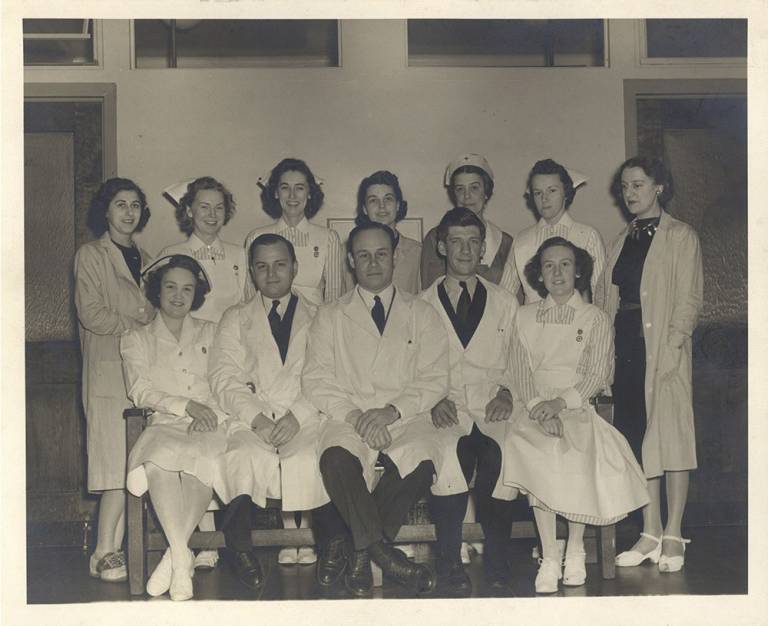
Before he joined the Red Cross, Drew had already run plasma collection at scale supporting the Blood for Britain Project, which collected plasma in New York and shipped it across the Atlantic. He opened Red Cross donation centers with the same standards and implemented mobile blood drives to meet the collection demands of the U.S. Army and Navy. By April 1942, the Red Cross was operating 18 centers, had collected over 217,730 pints and was averaging more than 17,000 blood donations a week, according to a July 1942 account in the American Journal of Public Health.
Dr. Mair was introduced to Dr. Drew the way many children of his generation were, on a series of posters of African American heroes that decorated the walls of his elementary school in Queens, New York.
"Becoming a physician myself was still a childhood fancy then, but seeing his placard confirmed it was a real possibility," said Dr. Mair, medical director of the Red Cross Minnesota-Dakotas and Wisconsin Regions.
Possibility propelled Dr. Mair to medical school. An unexpected rotation encounter introduced him to Drew's field.
"I had never really considered transfusion medicine as a field until, strangely enough, completing a rotation in autopsy pathology," Dr. Mair said. "My resident in that course was training to become a blood bank physician, and he took me under his wing. He became a mentor and introduced me to one of the most clinically oriented fields in pathology. I became hooked."
One rotation led to a career. Dr. Mair has spent more than 25 years at the Red Cross, more than 20 of them as a divisional chief medical officer, supervising other medical directors across a broad geography of blood donation centers.
"I think about the challenges an African American man must have faced in the 1930s and '40s to graduate second in his medical school class at McGill University, and then complete his surgical residency there," said Dr. Mair. "I also consider the moral fortitude of our great organization to select the best candidate to lead what would become Red Cross Biomedical Services."
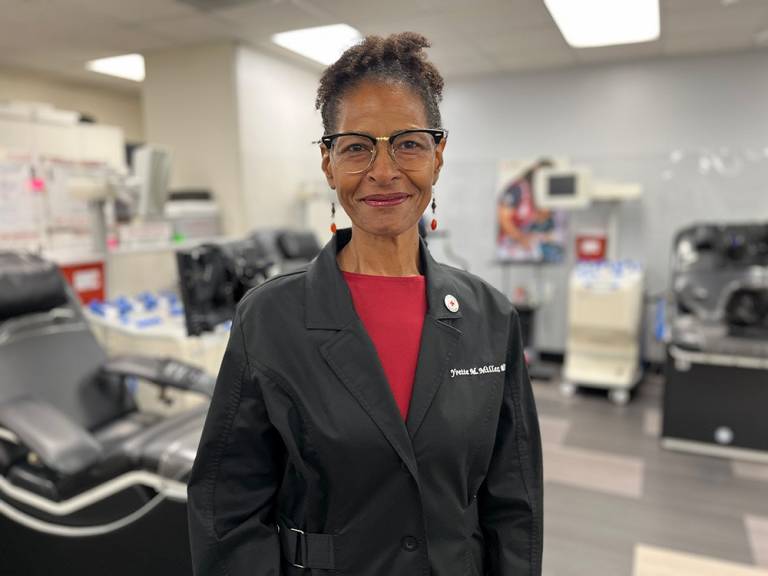
Dr. Miller, who is featured in the film, learned about Dr. Drew in grade school in Winston-Salem, North Carolina, about an hour from Burlington, where he and three colleagues were involved in the car crash that led to his death in 1950.
"As a child, I knew that I wanted to be a doctor," said Dr. Miller, Red Cross executive medical officer. "I loved science and as an avid reader, I checked out books from the library about science, medicine and Black doctors ... my mother worked as a home health nursing aide for the wife of Dr. Rembert Malloy, a contemporary of Dr. Drew at Howard University. The work that I perform every day has been built upon the scientific foundation laid by Dr. Drew."
Dr. Miller is a national speaker on donor eligibility, helping strengthen donor recruitment and retention within the African American community and addressing the structural barriers that shape health care access.
Dr. Young, who came to the Red Cross eight years ago after leading an academic research program at Vanderbilt University Medical Center, leads an office that has built Dr. Drew's standard into its structure. The office created an executive medical director role devoted to the volunteer donors who make the blood supply possible. It helps oversee red blood cell exchange therapies, the hours-long procedure that removes abnormal red blood cells from patients living with sickle cell disease and replaces them with healthy units from blood donors. The office also works with hospital partners to find closely compatible matches or CEK-negative units for patients.
"We pride ourselves on providing accessible, expert medical support to our hospital physician partners, helping ensure safe, evidence-based transfusion care nationwide," Young said.
Every unit of that care traces back to a system Drew built under conditions few outside the field know in full. Drawing on years of research and his experience helping support the Blood for Britain project, he established a national blood bank for an organization that had never operated one, with the Army and Navy expecting collections in the thousands as the war in Europe made plain how many wounded soldiers would depend on it. He did so within a segregated society whose standards were written into the military's blood policy, which required donations be separated by race, a policy the science he studied did not support and one he publicly spoke out against.
On September 18, the Red Cross released the film on its YouTube channel, sharing his story through the voices of his family and leaders of the NAACP, Omega Psi Phi Fraternity, Inc. and the Red Cross.
"Telling Dr. Drew's story through film makes his legacy accessible in a way that facts and dates alone cannot," said Dr. Young. "I hope Red Crossers and the public come away understanding not only what he accomplished, but the courage, scientific rigor and sense of service behind it. His story reminds us that progress is built by people willing to challenge assumptions, expand opportunity and use their expertise in service of others."
Dr. Mair hopes audiences take from the film Drew's "persistence to overcome all the barriers put in his way and his brilliance." Dr. Miller hopes viewers leave with something more than admiration.
"I hope that every person that sees the film sees themselves in a lifesaver role," Dr. Miller said. "You can be a lifesaver by donating blood, hosting a blood drive and hosting a screening of the film with your organization, church or school."
Carry Dr. Drew's Legacy Forward. To schedule a blood donation appointment in honor of Dr. Drew, or to register to host a screening of Iconic Excellence or a blood drive, visit RedCrossBlood.org/IconicExcellence.
About the American Red Cross:
The American Red Cross shelters, feeds and provides comfort to victims of disasters; supplies about 40% of the nation’s blood; teaches skills that save lives; distributes international humanitarian aid; and supports veterans, military members and their families. The Red Cross is a nonprofit organization that depends on volunteers and the generosity of the American public to deliver its mission. For more information, please visit redcross.org or CruzRojaAmericana.org, or follow us on social media.
Support all the urgent humanitarian needs of the American Red Cross.
Find a drive and schedule a blood donation appointment today.
Take a class and be ready to respond if an emergency strikes.