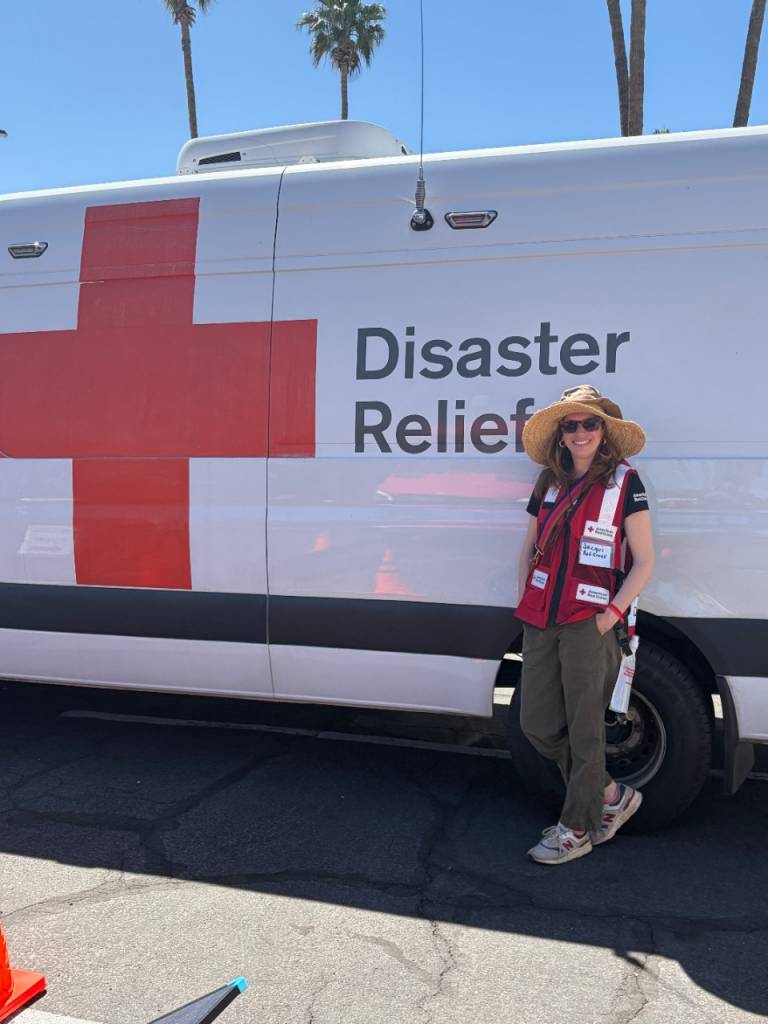
As extreme temperatures continue to impact communities across the U.S., the risks associated with prolonged heat exposure are becoming increasingly important to understand. The American Red Cross is working to address this through initiatives like Heat Walks, designed to bring awareness and resources directly to communities before heat becomes life-threatening.
For Red Cross employee and extreme heat safety advocate Jacqui Bassermann, heat preparedness isn’t just professional, it’s deeply personal.
“Extreme heat is the leading cause of weather-related deaths in the U.S. — more than any other disasters combined,” Bassermann said. “It’s not just, ‘You walk out the door, it’s a hot day, you drink water, you stay cool, and you go home.’ There are so many compounding factors and risks that make extreme heat such a dangerous situation.”
Bassermann is dedicated to educating communities about the very real dangers of extreme heat, particularly those who may not recognize their own vulnerability.
Older adults, young children, and individuals with underlying health conditions face significantly greater risks during heat events. Even those who are unaware of existing conditions can be affected, as heat can rapidly exacerbate hidden health issues.
Her understanding of those risks became especially clear during her own pregnancies.
“I consider myself very fortunate in life. Prior to being pregnant, I did not have any health or socioeconomic issues that put me into any risk categories beyond what the general public experiences in extreme weather events,” she said. “However, my three pregnancies were considered high risk beyond just the vulnerability of being pregnant in summer without consistent cooling systems.”
During those pregnancies, Bassermann experienced firsthand how limited access to cooling can become dangerous during extreme heat events.
“There were storms during those summers that knocked out the power several times in my home. Another time, the cooling systems in my apartment building weren't working throughout the whole season. At the hospital where I delivered my first born, the AC went out on the entire labor and delivery floor for almost an entire day,” she said.
Those experiences reshaped how she viewed heat safety and community responsibility.
“This all happened in an area that doesn’t normally experience extremely high temperatures, so it made me realize that anyone, anywhere can be impacted by the dangers of extreme heat,” Bassermann said. “Everyone should know how to take all the necessary measures to protect your health — stay hydrated, stay cool and stay connected.”
In response to growing concerns, the American Red Cross has launched Heat Walks, a community-based initiative led by the Red Cross Arizona and New Mexico Region, as Arizona is one of the states most affected by extreme temperatures. In places like Arizona, the consequences of extreme heat can escalate quickly. The goal of Red Cross Heat Walks is to proactively engage with vulnerable populations before emergencies occur.
“We recognized a growing need in our communities to reach people who are especially vulnerable to extreme heat,” said Edgar Olivo, regional executive of the American Red Cross Arizona and New Mexico Region and a key leader behind the Heat Walks initiative. “For many families, older adults and individuals without reliable access to cooling, extreme heat can quickly become dangerous. These walks are about meeting people where they are, sharing lifesaving information and helping ensure no one feels forgotten during the hottest months of the year.”
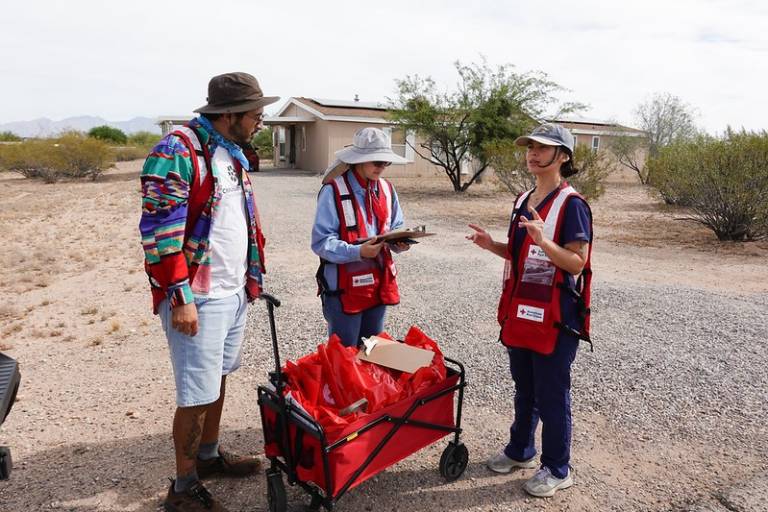
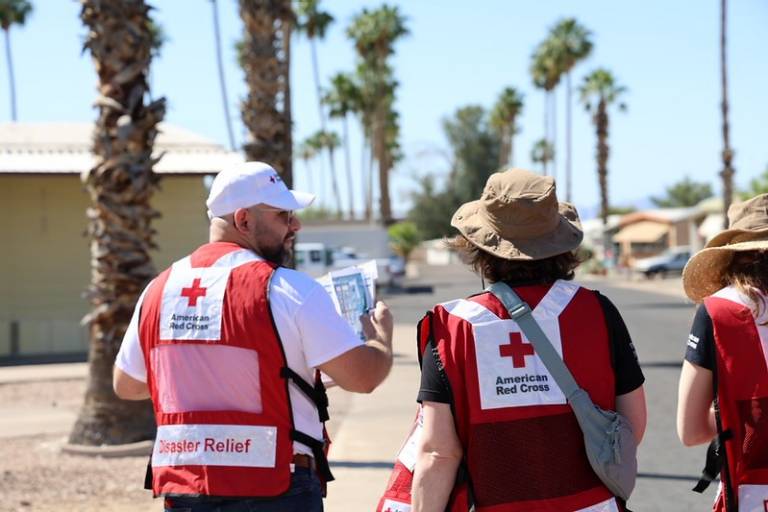
During the Heat Walks, Red Cross volunteers go directly into communities, going door to door to perform wellness checks, provide resources and education on how to stay safe during periods of extreme heat.
The Heat Walks initiative also highlights another often-overlooked risk factor during extreme heat: loneliness and social isolation. Red Cross volunteers say checking in on neighbors, friends and loved ones can be lifesaving during dangerous temperatures — especially for older adults, people living alone and those without reliable access to cooling.
“Sadly many people are at risk because nobody is checking in on them. That’s one of the reasons the Red Cross is showing up at their doors – to check on them,” said Bassermann.
Ahead of one Heat Walk event, volunteers learned many residents in the community struggled with loneliness, something Bassermann said deeply resonated with her.
“That really pulled at my heart strings and motivated me to check in and show up not only for this community, but as a reminder for mine as well,” she said. “Staying connected can save a life — and not just from heat.”
As the Red Cross continues expanding its heat preparedness efforts, Bassermann hopes the message reaches beyond emergency situations and into everyday behavior, encouraging people to treat extreme heat as a serious public health threat and check in on one another to recognize risks early. To learn more about extreme heat and how you can protect yourself and others, go to redcross.org/HeatCheck.
About the American Red Cross:
The American Red Cross shelters, feeds and provides comfort to victims of disasters; supplies about 40% of the nation’s blood; teaches skills that save lives; distributes international humanitarian aid; and supports veterans, military members and their families. The Red Cross is a nonprofit organization that depends on volunteers and the generosity of the American public to deliver its mission. For more information, please visit redcross.org or CruzRojaAmericana.org, or follow us on social media.
Support all the urgent humanitarian needs of the American Red Cross.
Find a drive and schedule a blood donation appointment today.
Take a class and be ready to respond if an emergency strikes.